A key customer is demanding a discount. Do these three things before you concede
When a major customer pushes on price, find out their alternatives and internal constraints first, then decide whether to cut, trade, or walk. Three conclusions, common mistakes, and three plays.
The short answer
A customer pushing on price is not a customer leaving. Most price pressure is a routine procurement step whose goal is a result that looks good when reported upward.
Before conceding, answer: what it would really cost them to replace you, who they have to answer to internally, and whether they want a lower price or a reason they can defend.
The right response is usually not a lower unit price but a changed exchange: a longer contract, more volume, better payment terms, or less customization, so the concession buys something.
Also searching for: customer demands discount · customer asking for lower price how to respond · key account price pressure · negotiating price with a big customer
Where people usually go wrong
Treating the demand as a threat
Hearing that someone else quoted lower and panicking, forgetting that if they could switch easily they already would have.
Negotiating on one dimension
The unit price drops and nothing else changes. That is a gift, not a deal.
Conceding too fast and too whole
Give everything in the first round and they will assume there is more, and push again next time.
Having no walk-away line
If you do not know your floor, you have no leverage at the table.
Three things to check before acting
Their alternatives
Switching suppliers means re-qualification, retraining, and delivery risk. Those switching costs are your leverage. Quantify them first.
Their internal constraints
Procurement has to report to a boss; operations has to avoid supply gaps. Work out who really decides and what they fear most.
Your walk-away line
At their price, does this order still make money and is it worth the capacity? An order below your floor costs more to win than to lose.
What Sun Tzu would look at first
The Art of War, chapter 3, Attack by Stratagem
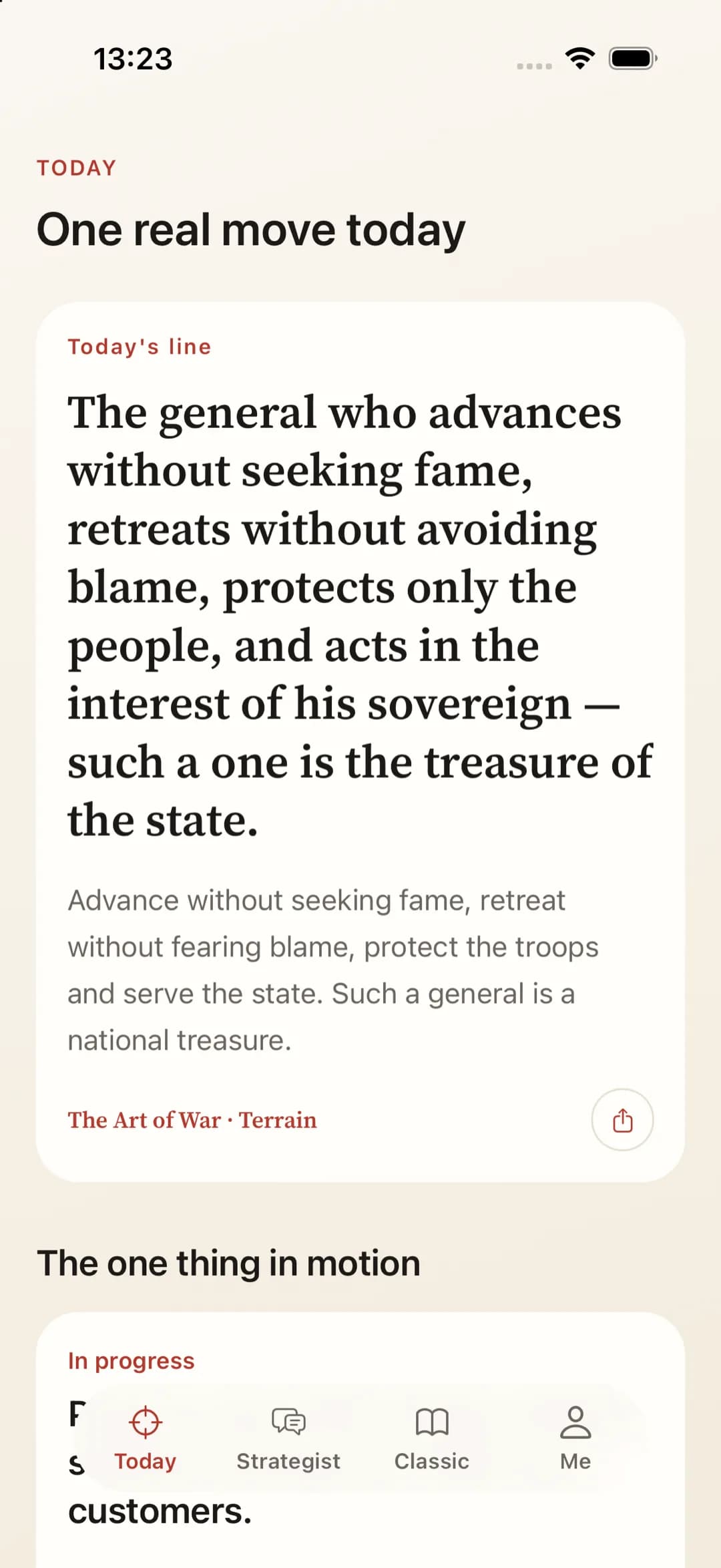
Know the enemy and know yourself, and in a hundred battles you will never be in peril.
Knowing the other side at the table does not mean guessing what they want. It means learning their constraints, alternatives, and who they answer to. Once you know these, price pressure stops being a threat and becomes an exchange you can design.
Three versions, three plays
They have a real alternative and your price is genuinely above market
Offer a conditional reduction tied to a longer contract, higher volume, or less customization. They get a result; you get certainty.
It is routine procurement pressure
Hold the unit price and offer a non-price concession they can report: a free training session, a faster response tier, one quarter of extended payment terms.
Their price is below your walk-away line
Say plainly that it does not work, offer the lowest configuration you can deliver at that price, and make clear you want to keep the relationship. Many customers come back within weeks.
How the app walks you through it
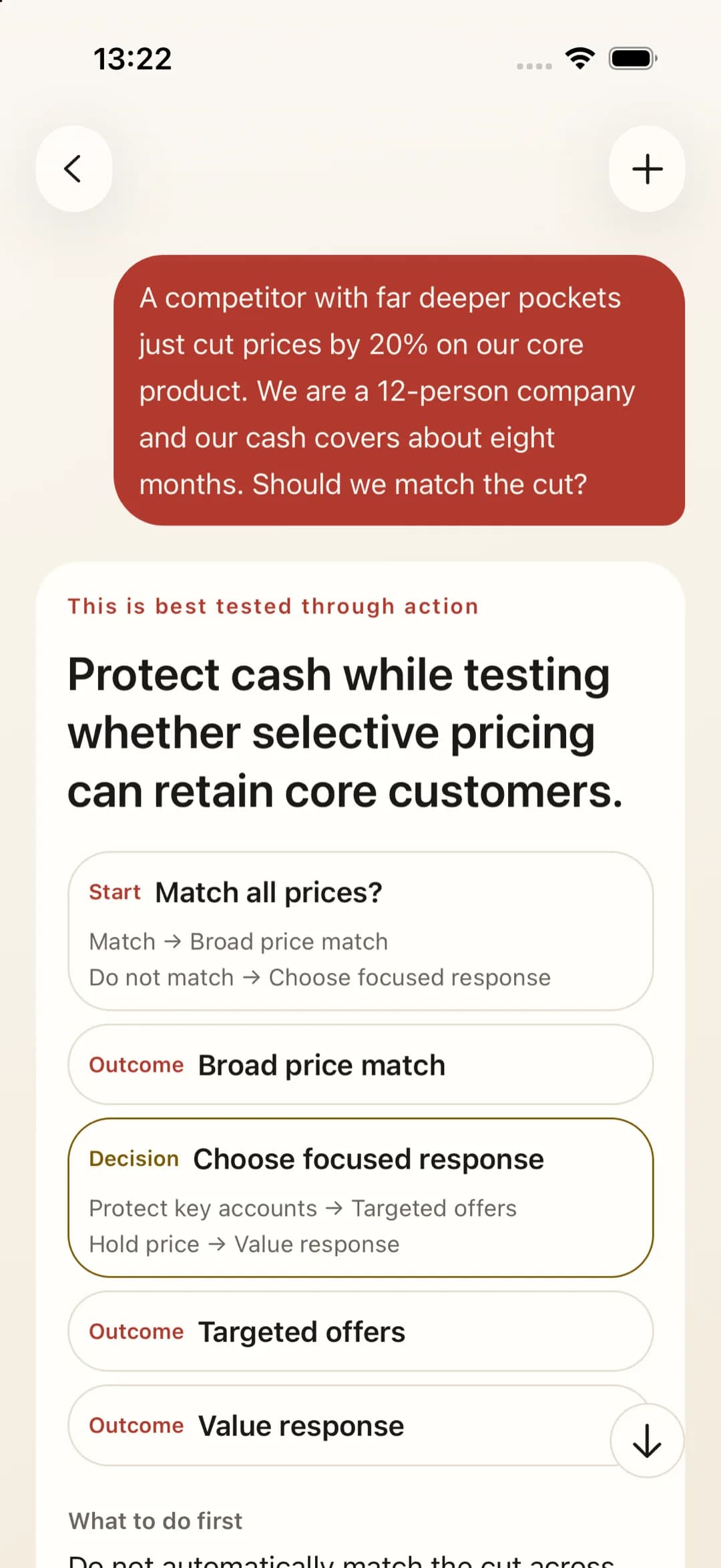
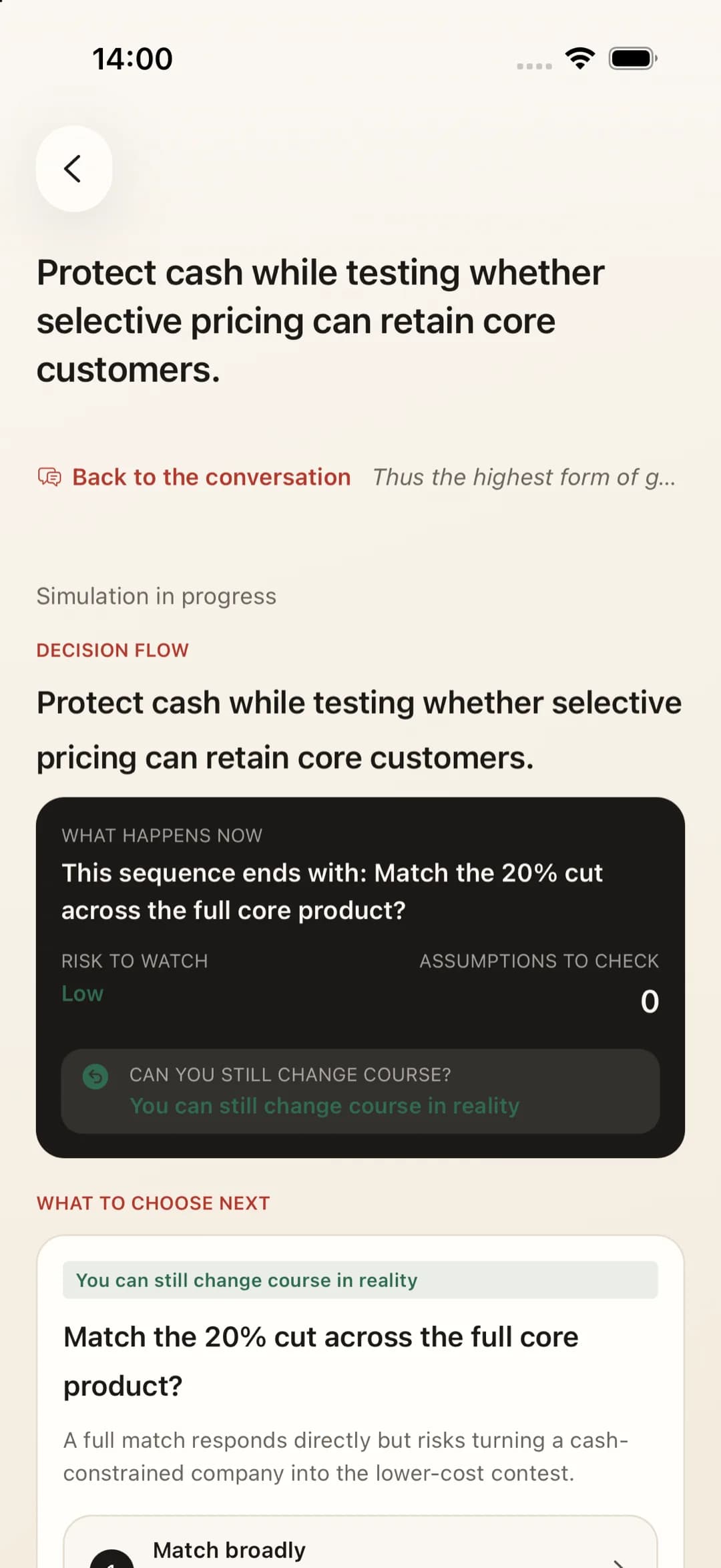
The strategist asks about your situation first, then gives a judgement and what to do firstLay both sides on the table and simulate whether the conclusion changesOne real move today, with a signal to watch
Tell the strategist the situation: who the customer is, what they are asking, where your cost line sits, and what you know about their side.
The strategist first asks about what you do not know, their alternatives and who they report to, then lays out both sides' leverage in one comparison.
You leave with a one-sentence reply plan and a boundary that tells you when to walk away.
This page covers the order of judgement. Your own situation, opponent, and resources are worked through with the strategist in the app.
The customer says a competitor quoted 15% less. How do I respond?
Neither deny nor match. Ask what scope, delivery, and service level that quote includes. In most cases the scope differs. Bring the comparison back to the same baseline before discussing price.
If I do not concede, will I lose the account?
It depends on their switching cost. If replacing you means re-qualification, retraining, and supply risk, they will not switch for 10%. If switching is cheap, you were only ever a price supplier and the account was going to leave eventually.
Should I concede all at once or in steps?
Every concession should buy a condition. Never concede unconditionally. Make each step smaller than the last so the other side can tell you are near the floor.
A long-standing customer is pushing on price. Should I give them a break?
A long-standing customer's value is stability and trust, so you can, but turn the concession into an exchange: a longer renewal, clearer demand forecasts, or better payment terms.
This page covers the order of judgement and is not legal or financial advice. Negotiations involving contract terms, non-compete clauses, or antitrust rules require qualified professionals.