How to negotiate a raise: build leverage before you ask
Before asking for a raise, work out what makes you hard to replace, what the market pays, and what your manager needs to get it approved, then pick the moment.
The short answer
A raise negotiation is decided before you open your mouth: whether you have measurable results, what the market pays for your role, and which approval your manager has to clear.
The order of judgement is: what the company would lose without you, what the same role pays elsewhere, and where your manager's budget cycle and approval authority sit.
The right way to open is neither complaint nor threat. Put results, market rate, and the number you want side by side, and give your manager a reason to take upward and a date.
Also searching for: how to negotiate a raise · how to ask your boss for a raise · salary negotiation tips · raise request denied what to do
Where people usually go wrong
Citing effort as the reason
Long hours and a heavy load are input, not leverage. Managers approve value, not time.
Using an offer as a weapon
You can mention an outside offer, but people who threaten with one get the raise and a place on the list of people who will leave anyway.
Bad timing
Right after the budget closes, after layoffs, or after your manager was criticized, no argument gets approved.
No specific number
Ask for a bit more and you get whatever is easiest to grant.
Three things to check before acting
What makes you hard to replace
Which results of the past year are yours, and which work only you can take on. That is your strong ground; state it in numbers.
Market rate
Salary ranges for the same role in your city and industry, from job boards and recruiters. Being under market is the hardest argument to refuse.
Your manager's constraints
Do they have approval authority, when is the budget set, how do people above them see you. Raises often fail not because the manager does not want to give one, but because they cannot justify it upward.
What Sun Tzu would look at first
The Art of War, chapter 4, Tactical Dispositions
First make yourself invincible.
The skilled fighter first secures a position that cannot be defeated, then waits for the chance to win. In a raise negotiation, that position is your results and the market rate. With those in hand, failing to get the raise costs you nothing; without them, asking only exposes you.
Three versions, three plays
You are clearly under market
Ask directly. Lay out the market range and your results, give a specific number and an effective date. This is the easiest kind to approve.
You are within market but your responsibilities have outgrown the role
Do not negotiate a raise; negotiate a re-level or a new title. When the role changes, pay is reset with it, which is easier than arguing a percentage in the old role.
Your manager agrees but says there is no budget
Do not stop there. Ask when budget will exist, what conditions apply, and whether a bonus or equity can bridge the gap. A date is worth far more than a vague later.
How the app walks you through it
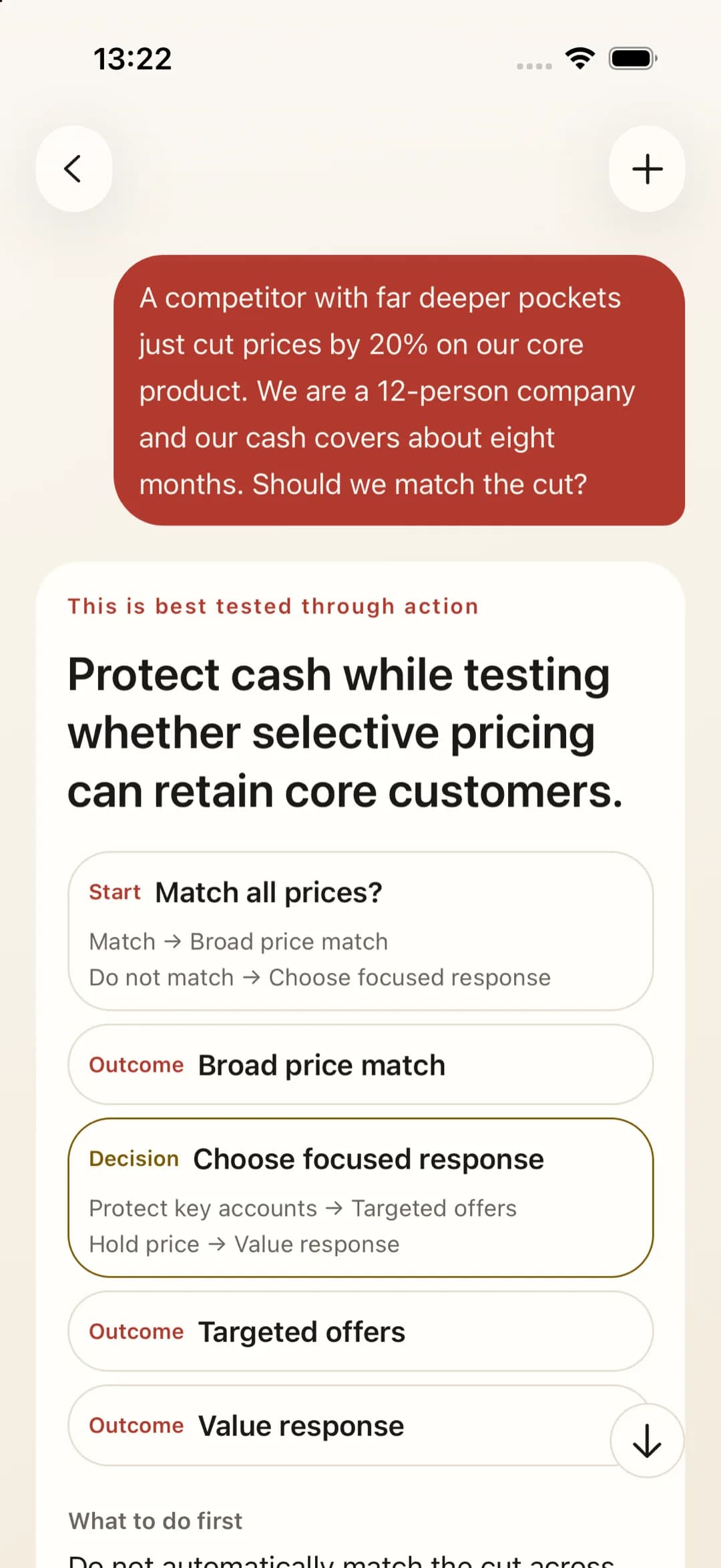
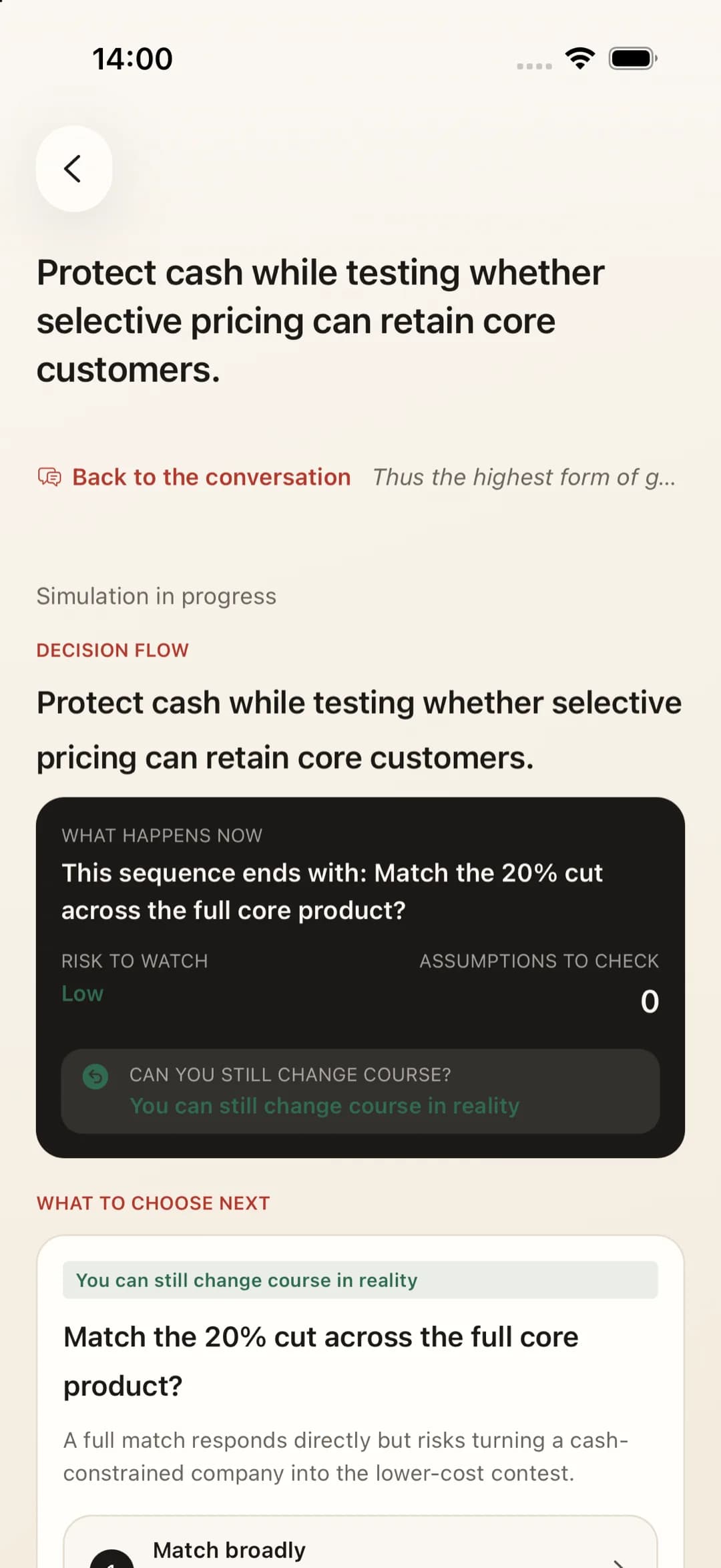
The strategist asks about your situation first, then gives a judgement and what to do firstLay both sides on the table and simulate whether the conclusion changesOne real move today, with a signal to watch
Tell the strategist your role, current pay, results from the past year, the market range, and how approvals work for your manager.
The strategist first converts your results into value the company understands, then judges timing and framing, and shapes your request into a form your manager can take upward.
You leave with an action card: one document to prepare this week, the opening sentence, and a signal that tells you to reassess staying if the answer is no.
This page covers the order of judgement. Your own situation, opponent, and resources are worked through with the strategist in the app.
Look at the reason. If it is budget or timing, get a specific date for the next conversation and wait. If it is a judgement on your value, and you are sure you are not underpaid, it is telling you where the ceiling is.
How much should I ask for?
Anchor on the market. If you are under market, ask to reach the median. If you are at market, increases usually track a change in responsibility. Open slightly above your target to leave room, but not absurdly.
Should I tell my manager about an outside offer?
You can, phrased as: I have an opportunity, I would rather stay, and I want to know what is possible here. Do not say give me a raise or I leave. Once said, the relationship changes.
When is the best time to ask?
Right after a result everyone can see, and before the budget cycle starts. Avoid the weeks after layoffs, a losing quarter, or your manager being held accountable.
This page covers the order of judgement and is not career or legal advice. Employment contracts, non-compete clauses, equity, and bonus terms require qualified professionals.