When a partner asks for more equity, work out whether they want recognition, control, or income, then use vesting, milestone adjustments, or profit share instead of a one-off transfer.
The short answer
When a partner asks for more equity, the problem is never just the number. Separate whether they want recognition for their contribution, control over decisions, or a share of future income. Each calls for a different solution.
The order of judgement is: whether their contribution has genuinely changed, whether the current split no longer reflects actual input, and whether anything other than equity can meet their need.
The right move is to replace a one-off transfer with a conditional structure: vesting over time, adjustments tied to milestones, or dividends and options in place of the equity itself.
Also searching for: business partner wants more equity · co-founder asking for more shares · renegotiating partnership equity split · partner demands larger ownership stake
Where people usually go wrong
Conceding to keep the peace
Equity given cannot be taken back, and the root of the conflict stays unresolved.
Treating equity as the only currency
They may want a say or income; you dig in on shares.
Delaying the conversation
The longer a partner's request waits, the more emotion attaches to it, until there is no room left for rational negotiation.
Leaving it unwritten
A verbal adjustment becomes two different memories a year later and a new conflict.
Three things to check before acting
Their real need
Ask: if the shares stayed the same, what would make this feel fair? The answer tells you whether it is recognition, control, or money.
The change in contribution
What each of you has put in and risked over the past year. If the split is genuinely unfair, adjusting early is cheaper than adjusting late.
The boundary of control
Whether the transfer changes the decision structure and whether anyone crosses a key threshold. This matters more than the shares themselves.
What Sun Tzu would look at first
The Art of War, chapter 11, The Nine Situations
Crossing the river in the same boat.
Sun Tzu says the men of Wu and Yue, enemies, would help each other like left and right hands if caught in a storm in the same boat. The partner question is not who holds how much but whether the boat capsizes. Confirm you are still in the same boat before negotiating how to divide it.
Three versions, three plays
Their contribution has clearly grown
Acknowledge it and adjust through vesting. New shares vest over two to four years; they are earned only if the contribution continues.
What they really want is a say
Leave the equity alone and change the decision mechanism. Define which matters need unanimous agreement and which each of you owns. Distribute power through rules, not shares.
What they want is current income
Solve it with a dividend ratio or bonus pool and keep the equity unchanged. Income problems get income tools, not ownership tools.
How the app walks you through it
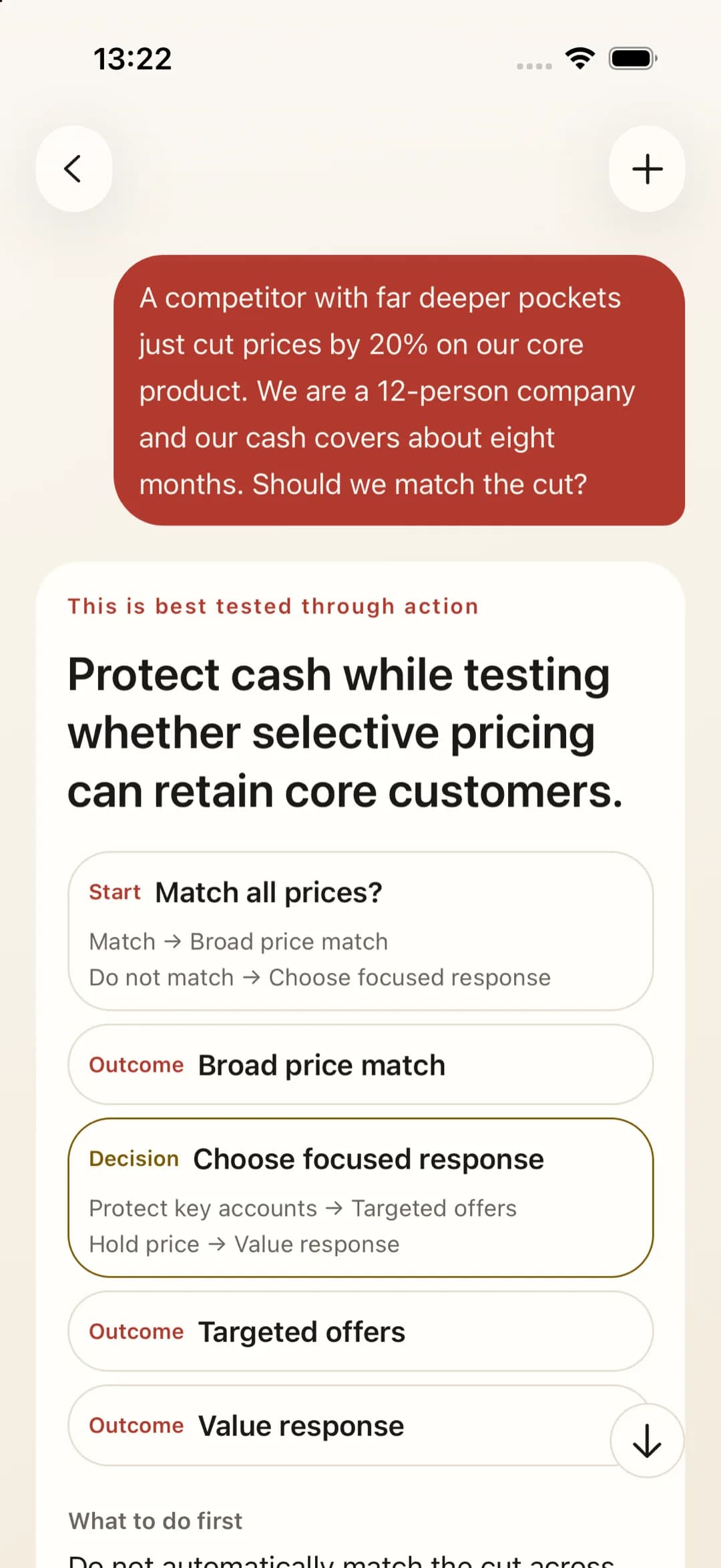
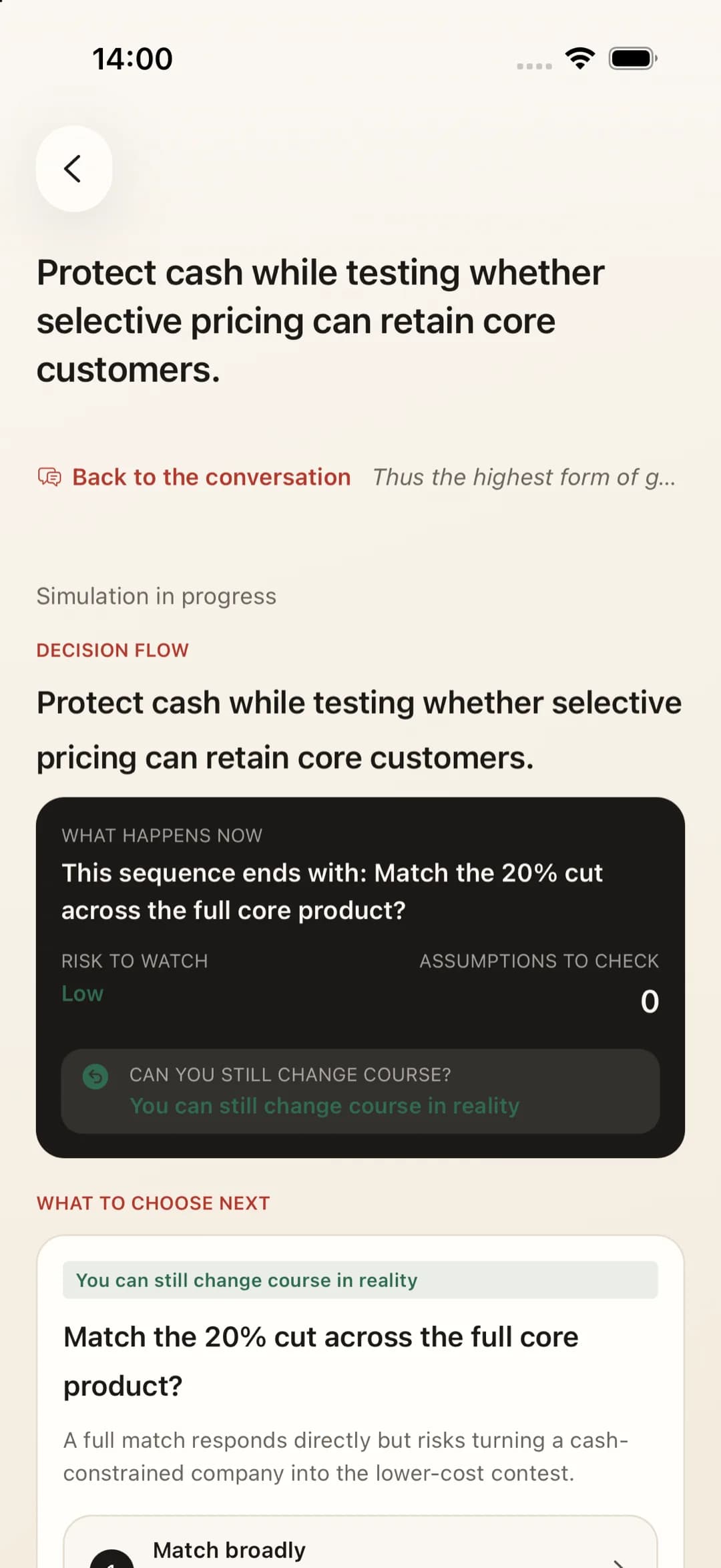
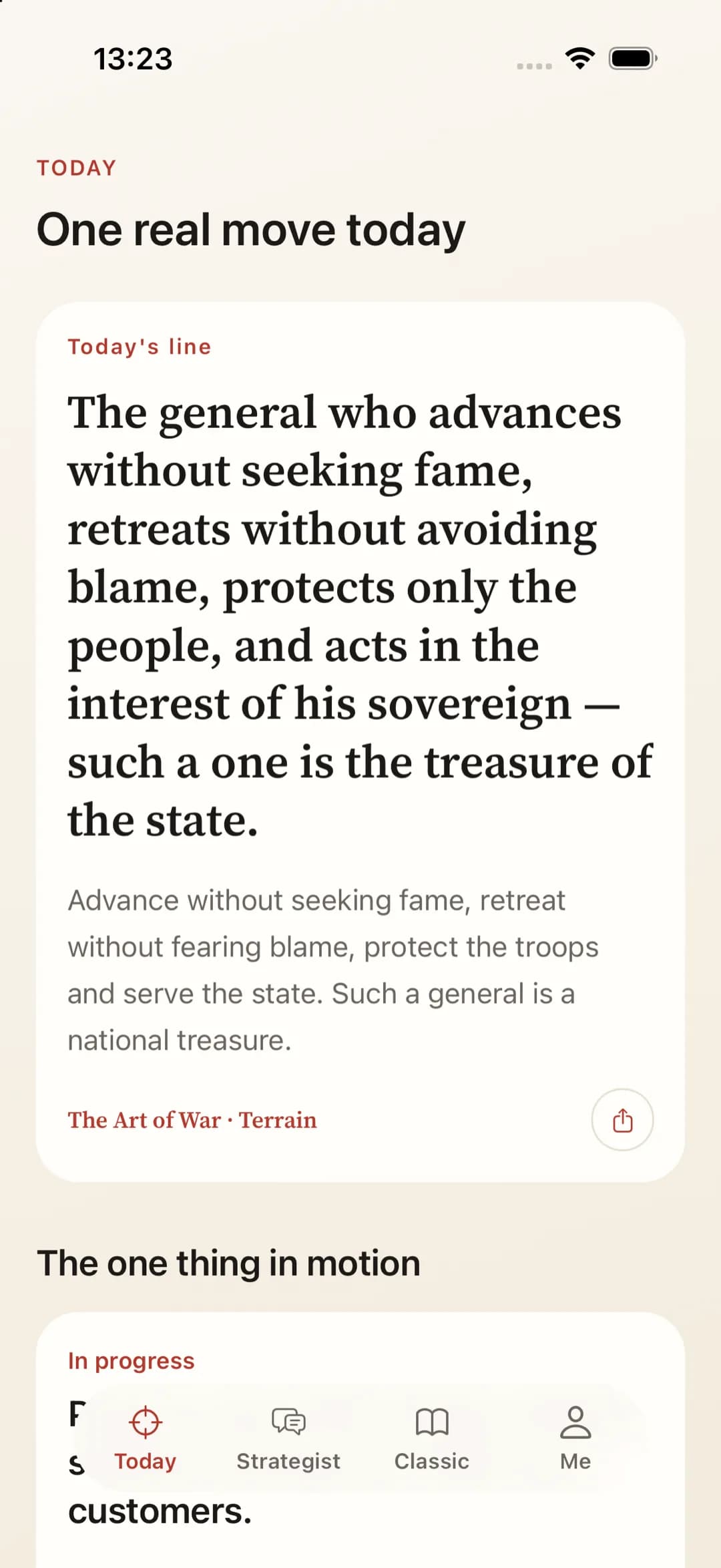
The strategist asks about your situation first, then gives a judgement and what to do firstLay both sides on the table and simulate whether the conclusion changesOne real move today, with a signal to watch
Tell the strategist what your partner is asking, the current cap table, what each of you put in over the past year, and the control issues that worry you.
The strategist first separates recognition, control, and income, then lays out a non-equity solution and a conditional equity solution for each.
You leave with an action card: the one question to ask in the next conversation, the structure you can accept, and a signal that tells you when to bring in a third party.
This page covers the order of judgement. Your own situation, opponent, and resources are worked through with the strategist in the app.
My partner says they will leave unless they get more shares. What do I do?
Work out the real cost of their leaving and your alternatives. If they are genuinely irreplaceable, negotiate a conditional adjustment. If they are using exit as pressure, settle the exit mechanism first, then talk about shares.
Should an adjustment happen all at once or over time?
Over time. A one-off transfer rewards the past; vesting is a commitment to the future. A partnership needs the second.
Should we bring in an outside adviser or lawyer?
For any change to equity, yes. Shareholder agreements, vesting terms, and buy-back mechanisms need professional documents. A verbal agreement has no force when the conflict arrives.
If I think the demand is unreasonable, should I refuse outright?
Not outright. Ask why the current split feels unfair to them. Most unreasonable demands sit on top of a reasonable grievance, and solving the grievance is cheaper than refusing the demand.
This page covers the order of judgement and is not legal, tax, or financial advice. Equity changes, vesting terms, and buy-back mechanisms should be drafted and reviewed by qualified lawyers and financial advisers.