Negotiation stalled: change the exchange before you concede
When a negotiation stalls, find each side's walk-away option and real red lines, then change what is being exchanged instead of pushing the same term again.
The short answer
A stalled negotiation is rarely a sign that you have not conceded enough. It usually means both sides are pulling on the same term and the exchange has nothing new left to give.
The order for breaking it is: confirm what the other side genuinely cannot move on and where they would go if the deal collapsed, then find what you hold that they value and that costs you little.
The right move is to change the table: split the single term into several tradable items, and trade what is cheap for you and valuable for them against what is cheap for them and valuable for you.
Also searching for: negotiation stalled what to do · how to break a negotiation deadlock · negotiation impasse strategies · deal stuck how to move forward
Where people usually go wrong
Pushing the same term again
Unit price will not close, so you grind on unit price. Each round burns patience and produces no new information.
Treating silence as leverage
You assume waiting will make them fold; they may be using the time to talk to someone else.
Revealing your floor early
Announcing a final offer at the first sign of deadlock, then moving again, costs you credibility for the rest of the deal.
Mixing people and problem
Reading their firmness as hostility turns a problem to solve into a contest to win.
Three things to check before acting
Their walk-away option
What is their alternative if this collapses, and how realistic is it? The worse the alternative, the less likely they leave.
The real hard constraints
Of the terms they hold, which are red lines set by their boss and which are personal preferences? Red lines cannot be crossed; preferences can be traded.
Your low-cost items
Payment cadence, delivery order, trial periods, exclusivity scope, renewal rights. Cheap for you, possibly valuable to them.
What Sun Tzu would look at first
The Art of War, chapter 7, Maneuvering
Turn the devious route into the direct one.
The difficulty of maneuvering is making the roundabout path the straight one. In a deadlock the straightest path is rarely to push harder on the contested term. It is to go around, to something the other side cares about, and open the front with a trade from the side.
Three versions, three plays
Neither side will move on price
Split price into a base and a conditional part. Give them a base number they can report, and recover the rest through volume, terms, duration, or service level.
They insist on a clause you cannot accept
Ask what the clause protects. Most hard clauses have soft substitutes: a guarantee or instalments instead of prepayment, a right of first refusal instead of exclusivity.
The talks have turned emotional
Pause once. Change the time, the setting, or if necessary the people. Emotional negotiation produces no new terms; it turns a stall into a rupture.
How the app walks you through it
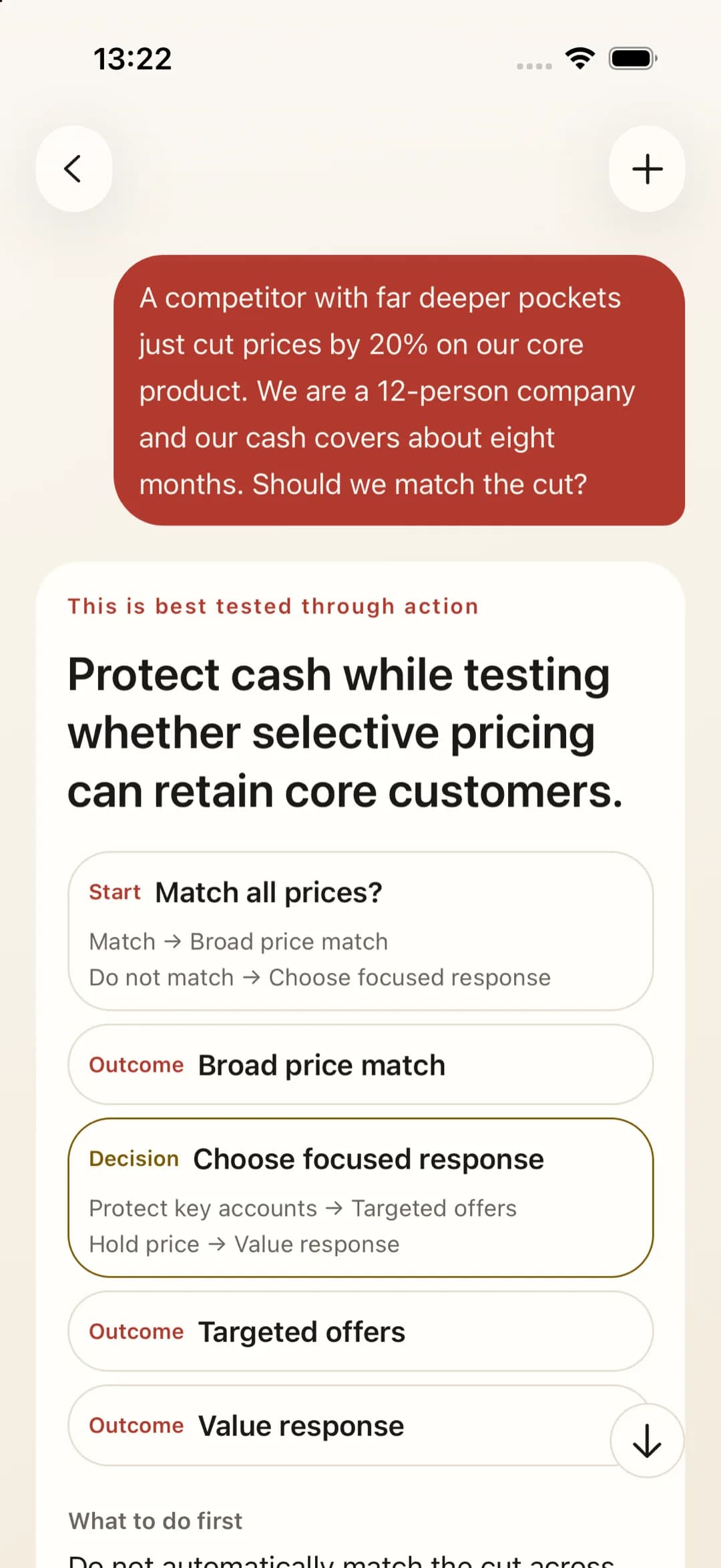
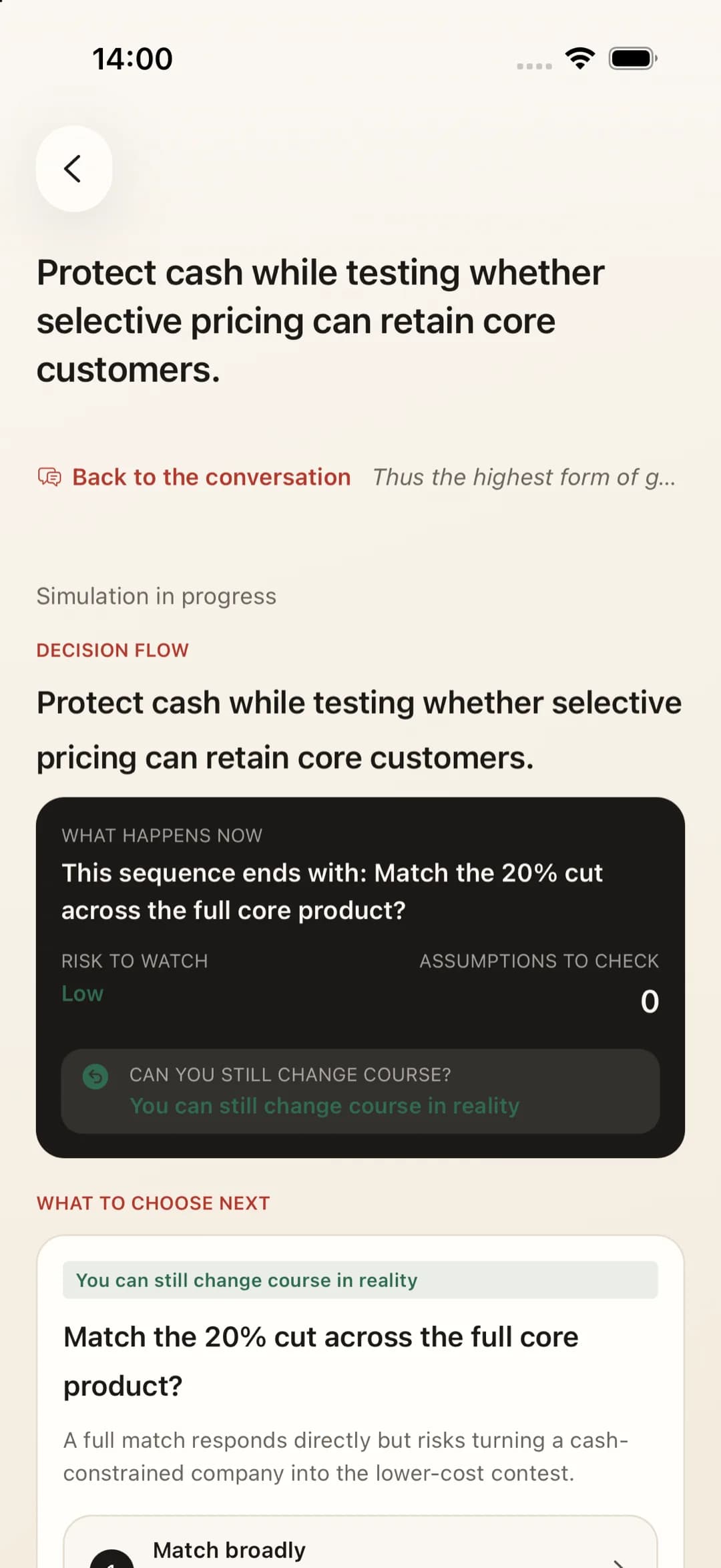
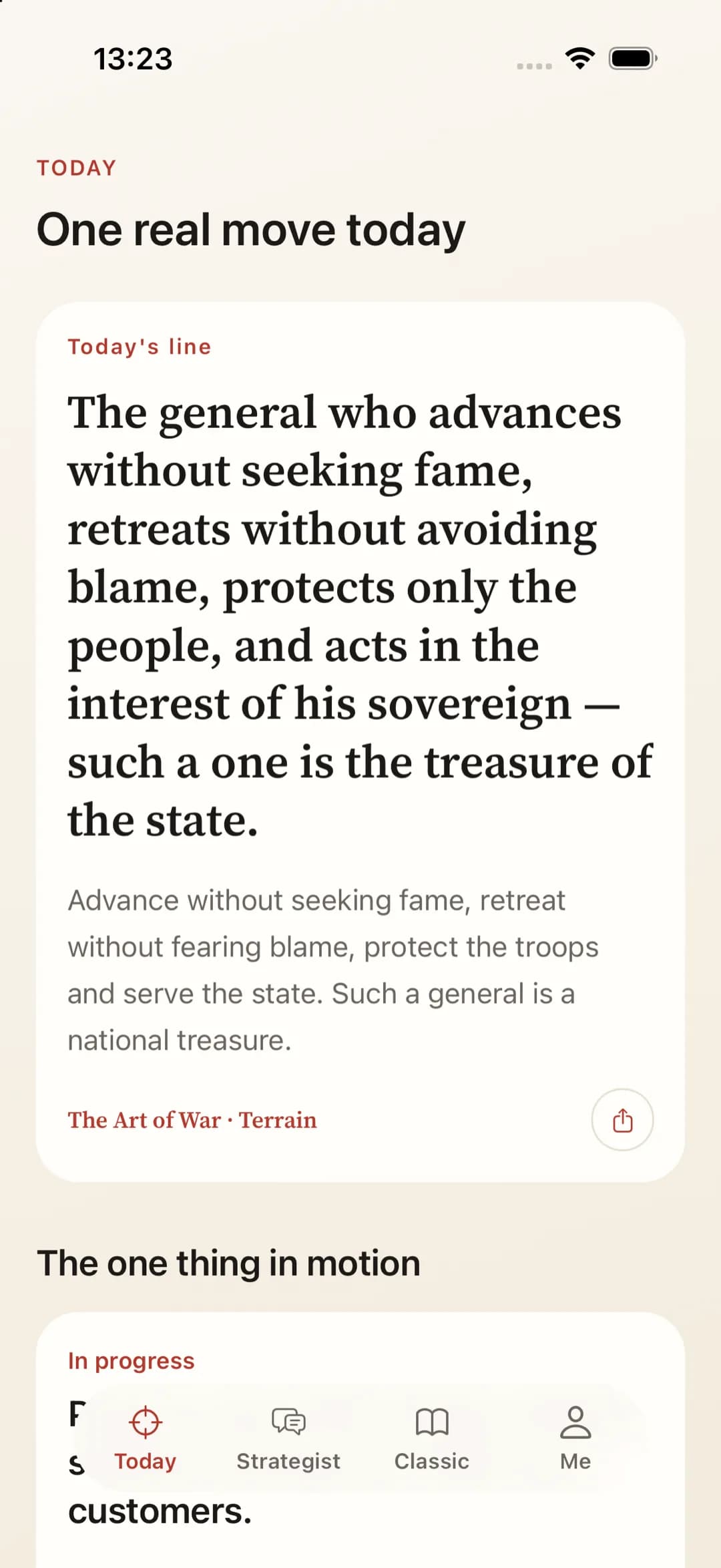
The strategist asks about your situation first, then gives a judgement and what to do firstLay both sides on the table and simulate whether the conclusion changesOne real move today, with a signal to watch
Tell the strategist who is at the table, how many rounds you have had, which term is stuck, and what you know about the other side.
The strategist first asks about their walk-away option and their real red lines, then lays both sides' terms out as a list of tradable items and finds what is cheap for you and valuable to them.
You leave with an action card: the first sentence for the next round, the one term to trade, and a stop signal that tells you when to walk.
This page covers the order of judgement. Your own situation, opponent, and resources are worked through with the strategist in the app.
We have been stuck for weeks. Should I concede first to show good faith?
An unconditional concession is not good faith; it is a signal that waiting pays. If you move, trade it for a condition, however small.
They say this is their final offer. Should I believe it?
Look at their walk-away option. If they have a ready alternative, it may be true. If they do not, a final offer is usually pressure. Do not challenge it head-on; ask whether the number changes if the conditions change.
When should I actually walk away?
When their terms are below your walk-away line and you have confirmed there is nothing else to trade. Leave the door open: state the conditions under which you would return.
Does bringing in a mediator help?
When neither side wants to move first and neither wants to collapse the deal, yes. A third party gives both sides a way to concede without losing face. They must be trusted by both.
This page covers the order of judgement and is not legal advice. Negotiations involving contracts, dispute resolution, or regulatory obligations require qualified legal and financial professionals.