When payment terms will not close, price the cost of the money sitting with the other side, then split the terms with instalments, discounts, or guarantees instead of fighting over days.
The short answer
A fight over payment terms is really a fight over who carries the cost of capital and the risk of default. Days are the surface. Convert the terms into money first: thirty extra days means this much interest and this much bad-debt exposure.
The order of judgement is: whether they want longer terms because cash is genuinely tight or because procurement policy says so; whether your cash can carry it; and whether a third party can carry the gap.
The right move is to split the terms: deposit plus balance, milestone payments, early-payment discount, factoring or supply-chain finance. They get the flexibility they want; you get the certainty you need.
Also searching for: payment terms negotiation · customer wants longer payment terms · net 60 vs net 90 negotiation · how to negotiate payment terms with a big customer
Where people usually go wrong
Arguing over days
Thirty versus sixty goes back and forth and nobody converts the terms into real cost.
Trading terms for the order
Accepting long terms to win the deal gives away margin in advance and adds default risk on top.
Ignoring payment discipline
The contract says sixty days; they actually pay in ninety. Negotiating contract days while ignoring their payment history.
Having no trigger clauses
Terms once granted become permanent, with no interest on late payment, no stop-supply threshold, no loss of discounts.
Three things to check before acting
Their real reason for longer terms
Are their own customers squeezing them, or is procurement applying one rule to everyone? The first can be solved with supply-chain finance; the second with an exception approval.
Your cash tolerance
For this order size, how much cash does each extra thirty days tie up, and does it affect your other business?
Their payment record
Have they paid on time before, or has there been slippage? With a poor record, even short terms need a guarantee.
What Sun Tzu would look at first
The Art of War, chapter 2, Waging War
In war, prize victory, not a long campaign.
Sun Tzu warns that a drawn-out campaign exhausts the state. Payment terms are the commercial version of a long campaign: every day the money sits with the other side, your capital erodes. Do not bet on outlasting them; change the structure so the money comes back sooner.
Three versions, three plays
They are a large customer and the terms are policy
Do not fight the days. Negotiate an early-payment discount or factoring. They keep their sixty-day policy; you get the cash back sooner through a discount or a third party.
Their cash is genuinely tight
Split into deposit plus balance or milestone payments. They get instalment flexibility; you get partial cash now, plus late-payment interest and a stop-supply clause.
A new customer with no payment record
Start with short terms and extend after the first payment lands. Trade credit history for terms, not terms for credit history.
How the app walks you through it
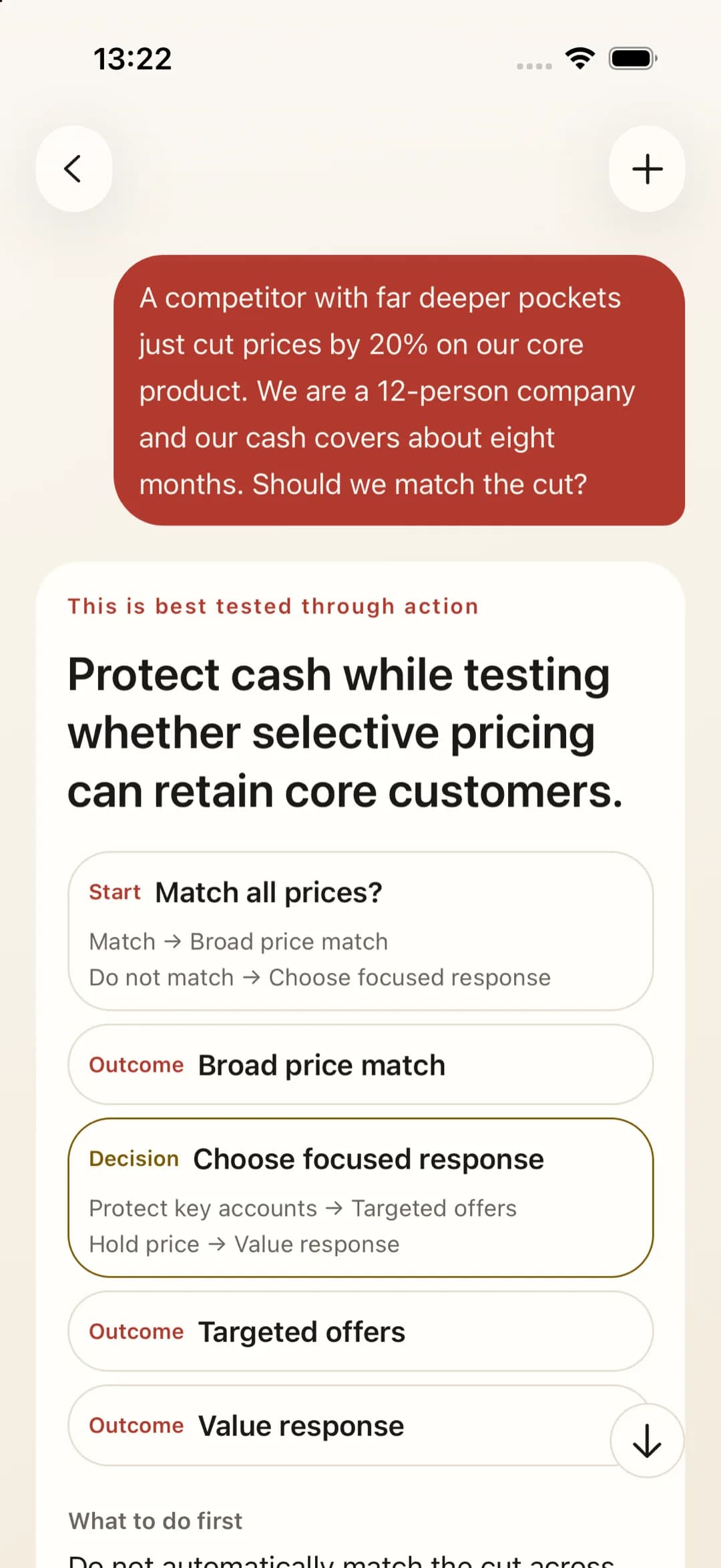
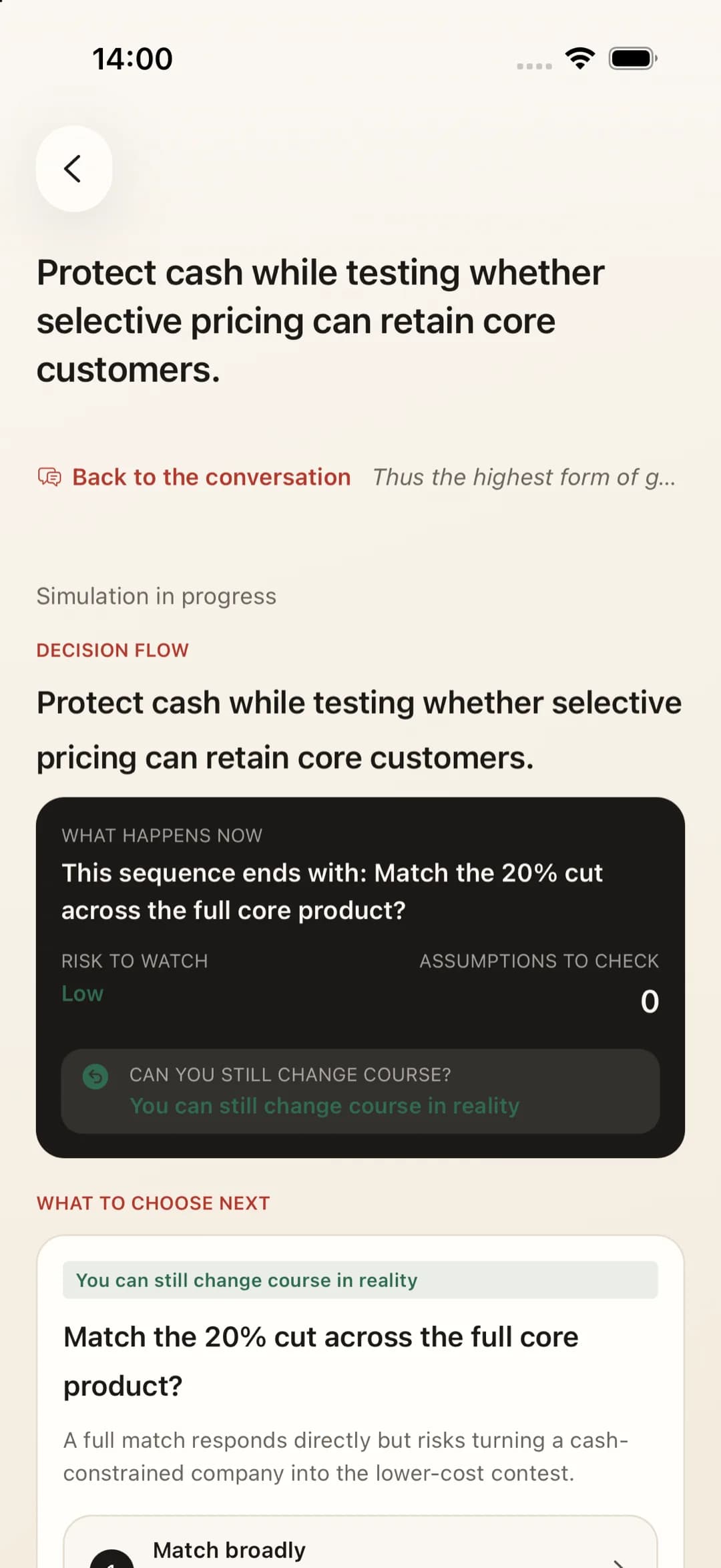
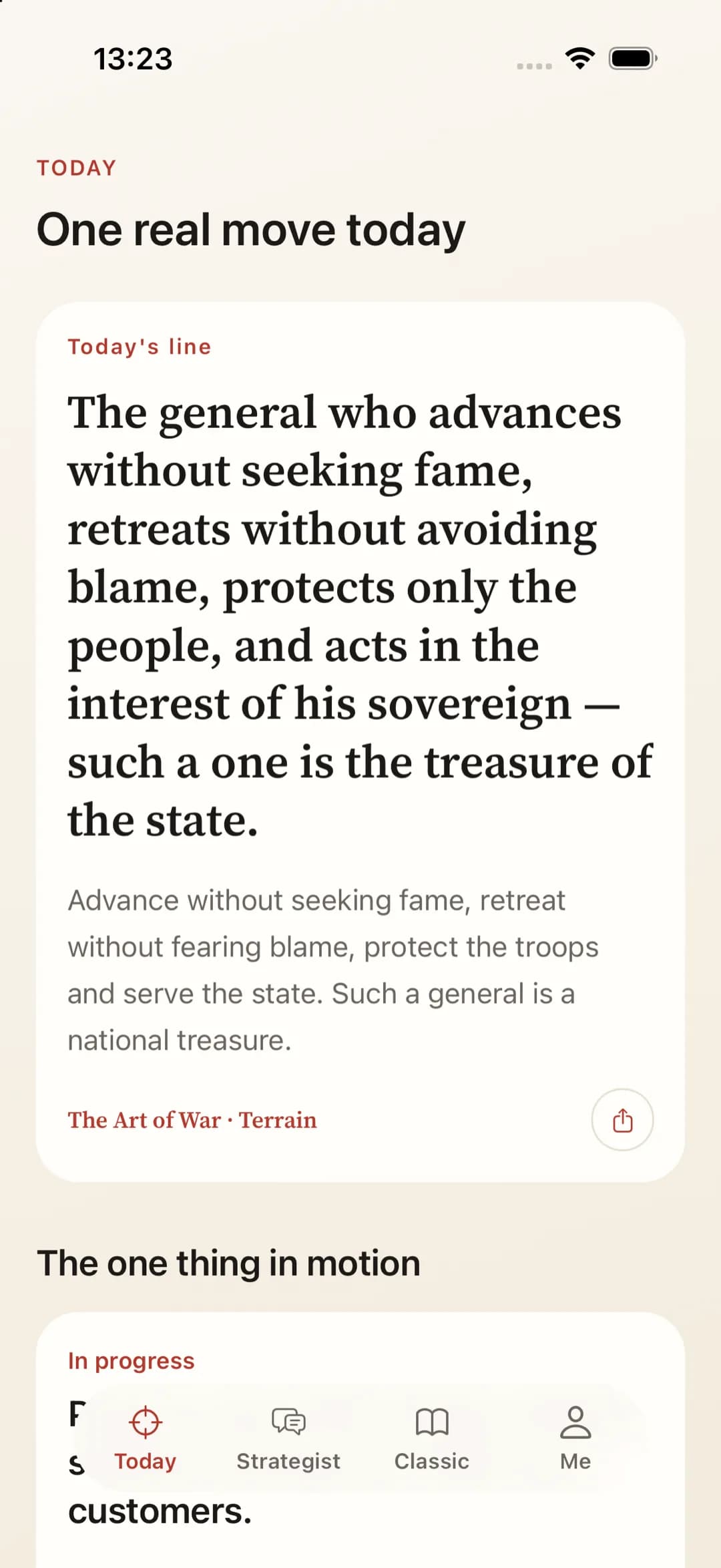
The strategist asks about your situation first, then gives a judgement and what to do firstLay both sides on the table and simulate whether the conclusion changesOne real move today, with a signal to watch
Tell the strategist the order size, the terms they want, your cash position, and their payment history.
The strategist first converts the terms into cost of capital and default risk, then lays out several structures that split the terms and marks the cash impact of each.
You leave with an action card: the payment structure to propose this round, the longest terms you can accept, and a stop signal that ends concessions.
This page covers the order of judgement. Your own situation, opponent, and resources are worked through with the strategist in the app.
The customer insists on ninety days or they switch suppliers. What do I do?
Confirm what switching would cost them, then compute what ninety days costs you. If you can carry it, recover the cash early with a discount or factoring. If you cannot, shrink the order rather than carry the full risk.
How large should an early-payment discount be?
Work it out from your cost of capital and default risk, not by feel. Below your financing rate, they have no reason to pay early; above your financing rate plus default risk, you are losing money.
Is factoring or supply-chain finance suitable for a small company?
Yes, if you have large customers. The financier looks at your customer's credit, not yours. Fees are usually cheaper than borrowing yourself, but read the recourse terms.
Which protective clauses belong in the contract?
At minimum: interest on late payment, the number of overdue days after which supply stops, and automatic loss of discounts on late payment. You will not use them in normal times; when things go wrong they are your leverage.
This page covers the order of judgement and is not financial or legal advice. Factoring, supply-chain finance, and default clauses require qualified financial and legal professionals.