When your largest customer says they are leaving, find the real reason and their timetable, size the cash and capacity gap, then choose retention, a managed exit, or both.
The short answer
When your biggest customer says they are leaving, do not discuss retention terms yet. Learn two things first: why they are leaving and when. Those two facts decide how much time and how many options you have.
The order of judgement is: whether the reason is something you can change, how large the cash and capacity gap will be without them, and whether their exit timetable is negotiable.
In most cases what you can actually win is not their staying but a longer transition and one candid review. Using that time to close the revenue gap pays better than repeated retention attempts.
Also searching for: biggest customer leaving what to do · key account wants to terminate contract · losing largest client how to recover · customer concentration risk
Where people usually go wrong
Cutting price to keep them
Price is rarely the only reason. A customer kept by a discount negotiates the same way next time.
Confrontation
Pressuring them with contract clauses or old favours may keep the account and will not keep the quality of the relationship.
Not sizing the gap
Being busy with retention without computing next quarter's cash and idle capacity, then discovering the real size of the problem after they have gone.
Leaving it to sales
The departure of your largest customer is a company-level matter. The decision maker should hear the reason directly, not through a sales relay.
Three things to check before acting
The real reason
A supplier switch, an internal strategy change, your own service failures, or trouble in their business. Listen at three levels, procurement, operations, and their leadership; the stories often differ.
Dependency
Their share of your revenue and capacity, equipment and people dedicated to them, and how long it takes to redeploy those resources.
The timetable
Remaining contract term, termination clauses, and how soon their new supplier can take over. This decides whether there is room to negotiate a transition.
What Sun Tzu would look at first
The Art of War, chapter 6, Weak Points and Strong
The skilled commander imposes his will on the enemy and does not let the enemy impose his will on him.
When one customer holds most of your revenue, the initiative is already theirs: they decide when the relationship ends and on what terms. Sun Tzu wants the initiative back. This time, win time and information; afterwards, reshape the customer base so that no single account decides whether you survive.
Three versions, three plays
The reason is your service or quality
Acknowledge it directly, offer a specific corrective plan with dates, and ask for a quarter-by-quarter trial rather than a long commitment. Start closing the revenue gap immediately; do not stake the plan on retention.
The reason is their strategy, insourcing, or a new source
Retention rarely works. Negotiate the longest possible transition, a defined exit order volume, and written confirmation, use the transition revenue to develop new accounts, and keep the relationship in case their plan changes.
The reason is trouble in their own business
Check receivables first, tighten payment terms and credit, and prefer less business over a large exposure if they fail. Shrink the relationship gracefully rather than propping it up.
How the app walks you through it
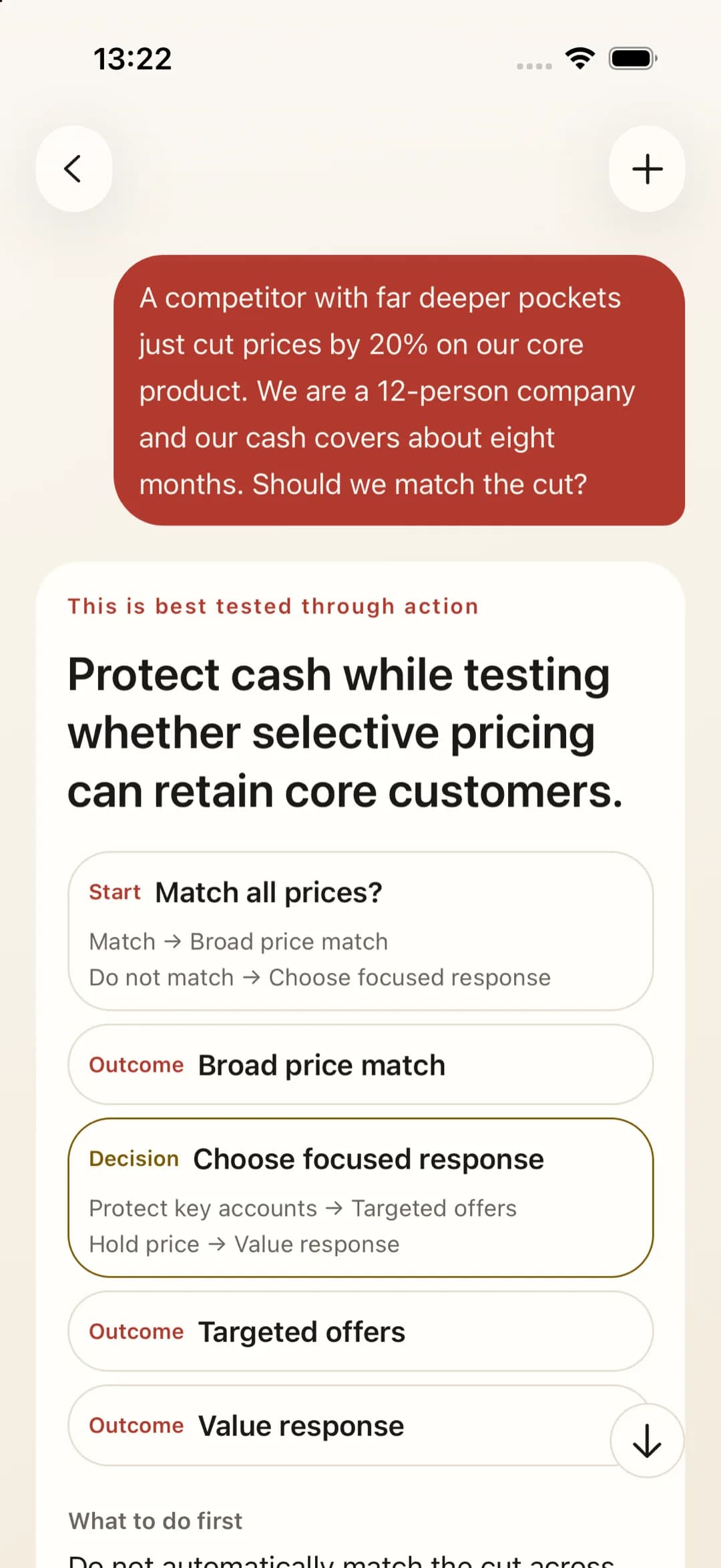
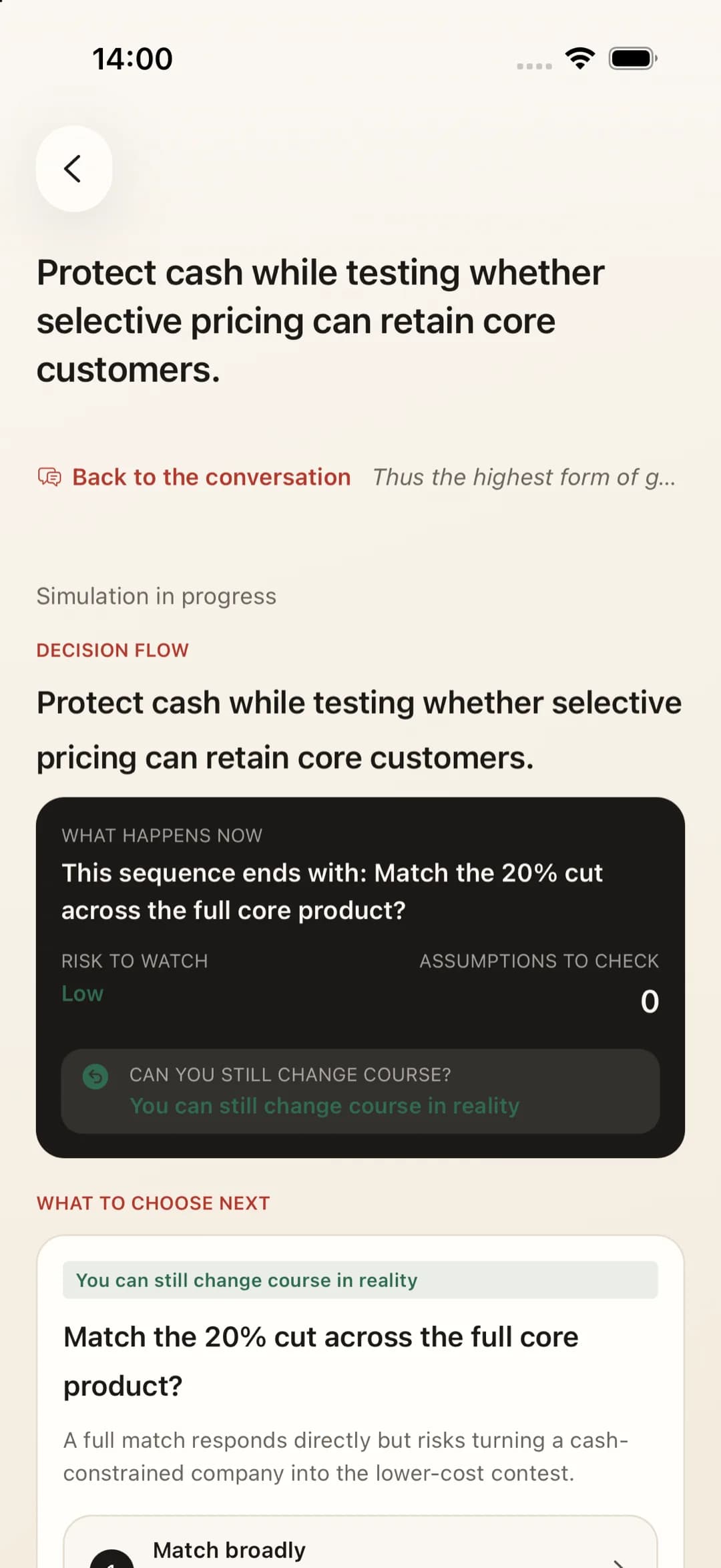
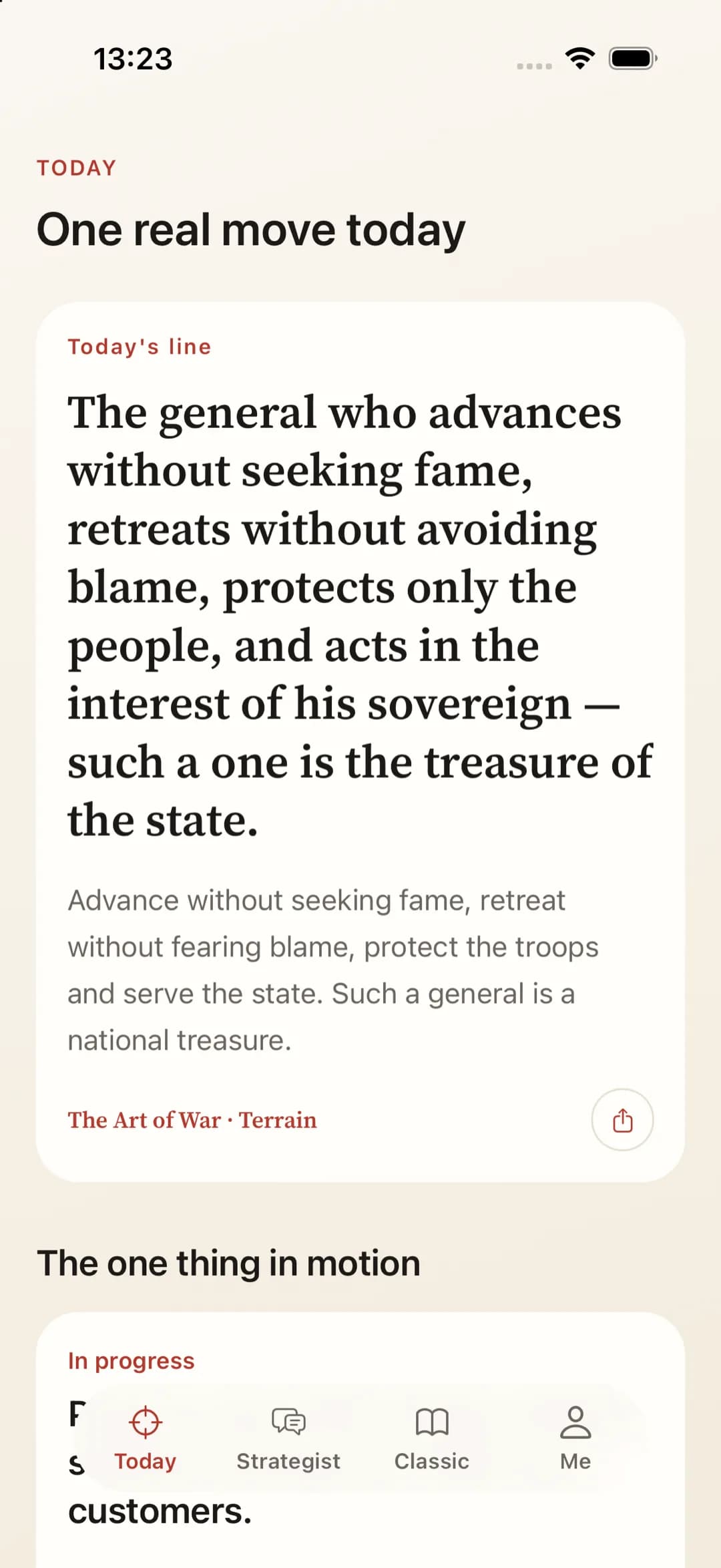
The strategist asks about your situation first, then gives a judgement and what to do firstLay both sides on the table and simulate whether the conclusion changesOne real move today, with a signal to watch
Tell the strategist the customer's share, the reason they gave, the remaining contract term, and your cash position.
The strategist separates three questions, the real reason, the size of the gap, and the transition, and judges whether what is worth fighting for is retention or time.
You leave with an action card: the one conversation to hold or the one receivable to collect this week, and the signal that ends retention efforts and shifts everything to closing the gap.
This page covers the order of judgement. Your own situation, opponent, and resources are worked through with the strategist in the app.
Should I try to retain them or find new customers first?
Both, but size the gap first. Knowing next quarter's shortfall in cash and capacity tells you how much retention is worth and how urgent new business is.
Can I hold them with the contract?
A contract can hold orders, not the relationship. A customer kept by clauses serves out the term with minimum cooperation. The right use of the clauses is to negotiate a transition both sides can accept.
How much customer concentration is dangerous?
There is no single threshold, but once one account exceeds about 30% of revenue, any decision they make becomes your business risk. The time to diversify is before they leave, not after.
Should I stay in touch after they leave?
Yes. Many terminations come from changes inside the customer; a year or two later the decision maker changes or the new supplier disappoints, and returns are common. Keeping polite contact costs little.
This page covers the order of judgement and is not legal or financial advice. Termination clauses, receivables recovery, and credit adjustments need qualified professionals.