A serious product quality incident: what to do first
When a serious product defect surfaces, judge safety first, then scope and whether the batch can be isolated, before choosing a stop-sale, recall, or targeted fix.
The short answer
The first judgement in a serious quality incident is a single one: can this hurt someone? If it can, stop selling and notify first, and discuss cost and liability later.
The order of judgement is: which batch and which step the problem came from, which customers already hold affected units, and whether you can isolate it before it spreads further.
In most cases, notifying and remedying before customers discover the problem costs less in the end and loses less trust than waiting for complaints to pile up.
Also searching for: product quality incident what to do · serious product defect response · product recall decision · batch quality problem customers
Where people usually go wrong
Costing before notifying
For a safety issue, every day of delay is later counted as knowing and not telling.
Defining the problem too narrowly
Handling only the units complained about, without checking the same batch or process, so the second wave of complaints is bigger.
Hunting for the culprit first
Spending the first days on who is at fault instead of on scope and containment.
Apologising without a plan
Customers need to know how to identify affected units, how to return or exchange them, and when they get good product. A vague apology angers them.
Three things to check before acting
Safety
What the defect does in the worst case, and whether any harm or near miss has already happened. This decides the speed of everything that follows.
Scope
Affected batches, quantities, and where they went. Whether batch or serial numbers can separate affected units from good ones.
Root cause clues
Design, incoming material, process, or transport. You do not need the root cause on day one, but you need to know whether it is still producing more affected units.
What Sun Tzu would look at first
The Art of War, chapter 4, Tactical Dispositions
First make yourself invincible, then wait for the enemy's vulnerability.
Invincibility in a quality incident means stopping the loss that is still growing: halt the affected line, isolate the batch, notify customers. Only once that is done is there room for root cause, recovery, and reputation. Reverse the order and every step hands an opening to competitors and public opinion.
Three versions, three plays
A safety-related defect
Stop sales and shipments immediately, start the recall procedure required by the regulator, and tell customers publicly how to identify and handle affected units. Freeze the batch in stock and appoint a single spokesperson.
Functional, non-safety, with a clear scope
No blanket recall. Notify affected customers by batch number, offer free replacement or repair, and publish a repair timeline. Make the process simpler than customers expect.
Sporadic, root cause unknown
Recover the complained units for analysis and sample stock and units on sale. Until the cause is known, tell customers the known facts and what you are doing, and do not promise a cause.
How the app walks you through it
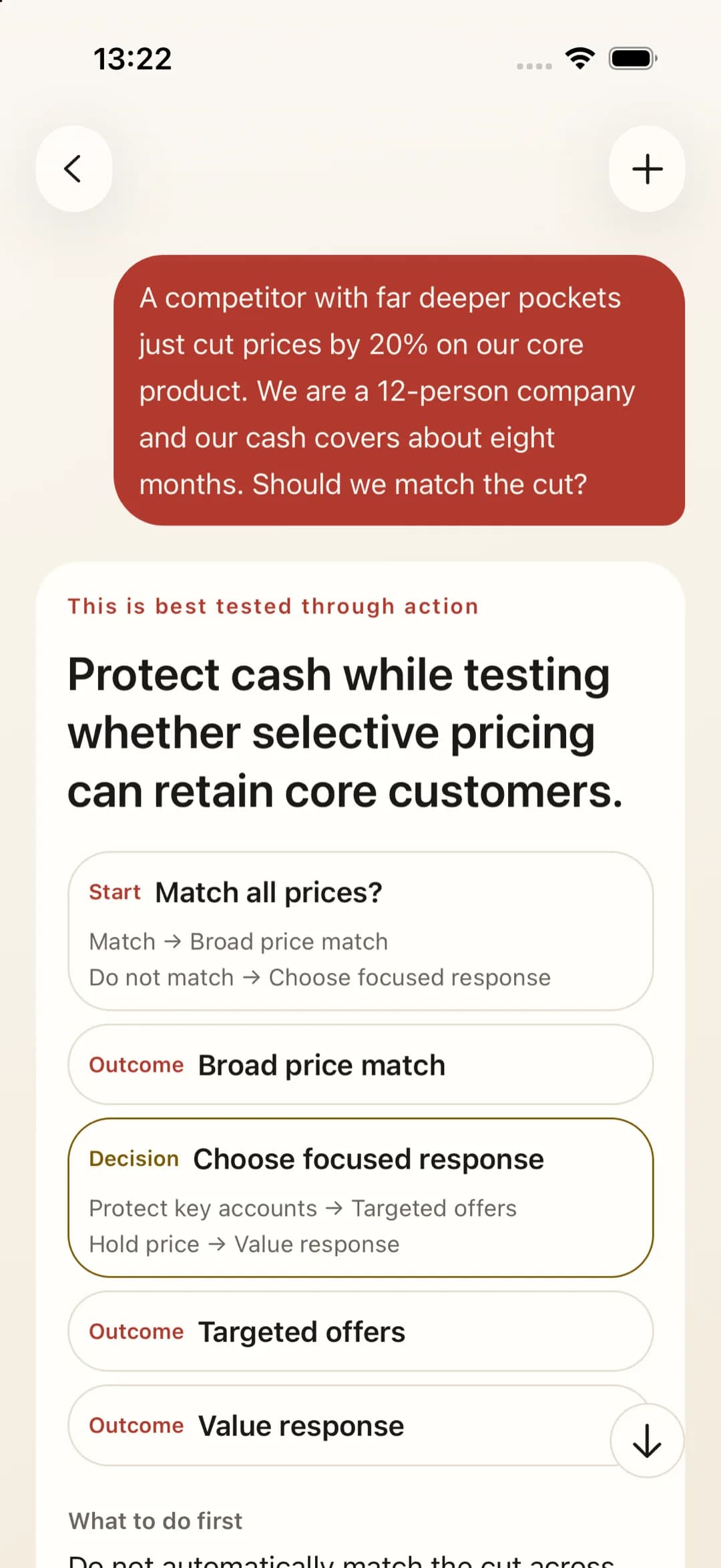
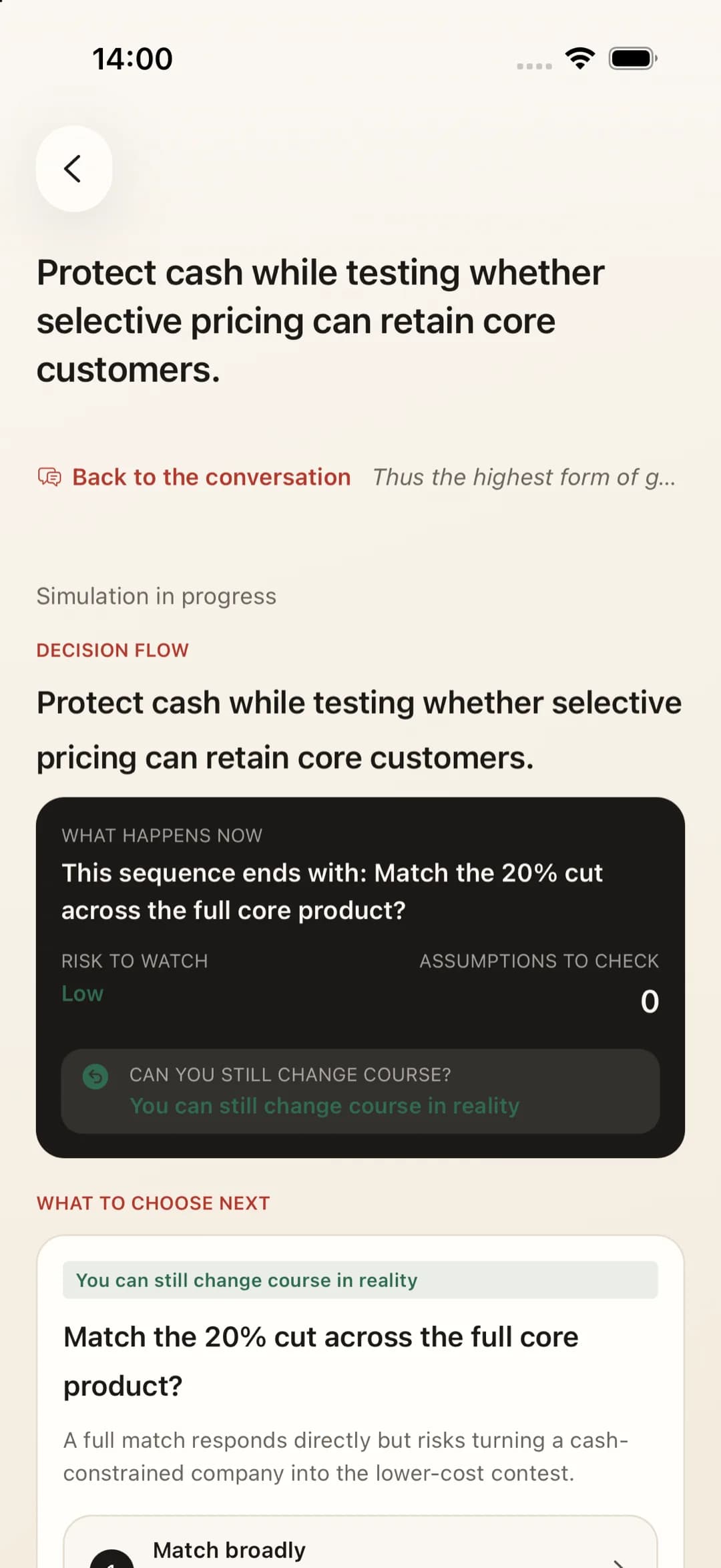
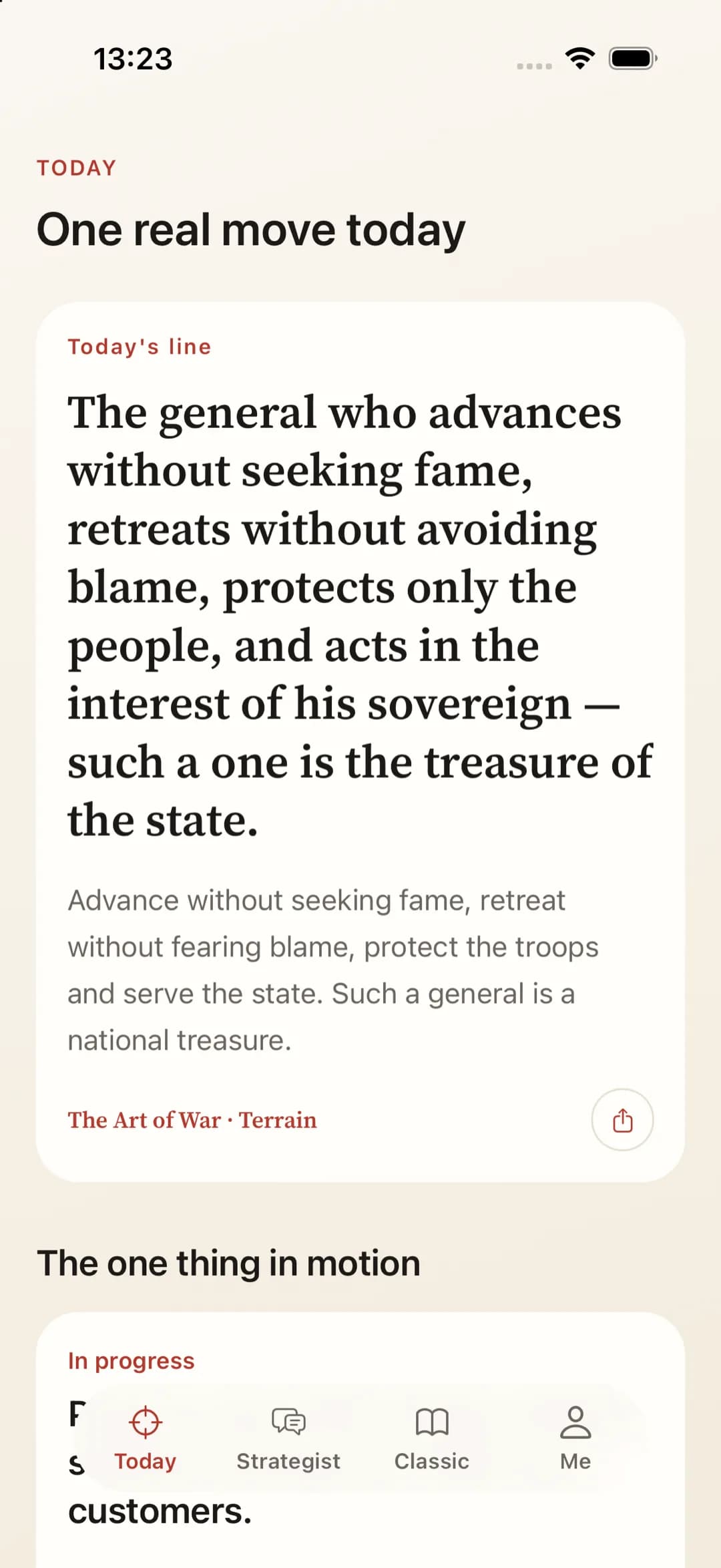
The strategist asks about your situation first, then gives a judgement and what to do firstLay both sides on the table and simulate whether the conclusion changesOne real move today, with a signal to watch
Tell the strategist what the defect looks like, which batches are involved, which customers have them, and whether there is a safety risk. Incomplete data is fine.
The strategist splits the incident into four lines, containment, isolation, communication, and root cause, and sets each line's urgency by safety.
You leave with an action card: what must be done today, and the signal that escalates a targeted fix into a full recall.
This page covers the order of judgement. Your own situation, opponent, and resources are worked through with the strategist in the app.
Only a few customers have complained. Do I notify everyone?
It depends on isolation. If batch numbers define the affected scope, notify that batch's customers. If the scope cannot be pinned down, notify wider. Under-notifying costs far more than over-notifying.
When is a recall mandatory?
When personal safety is involved, a mandatory standard is breached, or a regulator requires it, and then the local recall procedure applies. Functional defects can be fixed in a targeted way, with a written record.
Should I publicly admit it was our fault?
Acknowledge confirmed facts; say you are investigating where the cause is unknown; do not guess. Acknowledging facts is not the same as accepting full legal liability, and the two are handled separately.
How do I win customers back afterwards?
Finish the remedy first. Customers judge the speed and transparency of your handling, and many trust a supplier more after a well-handled incident.
This page covers the order of judgement and is not legal, quality management, or product safety advice. Safety-related defects must follow the recall rules of the local regulator; contact the relevant authorities immediately.