A customer complaint is going viral. What is the first move?
When a complaint spreads online, stop the spread and unify the facts and the voice first, then choose how to respond. Three conclusions, common mistakes, three checks, three plays.
The short answer
In the first hours of a viral complaint, the priority is not proving you were right. It is stopping the loss from growing: put the facts, the spokesperson, and the decision tempo in one person's hands.
The order of judgement is: which path the story is spreading through, whether it is true, and which group's emotion it has touched.
Most escalation comes from how the complaint was handled, not the original problem. One sincere, specific response with a timeline usually stops the spread better than any defense.
Also searching for: customer complaint going viral · negative publicity response · bad review escalating what to do · online complaint crisis
Where people usually go wrong
Rebutting too soon
Defending publicly before the facts are checked doubles the damage if you turn out to be wrong.
Many voices, many stories
Support, the founder, and sales each say something different, and readers assemble the contradictions into the next headline.
Deleting and suppressing
On most platforms, deletion itself becomes material for the second wave.
Answering only the complainant
Onlookers decide where this goes. Address them.
Three things to check before acting
The spread path
Is it being shared on one platform, or has it been picked up by media or industry groups? The path decides where you respond and how fast.
The facts
Is the core of the complaint true, and is there an internal handling history you do not know? Until checked, say only that you are verifying. Give no conclusion.
The emotional trigger
Are people angry about the product, or about feeling dismissed? The second is more common and easier to defuse with attitude.
What Sun Tzu would look at first
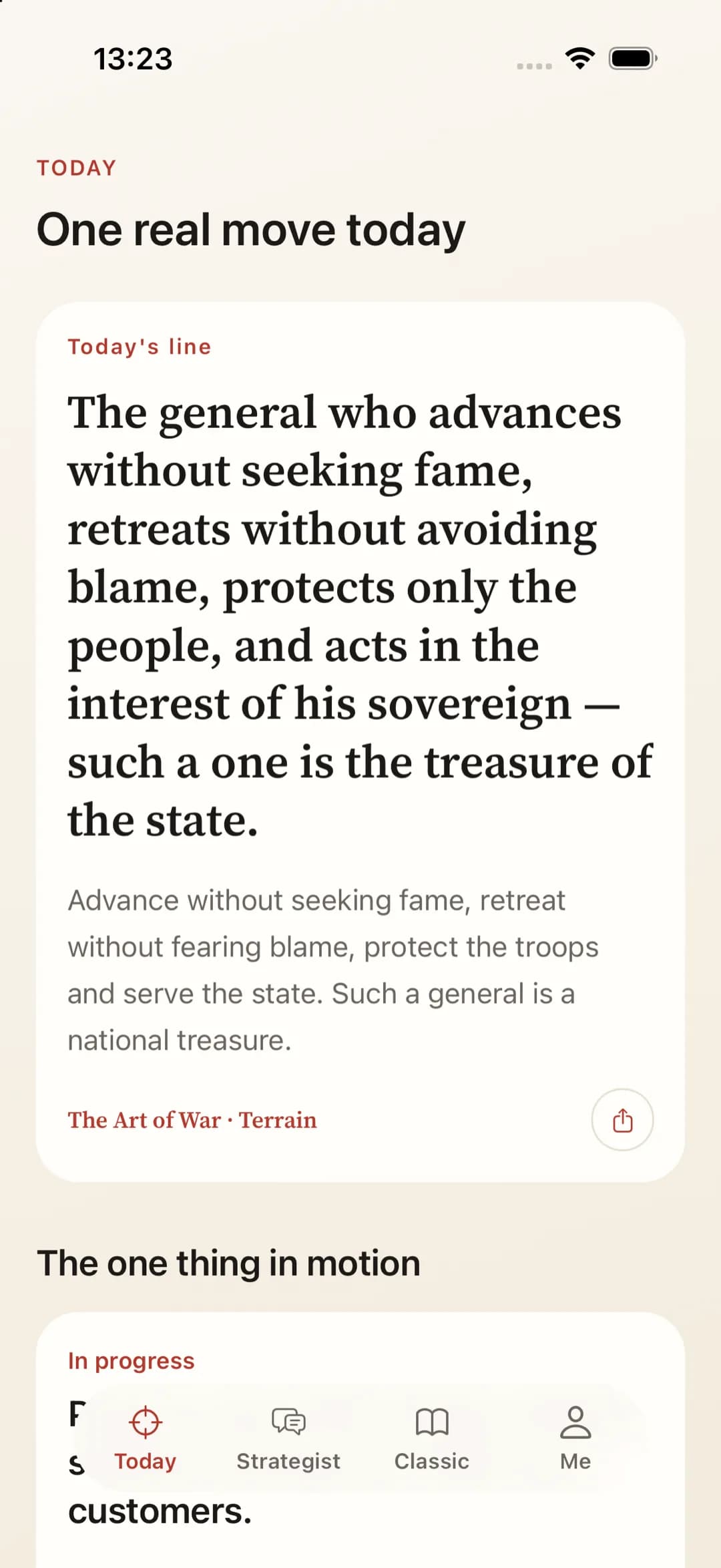
The Art of War, chapter 11, The Nine Situations
Seize what the enemy holds dear.
In a crisis, what is taken first is trust. Sun Tzu's approach is to hold what cannot be lost, one set of facts and one voice, before talking about counter-attack or recovery. Spending effort on proving you were right is often the fastest way to lose trust.
Three versions, three plays
The complaint is true
Acknowledge it publicly as soon as it is verified, state the remedy and a timeline, and contact the complainant directly. The more specific the acknowledgement, the sooner onlookers stop.
Partly true, with misunderstanding
Acknowledge the true part first, then clarify the rest with facts, not emotion. Do not erase the acknowledgement with a but.
Untrue and possibly malicious
Do not argue in public. Publish a short factual statement with evidence and keep legal options open. Arguing gives the other side free reach.
How the app walks you through it
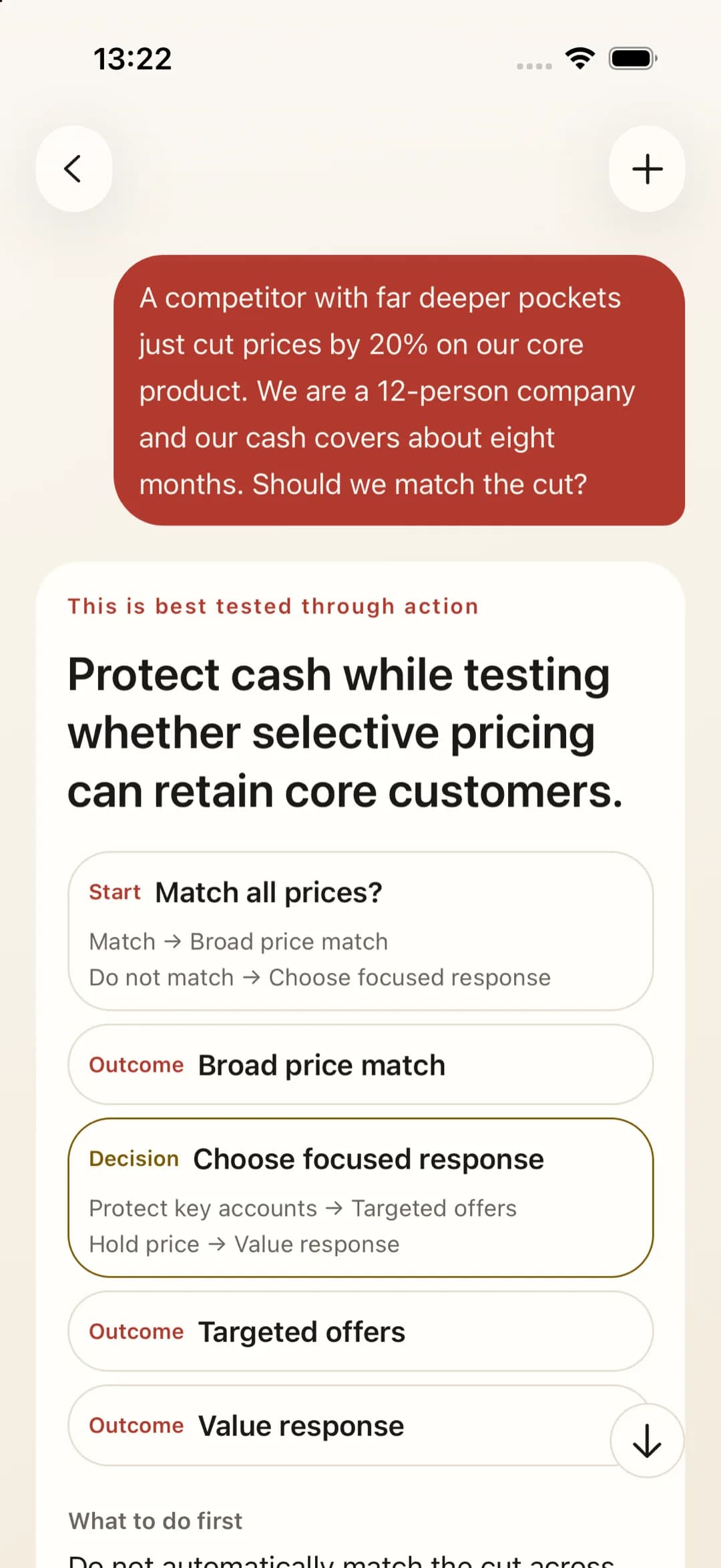
The strategist asks about your situation first, then gives a judgement and what to do firstLay both sides on the table and simulate whether the conclusion changesOne real move today, with a signal to watch
Tell the strategist what happened, where it has spread, and what you know so far, even if incomplete.
The strategist separates containment from counter-attack, lists the spread paths to close now, and the things not to say before facts are verified.
You leave with today's action list: who speaks, what they say, when, and when to escalate.
This page covers the order of judgement. Your own situation, opponent, and resources are worked through with the strategist in the app.
Ideally within hours, but the first response can be only that you have seen it, are verifying, and will give an explanation by a stated time. Speed matters, but do not trade accuracy for it.
Should the founder respond or the support team?
It depends on scale. A local complaint can be handled by the responsible manager. Once media or the industry is sharing it widely, a more senior voice is needed, and that itself signals seriousness.
Should I contact the complainant privately?
Yes, at the same time. The public response is for onlookers; the private conversation is for the complainant. Private contact alone reads as hushing it up.
What if a competitor is pushing the story?
Even then, the audience is still the onlookers. State the facts first, then decide whether to gather evidence and pursue it. Publicly blaming a competitor usually looks like changing the subject.
This page covers the order of judgement and is not legal or public relations advice. For personal safety, illegal acts, or serious accidents, contact local emergency or professional authorities immediately.