When a supplier fails without warning, count days of inventory and which customers are hit first, then decide whether to secure stock, switch sources, or reschedule deliveries.
The short answer
On the first day of a supply failure, the priority is not holding the supplier accountable. It is computing one number: with current stock and goods in transit, how many days each product line can still ship.
The order of judgement is: which customers and orders are hit first, how long an alternative source takes to deliver, and who carries the gap in between.
In most cases the right move is three things at once: protect deliveries to the most profitable and closest customers, start an alternative source, and tell affected customers the new delivery dates before they discover the delay.
Also searching for: supplier suddenly stopped supplying · supply chain disruption what to do · supplier failure contingency plan · sole supplier stopped delivery
Where people usually go wrong
Arguing about blame first
Spending the first two days fighting over the contract instead of counting stock and finding alternatives. Liability can be pursued later; a missed delivery window cannot.
Allocating stock first come, first served
It looks fair and leaves your most important customer and your least important one short at the same time.
Hiding it from customers
When customers discover the delay themselves, you lose trust, not just one order.
Grabbing any source
Accepting an unverified alternative to get goods now, and following a supply incident with a quality incident.
Three things to check before acting
Stock and transit
Per product line, count stock on hand, goods in transit, and semi-finished goods you can redirect, and turn that into days of delivery.
Customer exposure
Which contracts carry penalties for non-delivery, which customers have an alternative supplier ready, and which customers cannot replace you.
The real lead time of an alternative
Quotation, sampling, qualification, volume delivery: how many days each step takes. Do not treat a supplier's verbal promise as a delivery date.
What Sun Tzu would look at first
The Art of War, chapter 7, Manoeuvring
An army without its supply train is lost; without provisions it is lost.
Sun Tzu ranks supply alongside troops: without it, the strongest army never reaches the field. A supplier failure is a cut supply line. The first response is not to keep attacking but to reconnect the line, or pull the front back to where supply can reach.
Three versions, three plays
The failure is temporary: an equipment breakdown or a short cash squeeze
Negotiate a specific recovery date and priority allocation in writing, and bridge the gap with stock and rescheduled deliveries. Do not rush to replace them, but insist on written confirmation.
The failure is structural: insolvency, acquisition, or exit from the category
Start an alternative source immediately and compress qualification: small verified batches first, then volume. Speak candidly with your most important customers and ask them to accept a one-time delivery adjustment.
The failure is deliberate: bought out by a competitor or a price ultimatum
This is a negotiation, not a supply failure. Compute your switching time and their loss first, then decide whether to accept short-term terms to buy time or switch and let them lose a steady customer.
How the app walks you through it
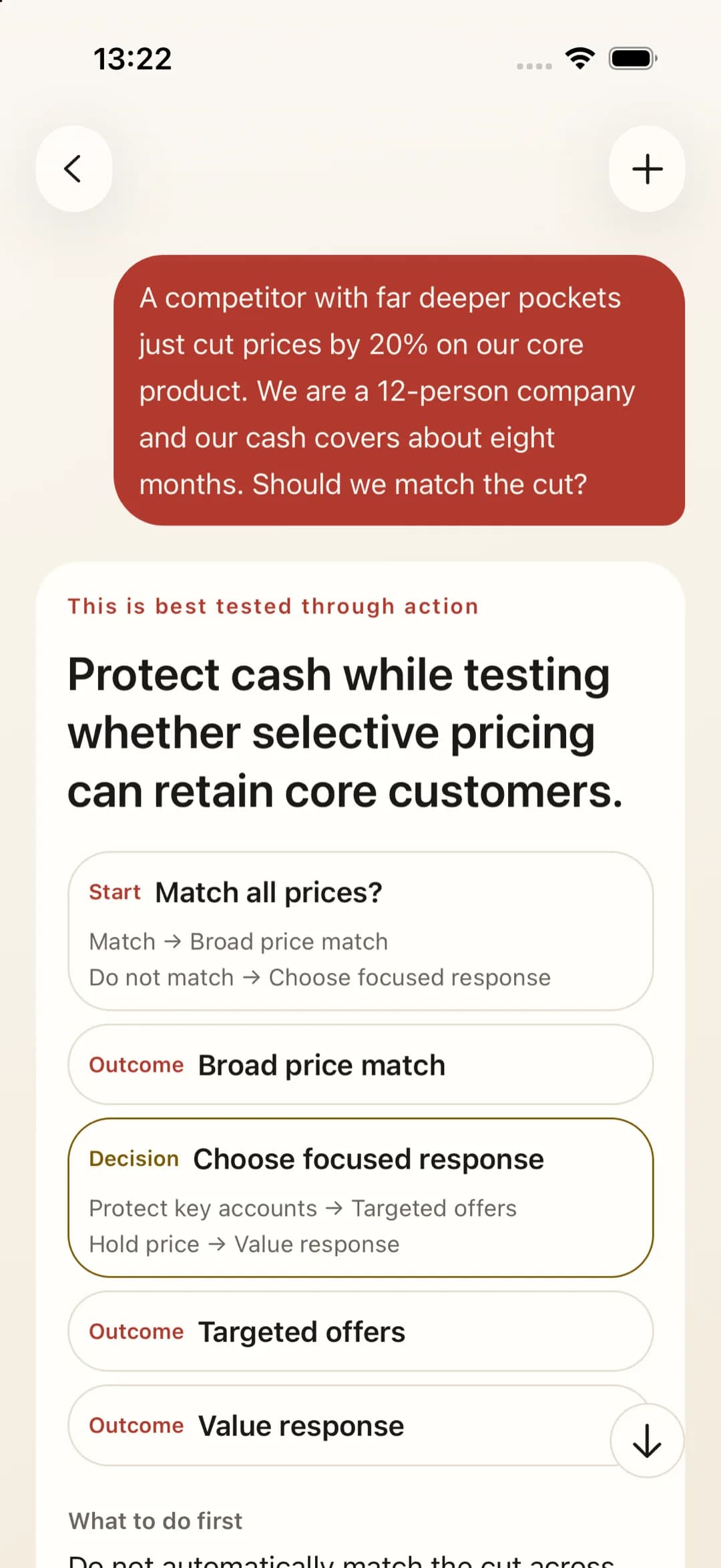
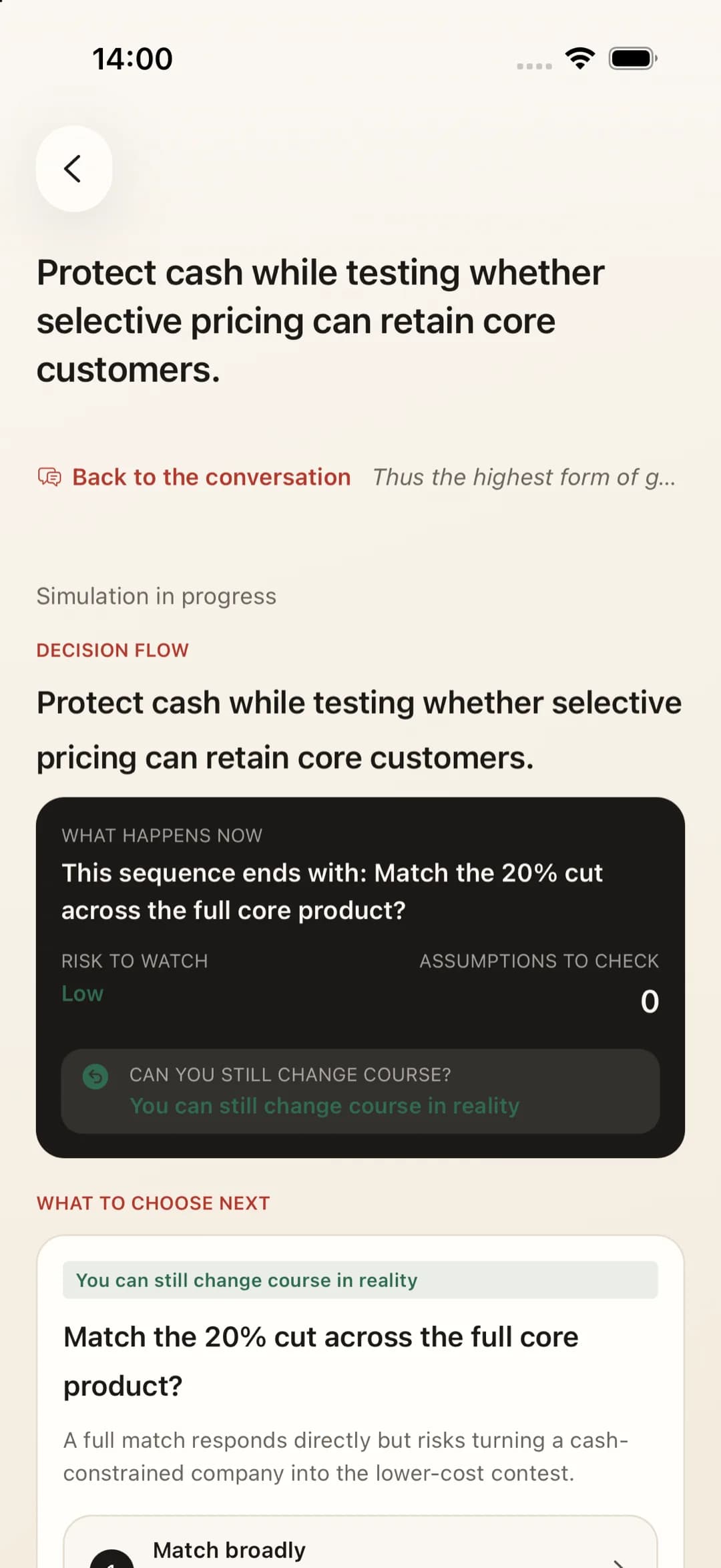
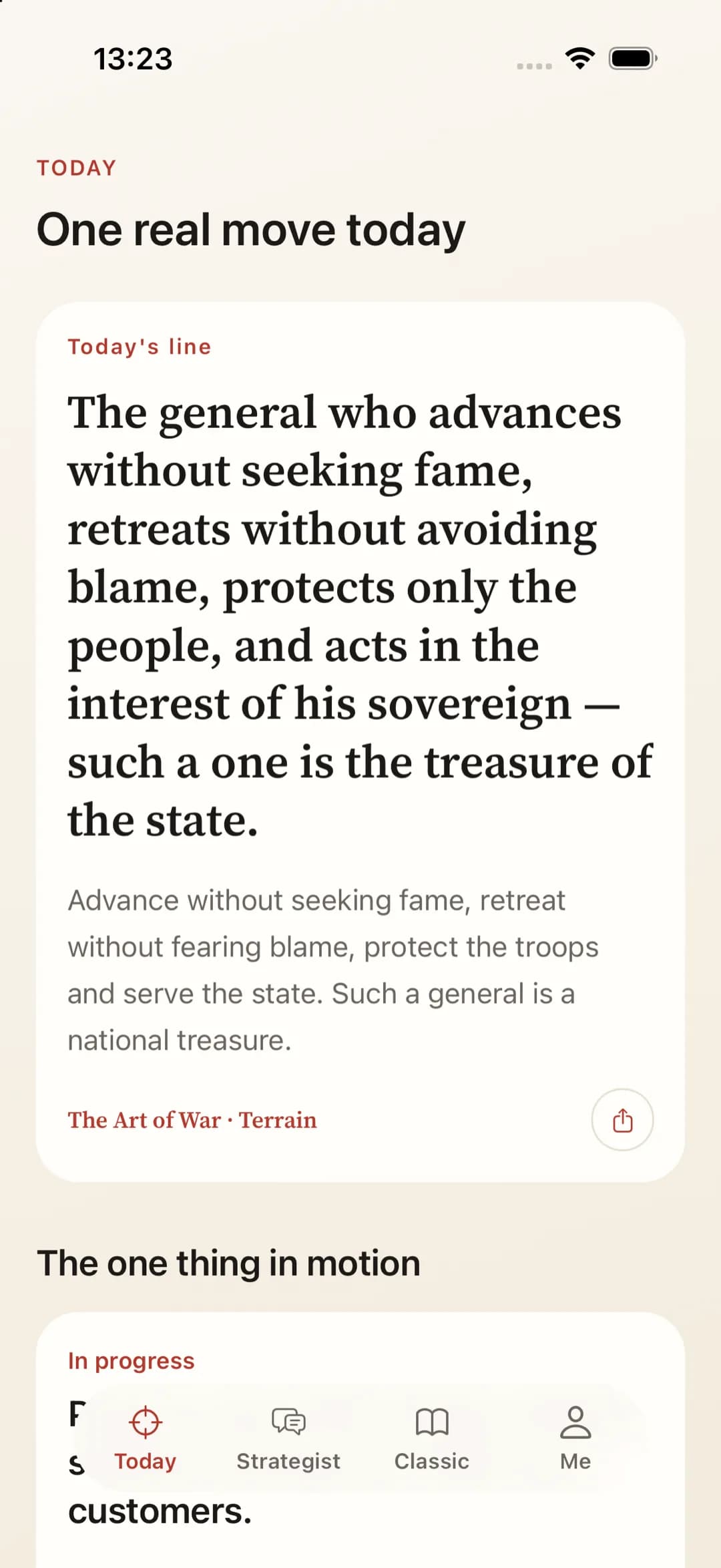
The strategist asks about your situation first, then gives a judgement and what to do firstLay both sides on the table and simulate whether the conclusion changesOne real move today, with a signal to watch
Give the strategist your days of stock, the affected customers, and what you know about the supplier. Rough numbers are fine.
The strategist separates three lines of work, protecting deliveries, sourcing alternatives, and talking to customers, and lists this week's actions and owners for each.
You leave with an action card: the one thing to do today, and the signal that escalates you to switching sources.
This page covers the order of judgement. Your own situation, opponent, and resources are worked through with the strategist in the app.
Should I find an alternative first or talk to customers first?
Do both, but count days of stock before either. Knowing how long you can last lets you give customers a concrete new date instead of a shrug.
Should I replace the supplier straight away?
It depends on whether the failure is temporary or structural. For a temporary problem, switching often costs more than waiting; for a structural one, every week of delay adds loss. The test is whether they can give a written, verifiable recovery date.
How do I avoid single-supplier risk in future?
Keep at least one qualified second source for critical materials, even if it only gets a small share in normal times. Its value is that qualification is already done, so volume can be moved when needed.
What if a customer claims damages for the missed delivery?
Check the force majeure and delivery clauses first, then talk remedy before talking liability. Most customers care more about when they get the goods than about compensation.
This page covers the order of judgement and is not legal or supply-chain advice. Contract breaches, claims, and force majeure clauses need qualified professionals. Alternative sources for food, pharmaceutical, or safety-related materials must meet the relevant regulatory requirements.