When someone takes credit for your work, separate one-off from pattern and peer from manager, then decide whether to add a record, have a direct conversation, or change how you work.
The short answer
When someone takes credit for your work, the first reaction should not be arguing on the spot. Public fights over credit are rarely won; most of the time onlookers remember that you were petty, not that the work was yours.
The order of judgement is: whether this is one-off or repeated, whether the person is a peer, a manager, or from another department, and how much the people who decide your review and promotion already know.
In most cases the right move is to add records and visibility so contribution is seen during the work rather than argued after it. Only a repeated pattern needs a direct conversation, and that conversation is with the person, not the audience.
Also searching for: coworker took credit for my work · boss takes credit for my work · someone stole credit for my idea at work · how to handle credit stealing at work
Where people usually go wrong
Arguing on the spot
Interrupting in a meeting to say that was mine. Even if you are right, the room remembers the conflict, and the credit-taker gets a reason to hit back.
Complaining to everyone privately
Venting to colleagues soon becomes you talking behind someone's back. The credit-taker loses nothing; you gain a reputation for gossip.
Doing nothing and waiting for next time
One incident may be a misunderstanding. Two without a response tells the person and everyone around that this can continue.
Forgetting visibility during the work
Credit can be taken because nobody knew who was doing the work while it was being done. Arguing afterwards starts from a losing position.
Three things to check before acting
One-off or repeated
Look back over six months. Is this the first time, or does the person do it to everyone? The first may be a communication habit; the second is a behaviour pattern.
Who took the credit
A peer can be spoken to directly. A manager depends on whether they also fight for your resources. Someone from another department depends on whether your own boss knows the truth. Three people, three plays.
What your reviewers already know
If your direct manager knows who did the work, the real loss is small. If they too heard only the other version, that is the problem to fix.
What Sun Tzu would look at first
The Art of War, chapter 4, Tactical Dispositions
First make yourself invincible, then wait for the enemy's vulnerability.
Sun Tzu says to secure your own position first and only then wait for the opening. Against credit-taking, the invincible position is the record and visibility built during the work: weekly notes, reviews, names on emails. With those, credit cannot be taken. Without them, arguing afterwards is fighting on the other side's ground.
Three versions, three plays
A peer did it for the first time
Say privately and calmly: the data section in yesterday's proposal was mine, please mention it next time you present. Most people comply because they now know you noticed.
Your manager repeatedly presents your results as theirs
First judge whether they also fight for your resources and promotion. If yes, that is an internal division of labour you can accept for a while. If no, put the results into formal records such as project documents and review minutes, and let the next level up see the process when appropriate.
Someone from another department took credit in front of your boss
Do not confront them. Debrief the process with your boss directly, using a timeline and records to establish the facts. Once the boss knows, the loss stops. From then on copy your boss on all cross-department output in advance.
How the app walks you through it
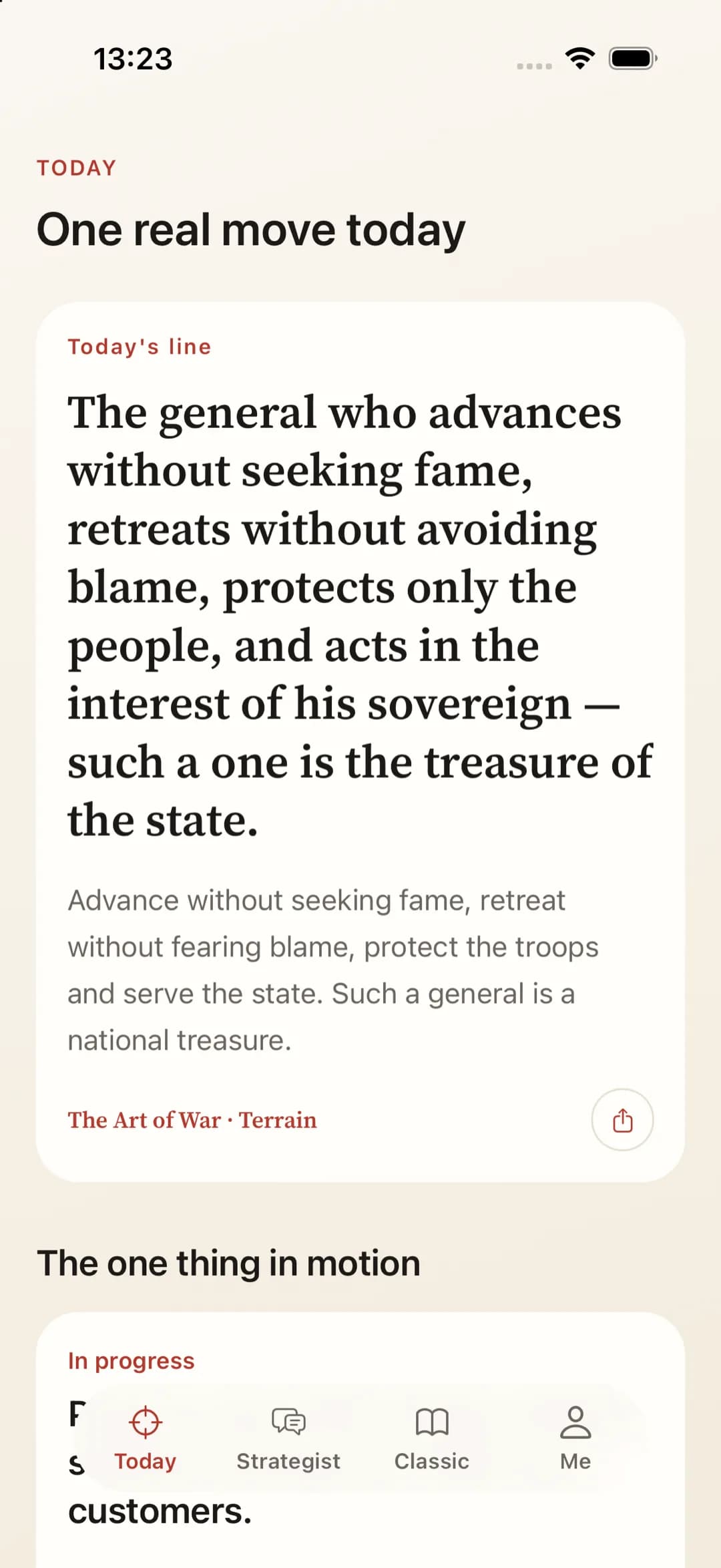
The strategist asks about your situation first, then gives a judgement and what to do firstLay both sides on the table and simulate whether the conclusion changesOne real move today, with a signal to watch
Tell the strategist who took credit for what, how many times, how much your boss knows, and what records you have.
The strategist separates one-off from pattern and peer from manager, then finds the link in your visibility that is missing.
You leave with an action card: one record to add or one conversation to have this week, and a signal that tells you when to escalate.
This page covers the order of judgement. Your own situation, opponent, and resources are worked through with the strategist in the app.
If the boss already knows the work was yours, no. If not, explain the process as a debrief, not as a complaint. Bring a timeline and records, not emotion.
How do I make contribution visible without looking petty?
During the work, not after. Write your part clearly in weekly notes, present your own section in reviews, and copy the relevant people on emails. These are work habits, and nobody reads them as petty.
Is it normal for a manager to take credit, and should I put up with it?
A manager representing the team's results outward is normal. What is not normal is refusing to acknowledge it internally or leaving it out of reviews. The test is whether they fight for your resources and promotion, not whose name they say in meetings.
What if the person is someone my boss trusts and speaking up changes nothing?
Then rely on records rather than words. Leave every contribution in documents, systems, and emails. At the next review or the next boss, the records speak for you. Meanwhile start judging whether this environment deserves your long-term stay.
This page covers management judgement only and is not HR or legal advice. Do not use Sun Tzu's language to justify retaliation, manipulation, or harming colleagues. Appeals about appraisals belong in your company's formal process.