A new boss was parachuted in. How to position yourself
When a new boss is parachuted in, find out what they were sent to do, whom they listen to, and what they must deliver in ninety days, then become the person they need.
The short answer
In the first ninety days, a parachuted-in boss needs not loyalty but people who help them see the situation clearly and deliver a first result. Find out what they were sent to do before choosing your place in it.
The order of judgement is: what problem the people above sent them to solve, whom they will learn about the team from, and what they must show upward in ninety days.
The right move is to give them early a piece of factual ground they cannot get on their own, rather than a declaration of allegiance, while keeping your relationships in the old team. Those who pick sides are often the first cleared out once the new boss is secure.
Also searching for: new boss parachuted in what to do · how to deal with a new manager from outside · new boss brought in over me · how to work with a new boss first 90 days
Where people usually go wrong
Rushing to show loyalty
Reporting intensively in week one and volunteering the previous boss's failings. The new boss files you as an opportunist, and your old colleagues stop trusting you.
Waiting it out
Letting them make the first move. In the first ninety days they define the team by the people they meet. If you do not appear, you are defined as background.
Pushing back with the old rules
We never did it that way. To a new boss this is a resistance signal, and the reason they were sent is often precisely to change the way it was done.
Misreading their mandate
Assuming they came to preserve when they came to consolidate or cut. If the mandate is misread, every position you take is wrong.
Three things to check before acting
What they were sent to do
Look at their background and recent moves above them: growth, consolidation, cutting, or replacing people. The appointment itself is the biggest piece of information, and their first all-hands confirms it.
Whom they learn the team from
Whom they met one-on-one in the first two weeks, whom they brought with them, whom they eat lunch with. Those are their information channels, and your information must travel through one of them.
What they must deliver in ninety days
A parachuted-in boss usually carries a specific short-term promise. Find that promise; the part you can help with is your place.
What Sun Tzu would look at first
The Art of War, chapter 8, Variation in Tactics
The wise leader weighs advantage and harm together.
Sun Tzu says the wise consider gain and loss at the same time. When a new boss arrives, picking a side gains immediate visibility and risks losing the old team and being seen as an opportunist; waiting gains safety and risks being defined as background. Only with both sides counted do you know when and how to appear.
Three versions, three plays
They came to drive growth or reform
In the first one-on-one, bring a list of the team's real bottlenecks and one thing you can move immediately. Do not judge the predecessor; state facts and the part you can do.
They came to consolidate or cut
First find out where your area sits after consolidation. If it is core, help them make the transition clean. If it is peripheral, learn the direction early and secure a defined role in the new structure.
They brought their own people
Do not compete with them and do not isolate them. Find one task that needs your local knowledge and their new methods together, and build the bridge yourself. Being the interface both sides need is steadier than belonging to either side.
How the app walks you through it
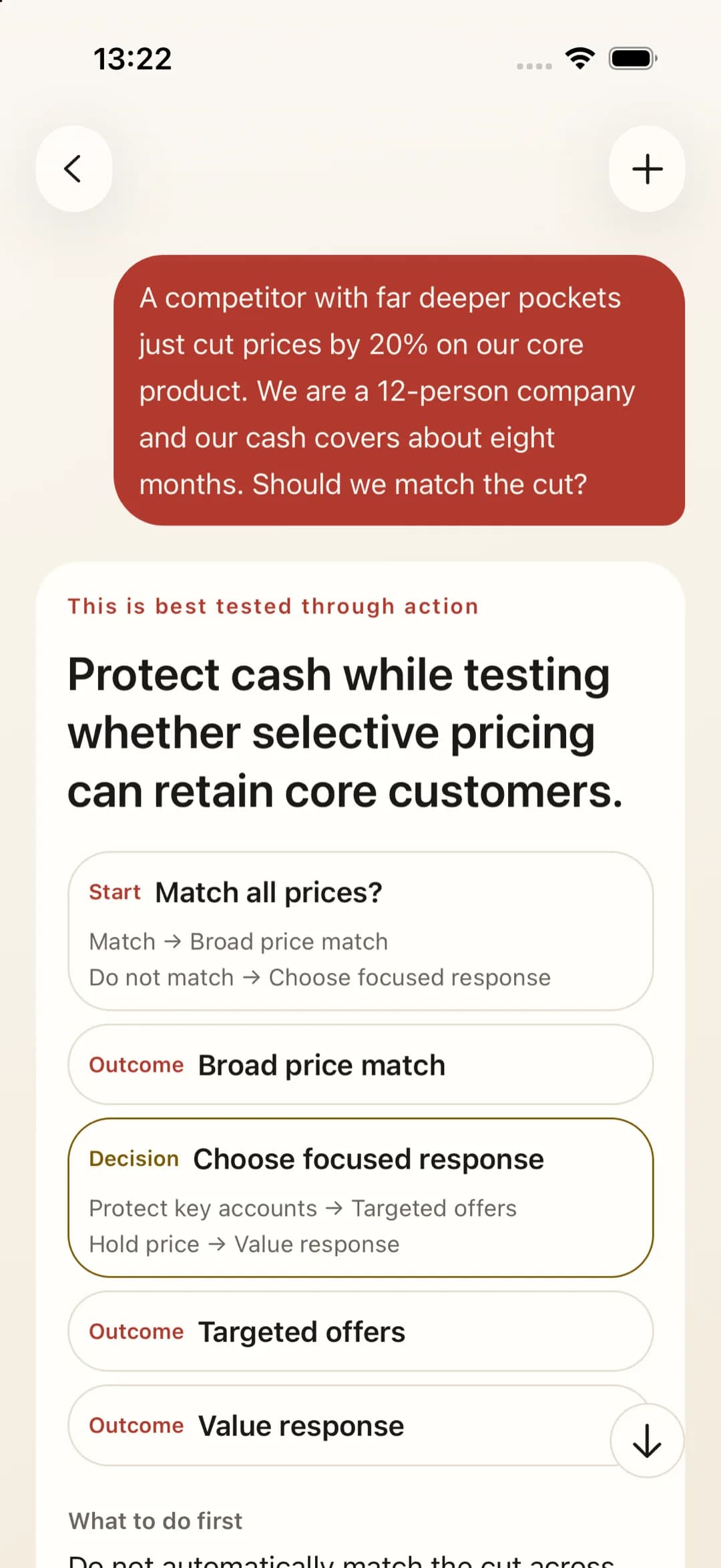
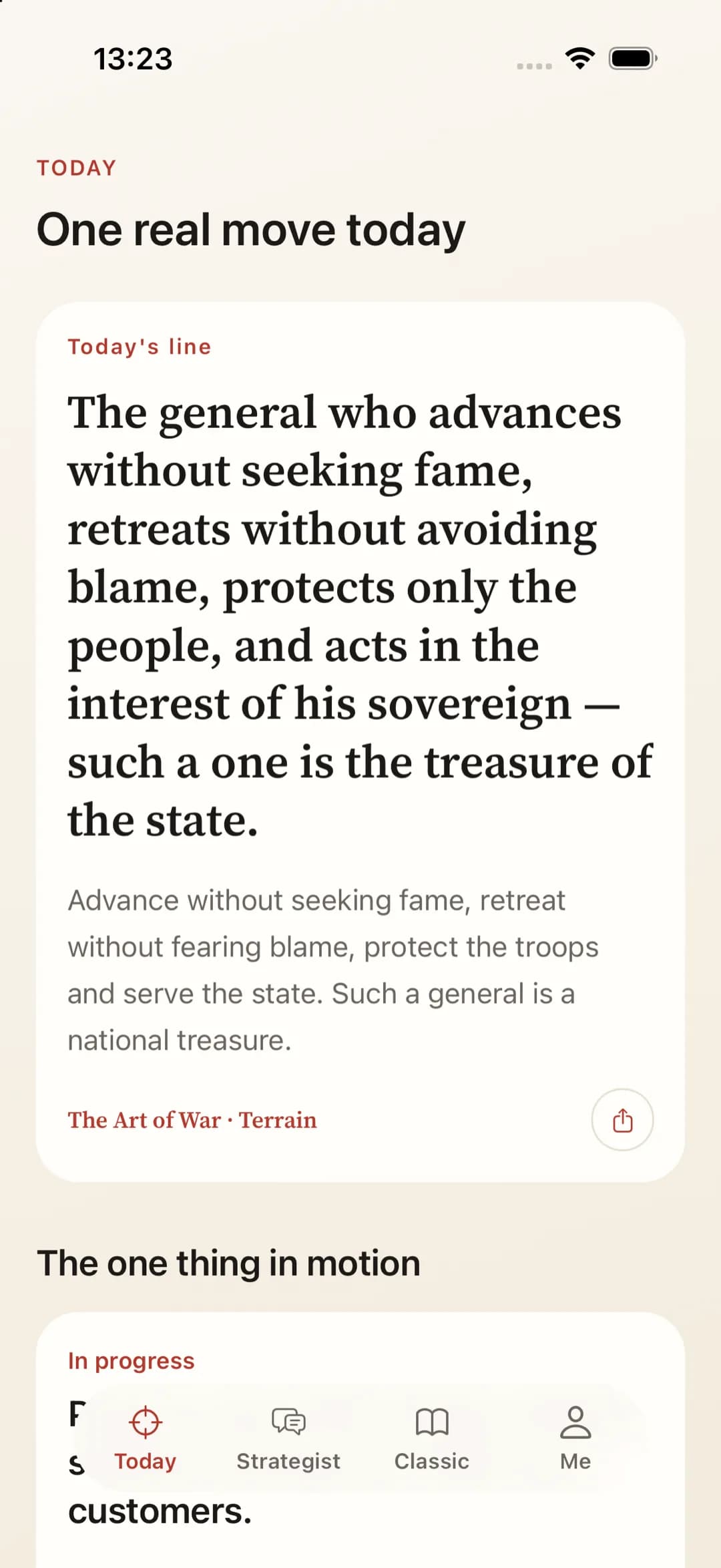
The strategist asks about your situation first, then gives a judgement and what to do firstLay both sides on the table and simulate whether the conclusion changesOne real move today, with a signal to watch
Tell the strategist the new boss's background, recent moves above them, whom they met in the first two weeks, and your current role.
The strategist first judges whether the mandate is growth, consolidation, or cutting, then looks at what facts you can provide and where you might sit in the new structure.
You leave with an action card: the one-page material to bring to the first one-on-one, and a signal that tells you when to adjust your position.
This page covers the order of judgement. Your own situation, opponent, and resources are worked through with the strategist in the app.
Yes, in week two or three, after their first round of conversations. Bring one page: what you own, the biggest current risk, and the one thing you think they most need to know. No judgements, no asks.
Old colleagues are all complaining about the new boss. What do I do?
Listen, but do not join in. What you can say is: let us see what they do in the first quarter. Neither side with the complaints nor defend the new boss.
The new boss clearly trusts the people they brought. Am I out of the picture?
Their people have new methods but no local knowledge, which is exactly your value. Take on one task that needs both, and it works far better than competing for favour.
What if I completely disagree with the new direction?
Execute for three months before judging; most new directions look unreasonable in the first quarter. If you still disagree after three months, raise it with facts from execution rather than predictions. If that fails too, then consider whether to stay.
This page covers management judgement only and is not HR or legal advice. Do not use Sun Tzu's language to justify manipulation, informing on colleagues, or harming them. Compliance concerns during reorganizations belong in your company's formal channels.