When another department will not cooperate, look at what they are measured on and what your request costs them, then decide whether to change the exchange, escalate, or go around.
The short answer
When another department will not cooperate, do not start with attitude. In most cases they refuse because your request carries no weight in what they are measured on, or because it eats resources they have already committed.
The order of judgement is: what they are measured on, what your request costs them, and who can set priorities for both of you at the same time.
The right move is usually not escalating to the boss. It is rewriting your request into a version that helps their metrics and costs them the least, and only then deciding whether a higher level needs to rank the priorities.
Also searching for: other department not cooperating · cross-functional team not cooperating · how to get another team to prioritize my project · cross-department collaboration problems
Where people usually go wrong
Treating refusal as a character flaw
Complaining in group chats or meetings that the other department is difficult. That closes the door completely, and people who would have helped stop helping too.
Going to the boss first
Escalating before you understand the other side's constraints tells them you have no intention of working with them. Even if the boss overrules them, execution will be half-hearted.
Talking only about your own need
The email is all my project, my deadline, what I need, with not one line on what the other side gains or loses.
Reading one refusal as permanent
They cannot fit it in this quarter, which does not mean next quarter is impossible. Without asking about the time window, you write off the whole line.
Three things to check before acting
What they are measured on
Find the other department's key metrics for the quarter and the individual's performance focus. If your request is not in there, refusing is rational, not personal.
What your request costs them
Count the people, the days, and the work in progress it interrupts. What they are refusing is often not your goal but this invisible bill.
Who the shared manager is
Find the level that can rank priorities for both departments. If that level is three or more layers up, escalation costs more than going around.
What Sun Tzu would look at first
The Art of War, chapter 7, Maneuvering
Turn the devious route into the direct one, and misfortune into gain.
The direct route is forcing cooperation. The devious route is making cooperation pay for the other side. Sun Tzu's point is that the indirect path arrives first: change the exchange so that helping you also completes their own goals, which moves faster than pushing.
Three versions, three plays
Your request is not in their metrics at all
Rewrite the request. Tie your output to their number, for example the conversion or cost reduction your launch brings to their area. Go in with that version, not with your deadline.
They are willing but fully booked
Shrink the ask. Start with the smallest support that unblocks you, such as half a day of review or an existing data export, instead of one person for two weeks. Ask for the next open window and write it into your plan.
A clear refusal and no shared manager who can rank it quickly
Go around. Find an alternative path to the goal, such as a contractor, another team, or a reduced scope, and record the dependency and outcome for the next resource allocation round.
How the app walks you through it
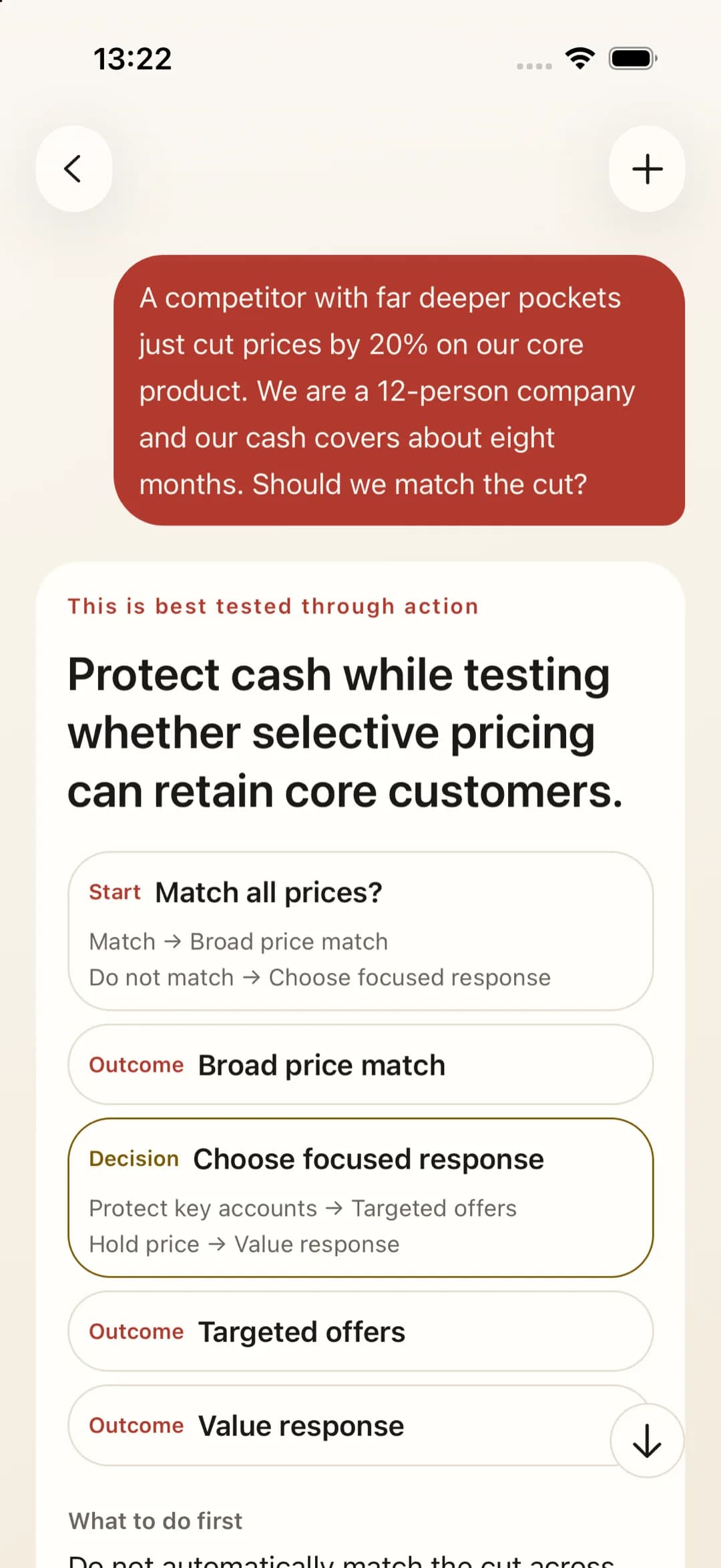
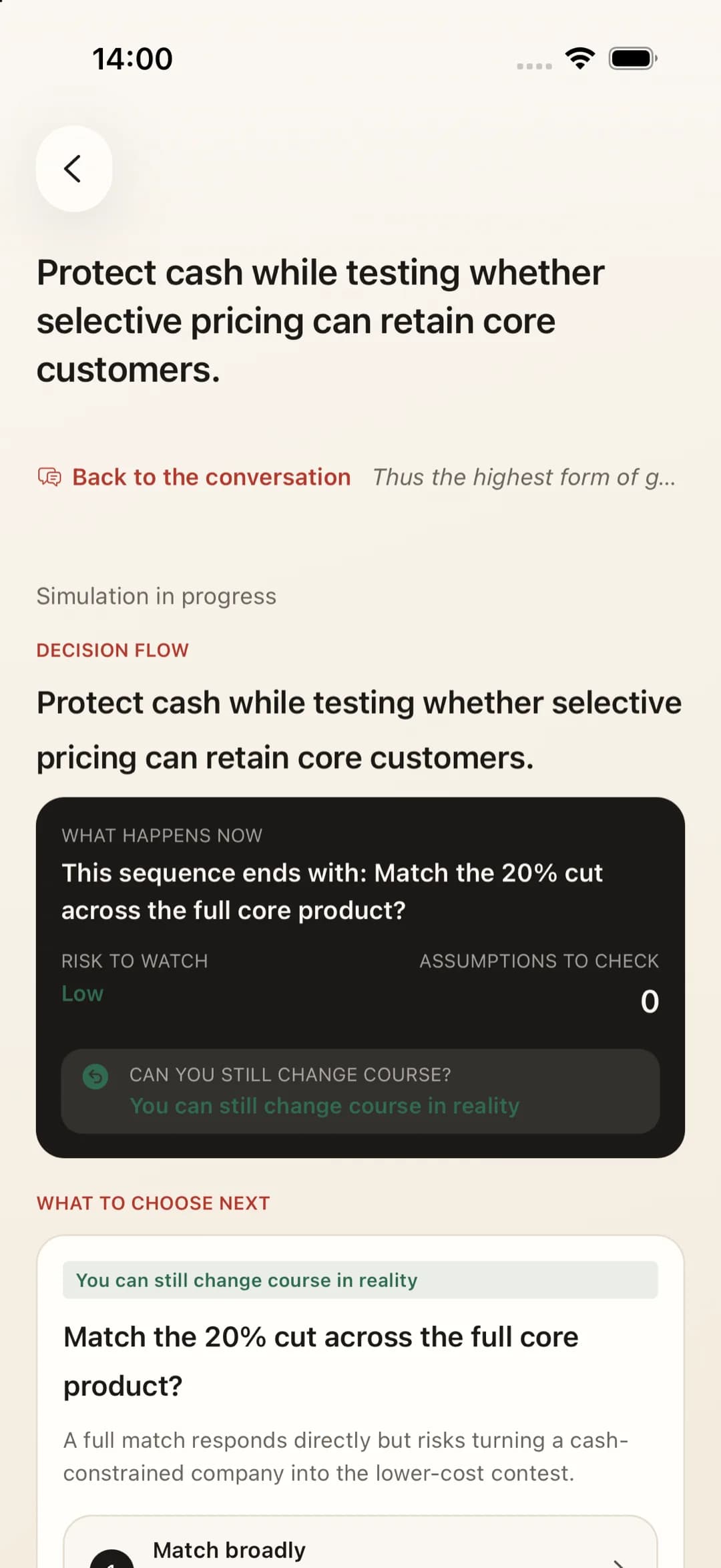
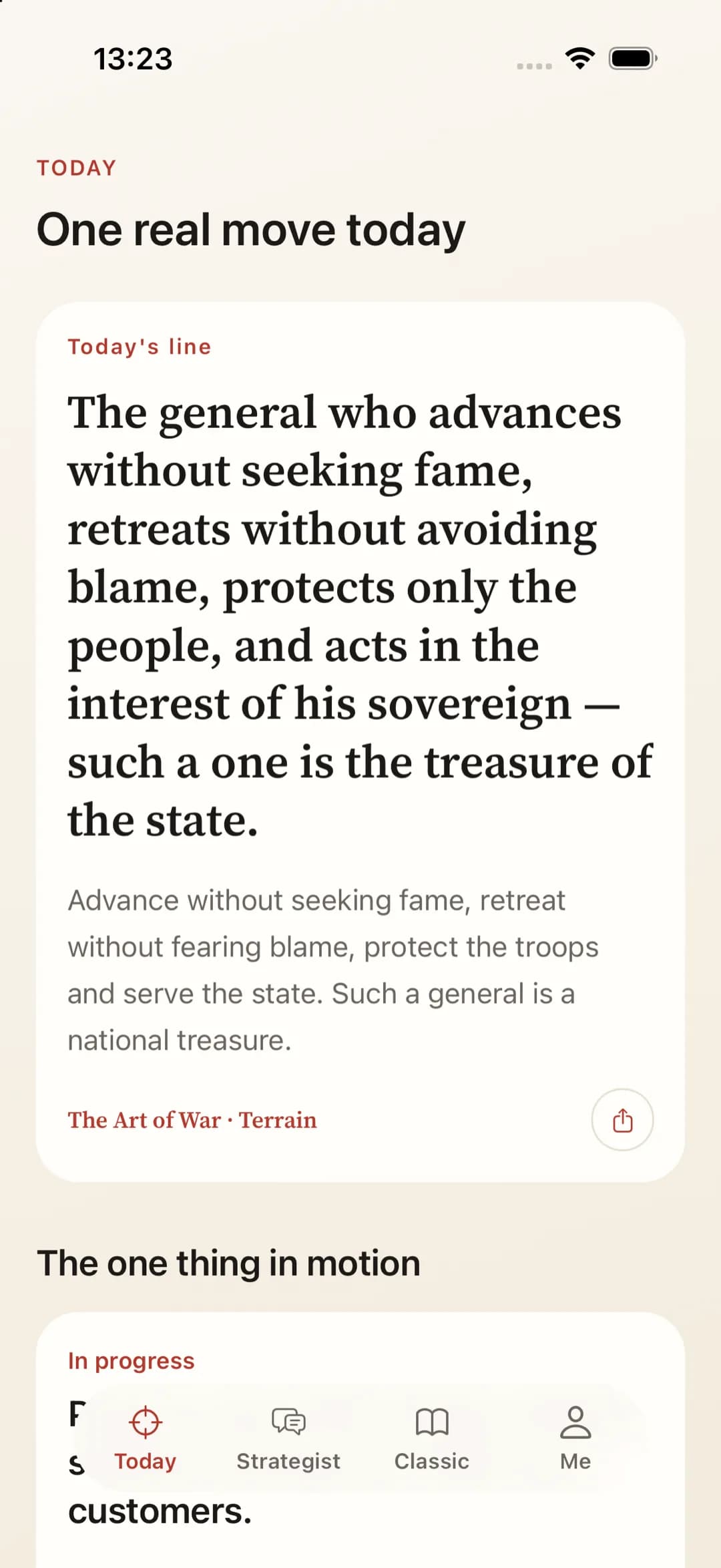
The strategist asks about your situation first, then gives a judgement and what to do firstLay both sides on the table and simulate whether the conclusion changesOne real move today, with a signal to watch
Tell the strategist what you are trying to push through, which department is blocking, what you have tried, and what you know about how they are measured.
The strategist asks about what you do not know, their metrics and the cost to them, then lays out both sides' constraints in one comparison to find what can be exchanged.
You leave with an action card: the version of the request to bring this week, and a signal that tells you when to escalate or go around.
This page covers the order of judgement. Your own situation, opponent, and resources are worked through with the strategist in the app.
The other department is clearly blocking me on purpose. Does the order still apply?
Yes. Even if it is deliberate, you still need to know where the request sits in their metrics before you know how a boss will rule. Escalating with facts about their metrics and resources works far better than escalating with frustration.
When should I go straight to the boss?
When two conditions hold: you have already offered a version that helps their metrics and they still refuse, and the shared manager is within two levels. Otherwise go around and save the escalation for the formal resource allocation.
Does copying their manager on the email help?
Usually it backfires. Copying is pressure, and they will read it as going over their head. If a manager needs to know, tell the other side first, or set up a three-way meeting instead.
How do I make the next cross-department project go smoother?
Write their contribution into the plan and the metrics at kickoff, and credit them publicly afterwards. People cooperate with those who made the last collaboration pay off for them.
This page covers management judgement only and is not HR or legal advice. Do not use Sun Tzu's language to justify pressuring, manipulating, or harming colleagues. Questions about appraisal and promotion systems belong in your company's formal process.