When you and a colleague are up for the same role, find out who decides, what they measure, and what the role requires, then decide where to put your effort.
The short answer
The opponent in a promotion contest is not the colleague. It is the decision-maker's picture of what the role requires. Find out who decides and what they measure before deciding where to spend effort.
The order of judgement is: what capability the role needs proven, how much the decision-maker has actually seen of you, and how heavily each of your weaknesses weighs in their eyes.
The right move is not to pull the other person down. It is to give the decision-maker evidence they have not seen on the one or two things they care about, and to become the easier of the two decisions to make.
Also searching for: competing with a coworker for promotion · how to get promoted over a colleague · promotion competition at work · passed over for promotion by a peer
Where people usually go wrong
Treating the colleague as an enemy
Guarding information, withholding help, grabbing airtime in meetings. What the decision-maker sees is collaboration getting worse, which is often the heaviest item in the promotion criteria.
Doing more instead of doing what counts
Taking on ever more tasks on the theory that volume proves worth. The role may require judgement and people leadership, not output.
Never discussing it with the decision-maker
Assuming good work gets noticed on its own. Decision-makers need reasons; if you do not supply them, they use the ones others supply.
Speaking up only after the result
Asking why after being passed over, when every reason has already hardened. The information has to arrive before the decision forms.
Three things to check before acting
What the role needs proven
Look at how the last person in the role was chosen and which capability sits first in the description. It may not be the thing you are currently best at.
How much the decision-maker has seen of you
The person who decides is often not your direct manager. List the channels through which they learned about you in the last three months. If the answer is almost none, that is the first gap to close.
How each weakness weighs
Honestly list your weak points and the colleague's, then judge which the decision-maker cares about more. Promotions often go not to the strongest candidate but to the lowest-risk one.
What Sun Tzu would look at first
The Art of War, chapter 10, Terrain
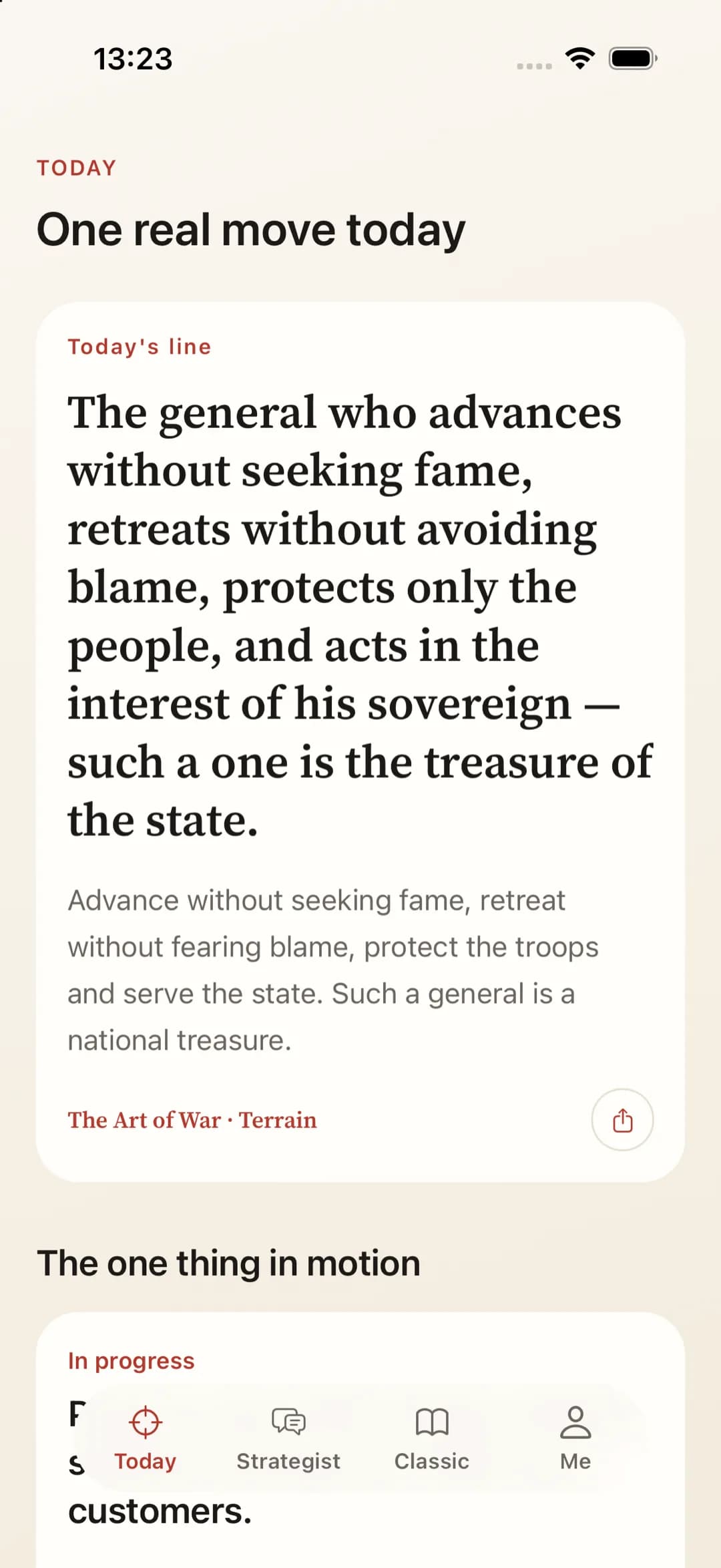
Know the heavens and know the earth, and your victory will be complete.
Sun Tzu says victory is only complete when you know both the season and the ground. In a promotion, the season is what the organization needs right now; the ground is the decision-maker's criteria and line of sight. Watching only the rival while ignoring season and ground means effort spent in the wrong place.
Three versions, three plays
The criteria are clear and the decision-maker knows you
Take on one piece of work that proves your weakest criterion, and let the decision-maker see it during the process. Hold everything else steady; do not spread out.
The criteria are vague and the decision-maker relies on your manager
Talk to your manager directly about the goal and ask what they think you still lack. Turn their answer into next quarter's focus. They are your advocate at the table; make it possible for them to speak for you.
The colleague is clearly favoured
Do not fight head-on in the same lane. Judge which roles will open in the next six months and position yourself there, while keeping the cooperation with the colleague. People who get promoted usually bring along or lift those they worked well with.
How the app walks you through it
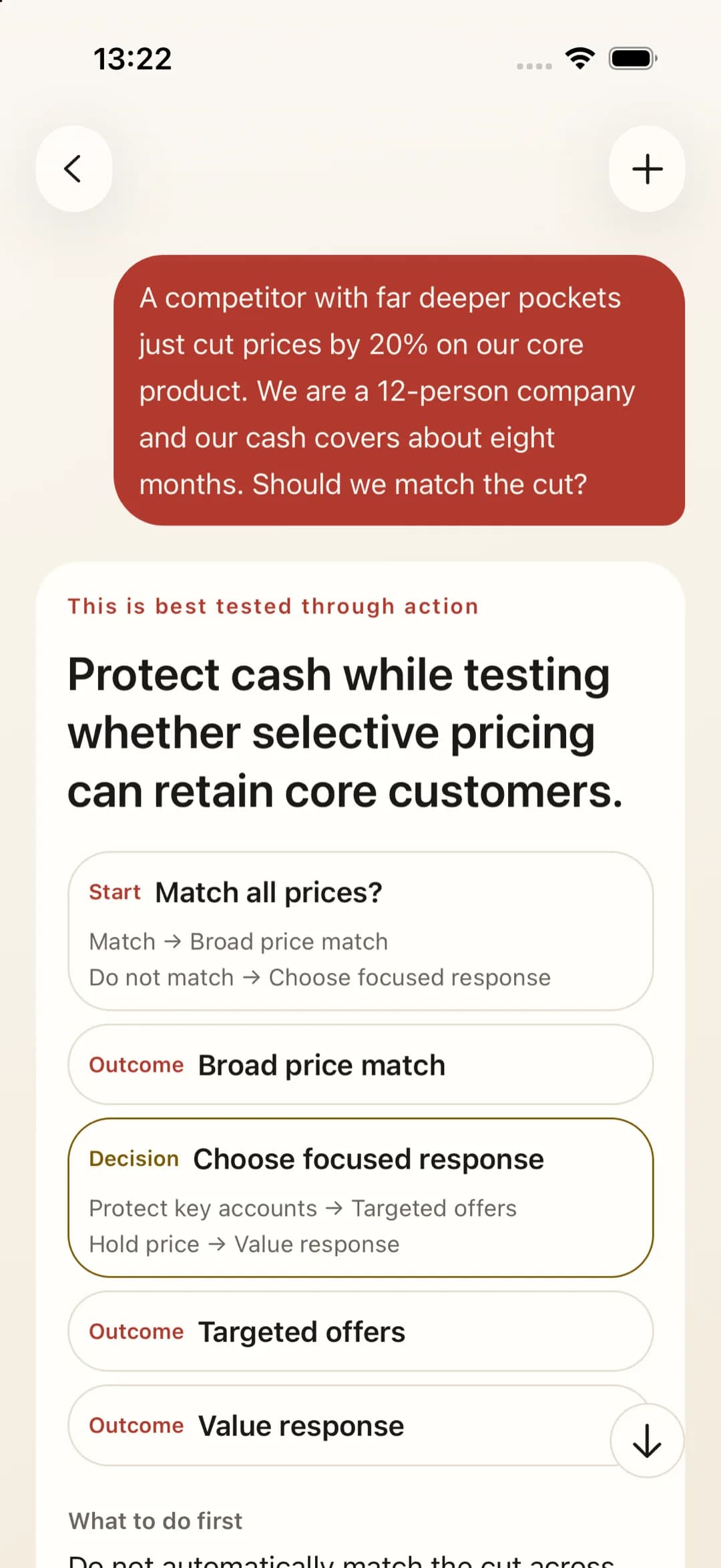
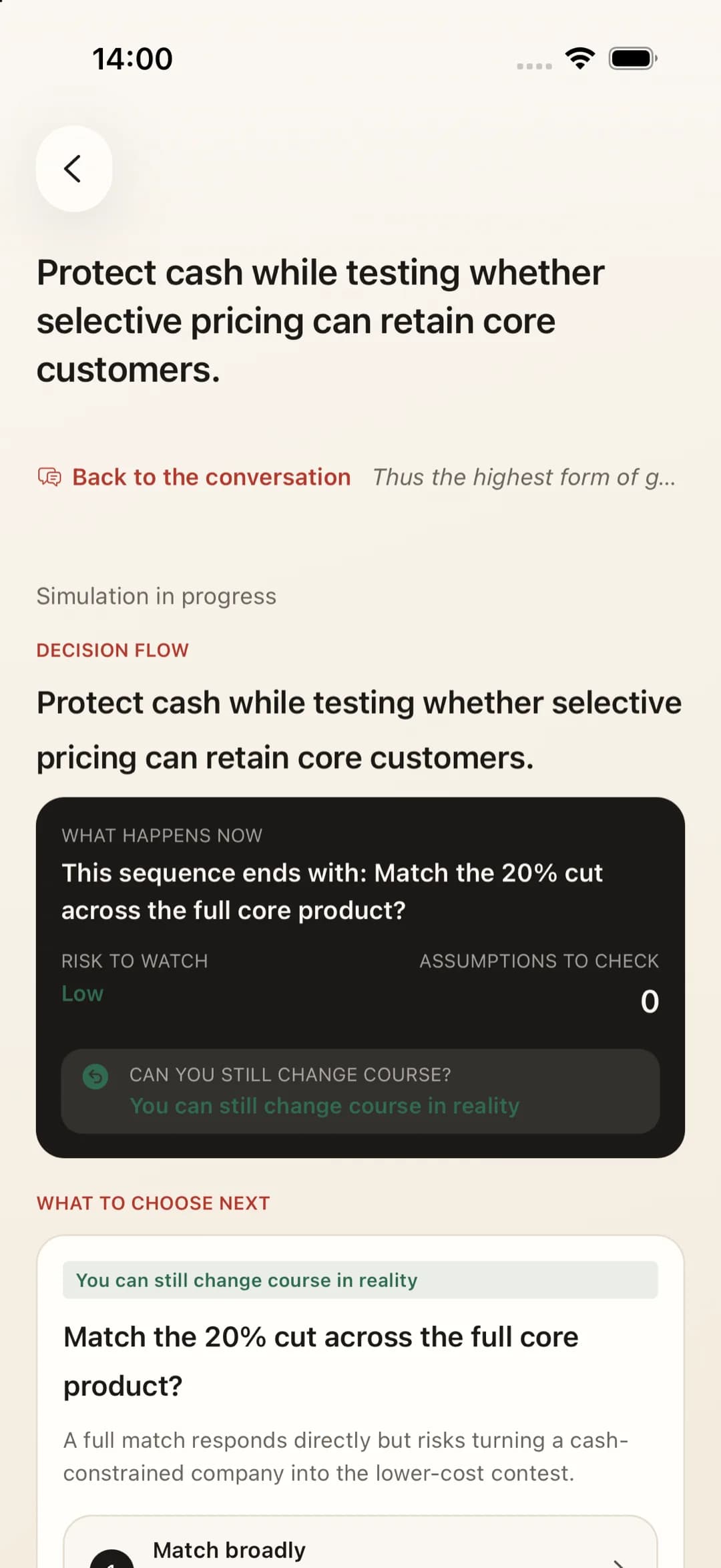
The strategist asks about your situation first, then gives a judgement and what to do firstLay both sides on the table and simulate whether the conclusion changesOne real move today, with a signal to watch
Tell the strategist the role, who decides, your and the colleague's strengths and gaps, and how the decision-maker has recently seen you.
The strategist lays out the role's criteria and the decision-maker's line of sight first, then finds which piece of evidence you lack and through whom it should travel.
You leave with an action card: one capability to prove this quarter and the work that carries it, plus a signal that tells you when to change lanes.
This page covers the order of judgement. Your own situation, opponent, and resources are worked through with the strategist in the app.
Should I tell my boss directly that I want the role?
Yes, and early. Ask what they think you still lack, in the tone of seeking advice rather than making a demand. Decision-makers prefer to promote people who state their goal and act on feedback.
My colleague is undermining me behind my back. What now?
Do not retaliate in kind; that disqualifies both of you. Put your energy into evidence the decision-maker can see and keep normal working cooperation with the colleague. The contrast in behaviour is itself information.
I was passed over. Should I stay?
Ask for one specific piece of feedback first and find out whether the gap was capability, timing, or relationships. Capability can be built, timing can wait for the next role. A relationship gap that cannot change in the short term is when to consider a move.
We are friends. Will the contest ruin the friendship?
It depends on whether you put the contest on the table. Say early and plainly: we are both up for this, and I want to keep working together whatever the result. Most people are relieved rather than offended.
This page covers management judgement only and is not HR or legal advice. Do not use Sun Tzu's language to justify disparaging, manipulating, or harming colleagues. Promotion appeals and discrimination concerns belong in your company's formal channels.