A key employee is leaving. Judge these three things before you try to keep them
When a key employee resigns, work out why they are leaving, which line breaks without them, and whether staying would actually stick, before choosing retention or handover.
The short answer
When a key employee resigns, the most expensive mistake is to argue for staying and negotiate terms in the same conversation. Learn why they are leaving first; the stated reason is often not the real one.
The order of judgement is: which line breaks when they go, whether anyone else can hold it, and whether you can actually deliver the conditions that would make them stay.
If the only way to keep someone is more money, you are usually delaying the departure by three to six months. Real retention solves the reason they are leaving. If you cannot solve it, do the handover better than you would have done the retention.
Also searching for: key employee leaving what to do · how to retain an employee who resigned · counter offer after resignation · critical staff resigning
Where people usually go wrong
Raising pay immediately
A raise keeps someone once, tells the whole team that resigning is how you get a raise, and rarely addresses the real reason.
An emotional conversation
Blame or pleading both make the person less willing to cooperate on the handover during their remaining weeks.
Ignoring dependencies
Not listing what only they can do, then discovering a broken critical path after they have gone.
Treating one departure as a team problem, or the reverse
Watch whether others are also looking at the door after they leave. One departure may be an individual case or the first signal of a team problem.
Three things to check before acting
The real reason
Money, growth, their direct manager, the work itself, or family. Listen in a second conversation; do not conclude in the first.
How deep the dependency runs
List what only they can do, the relationships only they hold, and the systems only they can access. That is your exposure.
Team spillover
Whether their departure triggers others. Judge by what their peers do over the next two weeks, not what they say.
What Sun Tzu would look at first
The Art of War, chapter 8, Variation in Tactics
Do not rely on the enemy not coming; rely on being ready for them.
A key employee leaving is not an accident that might not happen. It is something that will happen eventually. The real response comes before the resignation: keep critical paths from depending on one person.
Three versions, three plays
They are leaving because of their manager or the work
This is solvable. Offer a specific change with a date, not a vague promise. A promise you cannot keep means they leave anyway in three months.
They are leaving for a clearly better opportunity
Do not fight an opportunity with a raise. Congratulate them honestly, complete the handover, and keep the relationship. In a year they may be your best customer or a returning hire.
Their departure breaks a critical line with no short-term replacement
Negotiate a longer handover, not a stay. Trade one or two months for a complete handover document and a training period, and start recruiting immediately.
How the app walks you through it
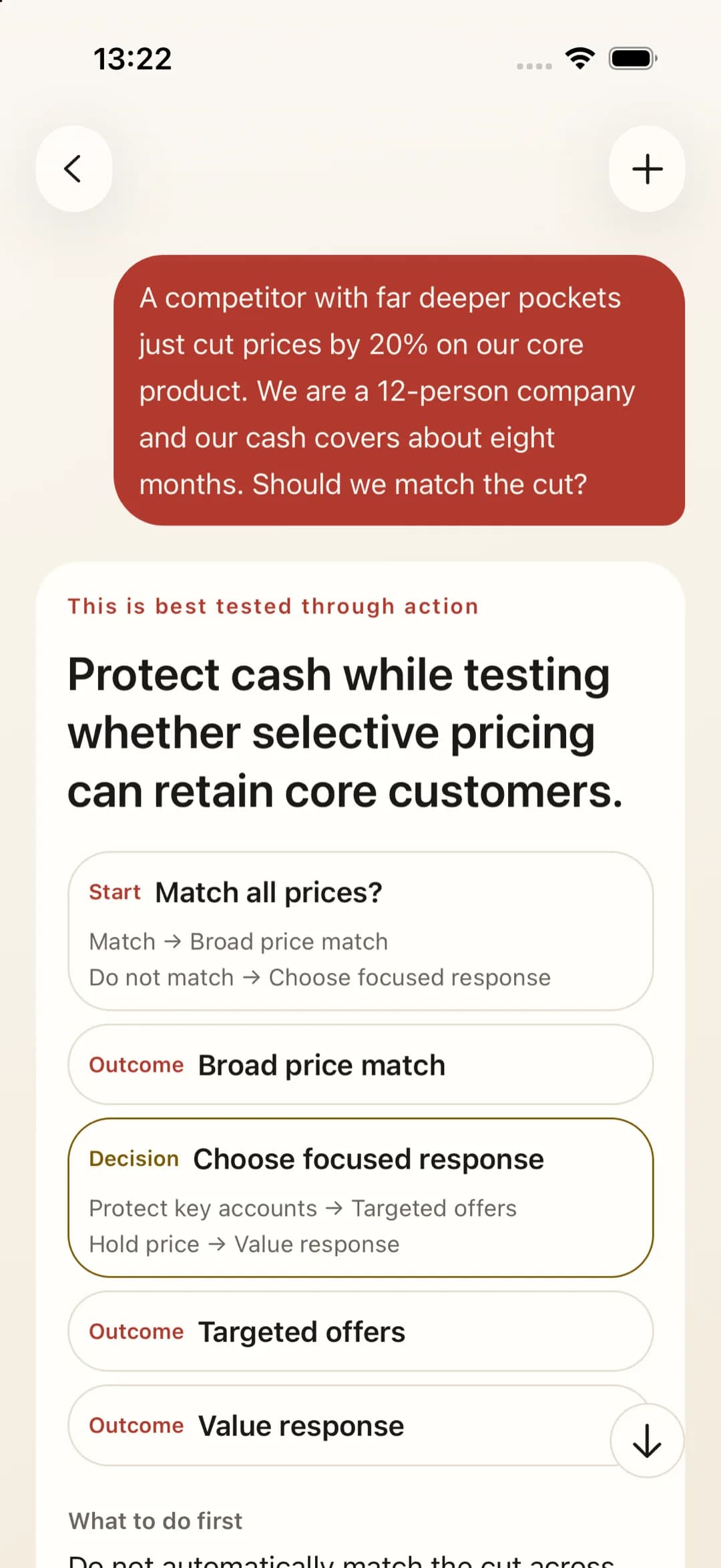
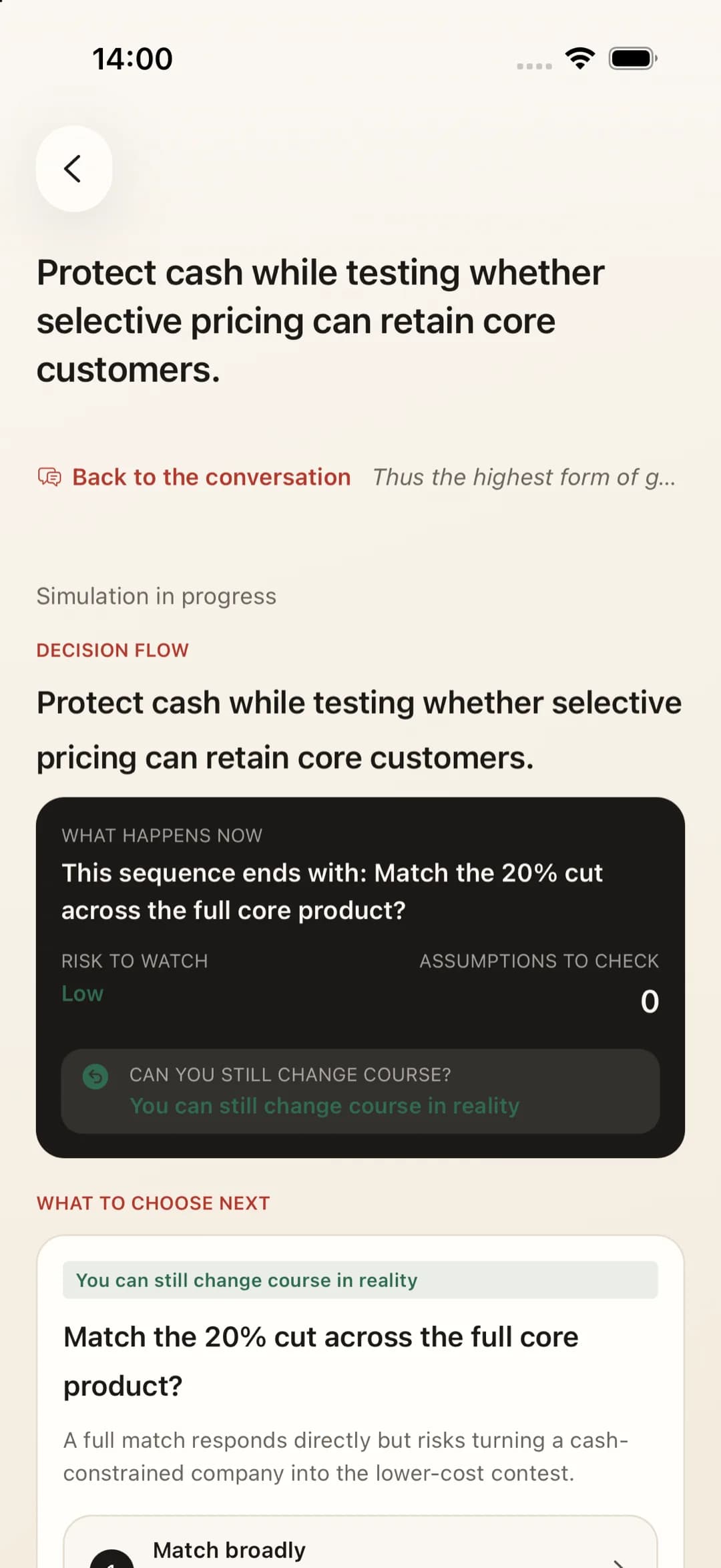
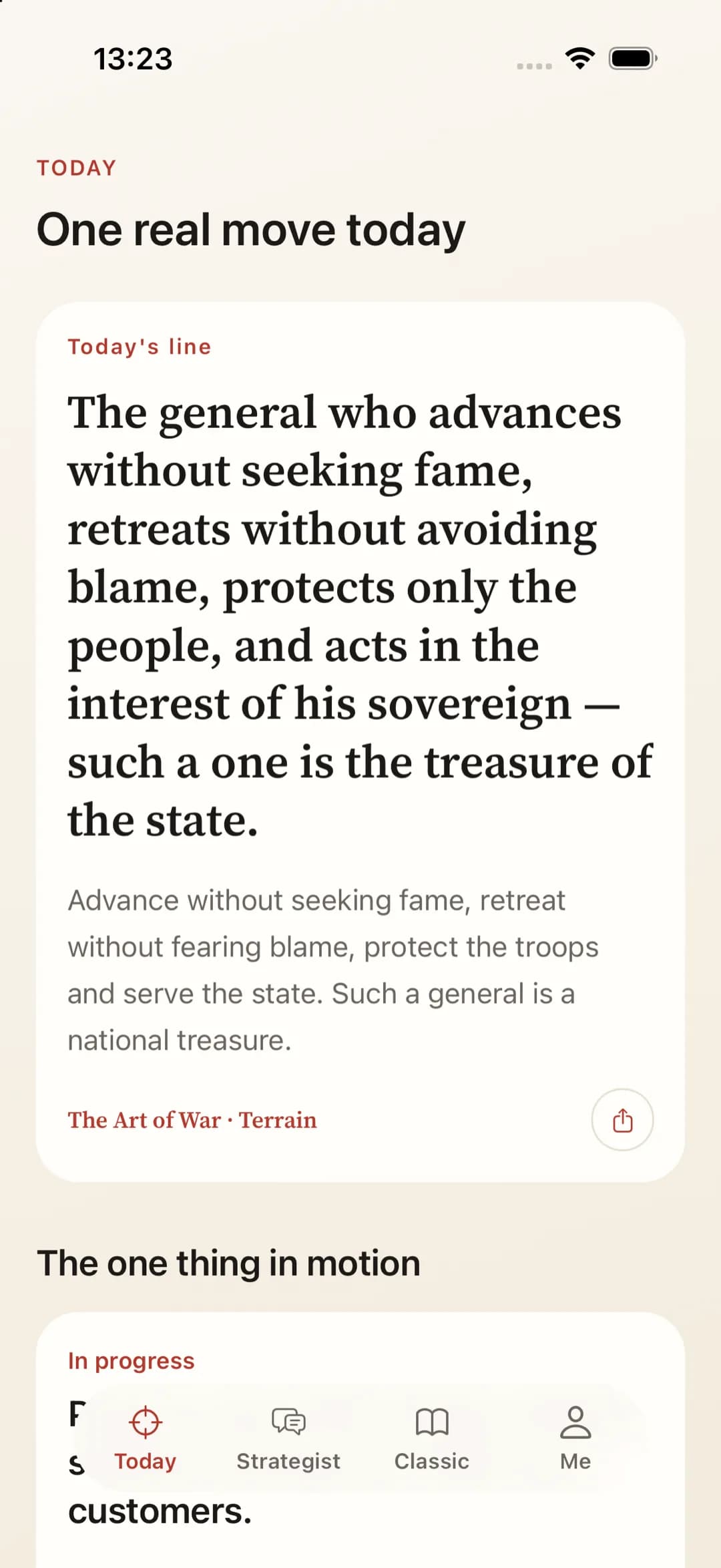
The strategist asks about your situation first, then gives a judgement and what to do firstLay both sides on the table and simulate whether the conclusion changesOne real move today, with a signal to watch
Tell the strategist who is leaving, what you know about why, what only they can do, and how the team is doing.
The strategist separates three questions, retention, handover, and team spillover, each with its own basis for judgement.
You leave with one action for this week: usually the outline for a second conversation, or a dependency checklist.
This page covers the order of judgement. Your own situation, opponent, and resources are worked through with the strategist in the app.
Not yet. Find out why they are leaving first. If it is not money, a raise only delays. If it is money, consider how the rest of the team will read it.
How do I tell whether they really want to leave or are asking for better terms?
Look for a specific destination and a specific date. Someone with both is usually leaving. Someone with grievances but no destination more likely wants to be heard.
How do I stop the team from following them out?
Announce the handover plan before they leave so the team sees the line has an owner. Whether the team scatters depends on whether they believe it runs without this person.
Should I try to retain someone who already has an offer?
You can, but know that people who accept counter-offers leave again within a year at a high rate. The retention terms must solve the original reason. If they cannot, do the handover well instead.
This page covers management judgement, not employment law. Follow local law on notice, non-compete, and compensation and consult professionals. Do not use Sun Tzu's language to justify coercion or mistreatment of staff.