A layoff conversation is decided before it starts: set the criteria, the order, and the severance first, then the words. Three conclusions, common mistakes, three checks, three plays.
The short answer
The outcome of a layoff conversation is decided before you open your mouth. Conversations rarely go wrong because of the wording. They go wrong because the selection criteria cannot be explained, the severance is not settled, or nobody has a plan for the people who stay.
The order of judgement is: criteria and list first, severance and timing second, and only then what to say in each conversation. Reverse the order and every conversation becomes a negotiation.
The conversation itself does three things only: state the decision clearly, explain severance and process clearly, and treat the person with respect. Do not over-explain, do not argue, and do not promise what you cannot deliver.
Also searching for: how to have a layoff conversation · what to say when laying someone off · layoff conversation script manager · how to communicate layoffs to the team
Where people usually go wrong
Rehearsing the script without settling the criteria
The person asks why me, and you have no answer. A criterion you cannot state turns into rumour among the people who stay, and that does more damage than the layoff itself.
Cutting in waves
Three people today, two more next month. Everyone who remains waits for the next round, work stalls, and the best people leave first.
Letting the conversation become a debate
The person pushes back and you start explaining how hard things are for the company, or you soften and say you will think again. The decision is made; the conversation is not the place to remake it.
Focusing on who leaves and forgetting who stays
The people who stay watch how their colleagues are treated and conclude that this is how they will be treated. What you say to them on the day sets morale for the next three months.
Three things to check before acting
Whether you can say the criterion out loud
Is the list based on eliminated roles, a shrinking business, or performance? Each person's reason must be sayable to their face and consistent with everyone else's. A criterion you cannot say is not a criterion.
Whether severance and process are compliant
Severance, notice period, benefits, and paperwork must be confirmed by legal or a qualified professional beforehand. Any number you get wrong in the room becomes a dispute later.
How the people who stay will read it
They will ask three things: why those people, will there be another round, and what happens to my job. Have those answers ready before the first conversation.
What Sun Tzu would look at first
The Art of War, chapter 1, Laying Plans
Method and discipline: the marshalling of the army, the graduation of rank, the control of supply.
Sun Tzu lists organisation, responsibilities, and the control of resources among the five things to settle before any campaign. A layoff is an organisation marching with fewer people. Without rules, order, and supply settled first, even the best script is improvisation in the middle of confusion. Fix the method before the conversation.
Three versions, three plays
The business is shrinking and a whole line is closing
The criterion is the easiest to state: the role is eliminated, and it is not about individual performance. Do it in one round, pay severance properly, and offer references and introductions. Tell the people who stay which business you are concentrating on, so they see the direction behind the cut.
Cost pressure, and every department must lose a share
The hardest criterion to explain. Replace the share with something you can say: overlapping roles, or business priority, rather than a percentage handed to each manager. Better a list one week late than a criterion you cannot state.
A layoff being used to handle performance problems
Do not mix them. Performance issues go through the performance process, with records and an improvement period. Hiding performance action inside a layoff tells the people who stay that anyone could be next, and it carries more legal risk.
How the app walks you through it
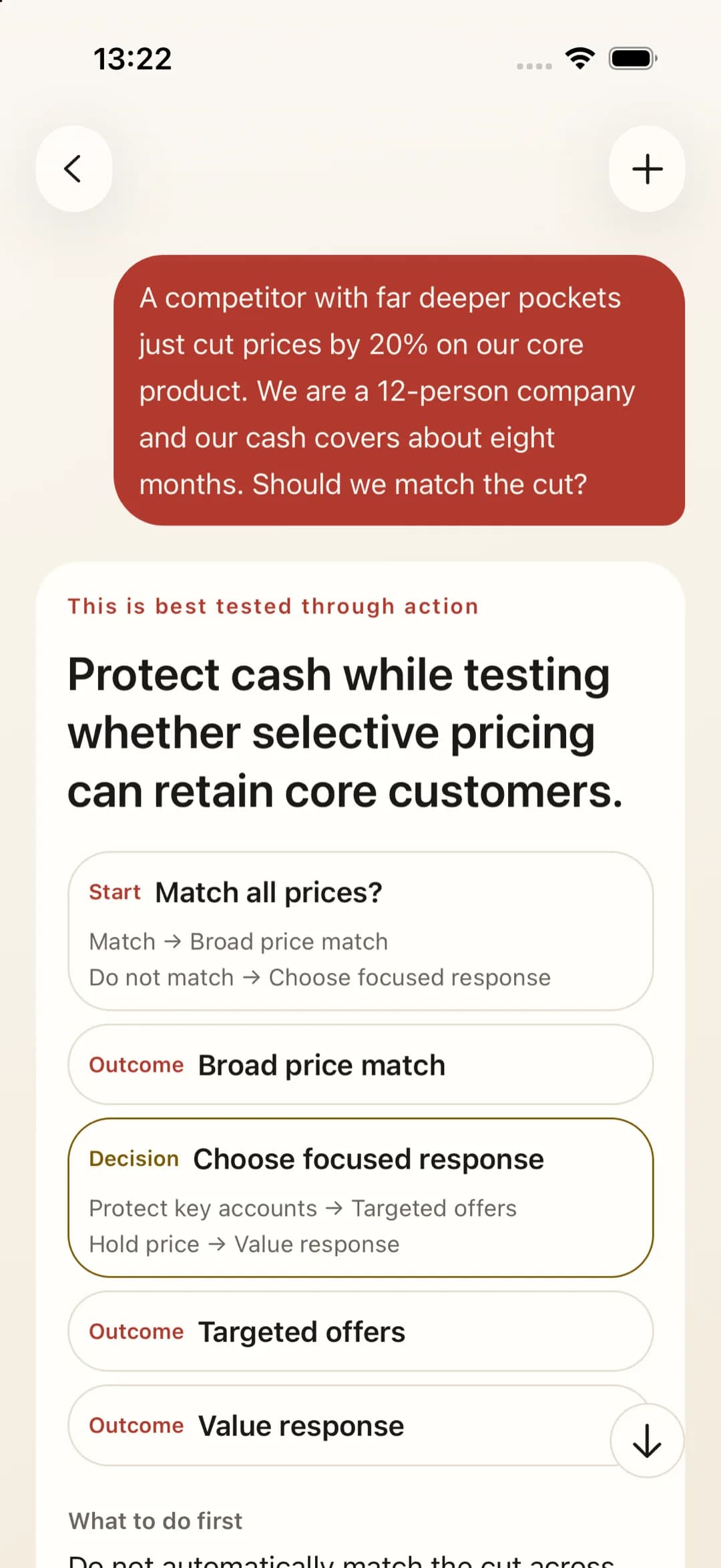
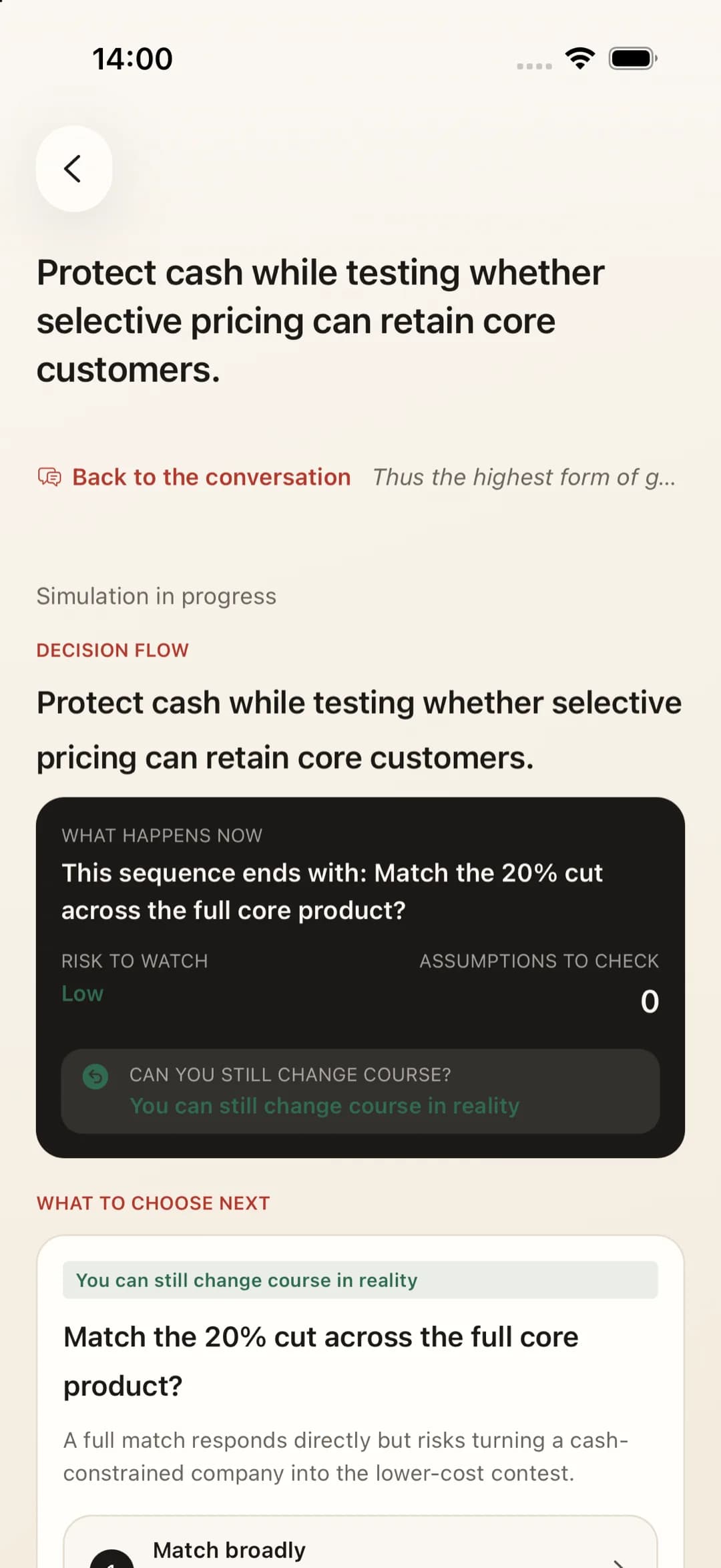
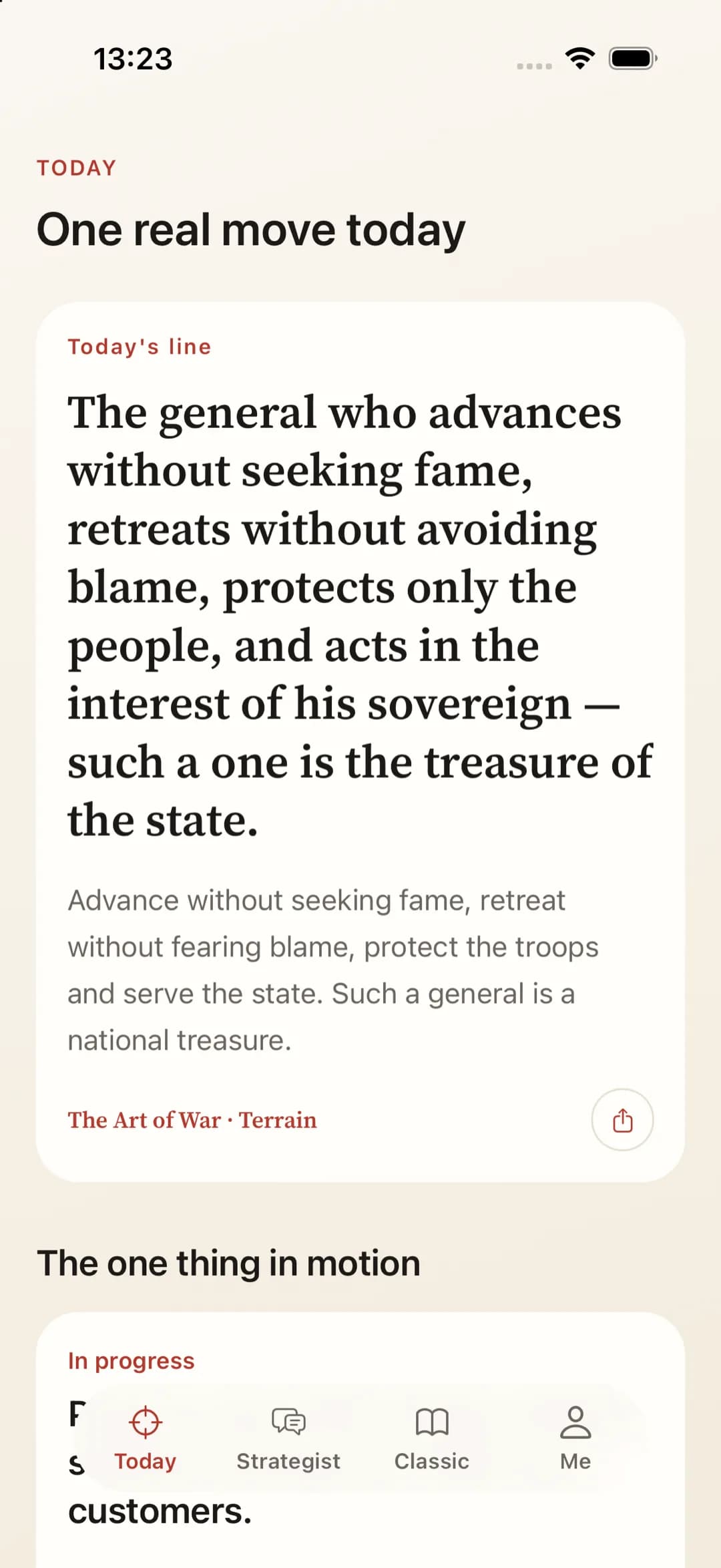
The strategist asks about your situation first, then gives a judgement and what to do firstLay both sides on the table and simulate whether the conclusion changesOne real move today, with a signal to watch
Tell the strategist the background: why the layoff, how many, how the list was made, where the severance plan stands, and which conversation you dread most.
The strategist first checks the order, criteria, severance, the people who stay, and tells you which link is not ready, then compresses each conversation into three sentences you must say and three things you must not do.
You leave with an action card: the timetable for the day and the words for the people who stay, plus a signal that tells you the situation is slipping.
This page covers the order of judgement. Your own situation, opponent, and resources are worked through with the strategist in the app.
Ten to fifteen minutes. State the decision, explain severance and process, answer practical questions. The longer it runs, the more likely it turns into an argument or a promise you cannot keep. Emotional support belongs in a separate conversation, not this one.
What do I say when they ask why me?
Answer with the criterion you settled in advance, in one sentence, without comparing them to anyone else. If the role was eliminated, say the role was eliminated. If you cannot say it, the list itself has a problem, and you should have revisited it before the conversation.
Should I warn the team that layoffs are coming?
Do not leak, but do it in one round. A leak makes everyone stop and wait. One round, followed by a clear explanation to the people who stay on the same day, lets the team get back to work within days.
What do I tell the people who stay?
Three things: the criterion for the list, whether there will be another round, and what the work focus is now. If you cannot promise there will be no further round, say under what conditions you will reassess. Honesty keeps people better than reassurance.
This page covers management judgement, not employment law. Notice periods, severance, procedure, and consultation duties differ by jurisdiction; follow local law and consult qualified professionals. Do not use Sun Tzu's language to justify coercion or mistreatment of staff.