When morale drops, work out whether the cause is unclear direction, broken promises, or an overloaded team before reaching for incentives. Three conclusions, three plays.
The short answer
Low morale is not a cause. It is a result. Find out what it is reflecting: unclear goals, promises not kept, work repeatedly overturned, or people who are simply spent. Different causes call for opposite actions.
The order of judgement is: what the team has been through in the last three months, what they complain about privately, and who went quiet first. Look at changes in behaviour before you listen to what people say in meetings.
In most cases team-building, slogans, and one-off bonuses do nothing. What works is making a decision that has been dragging for months, so the team can see the link between effort and outcome again.
Also searching for: team morale is low what to do · how to improve team morale · employees disengaged how to fix · low morale at work manager
Where people usually go wrong
Using incentives to cover the cause
Morale is low because the goal changed three times, and you pay a bonus. The bonus is spent, the problem remains, and the team has learned that disengagement earns compensation.
Blaming a few people
Singling out the least engaged as examples teaches everyone else that the people who spoke up got dealt with.
Holding a big meeting with big words
A demoralised team has no shortage of grand statements. What it lacks is one decision that lands and one date it can believe.
Reading statements instead of behaviour
Everyone says things are fine in the meeting; nobody volunteers for work afterwards. Statements are the cheapest signal. Behaviour is the real one.
Three things to check before acting
Who went quiet first
The people who stopped offering opinions and stopped reporting proactively are often the ones who cared most about results. Their silence is more dangerous than complaints, because it means they have given up on change.
What was overturned recently
Over the last three months, which decisions changed and changed again, and which promises were not kept. List them; the cause of low morale is probably on that list.
Where the effort goes
Is the team's time spent doing the work, or spent on coordination, rework, and waiting? If the second exceeds half, the problem is process, not attitude.
What Sun Tzu would look at first
The Art of War, chapter 9, The Army on the March
When the officers are angry, the men are exhausted.
Sun Tzu reads the state of an army from small signs: officers losing their temper means the troops are worn out. Morale works the same way. When a team starts blaming each other and arguing in meetings, people have not turned bad; they are tired or cannot see a way through. Fix the cause before demanding a better mood.
Three versions, three plays
Morale is low because direction keeps changing
Acknowledge the past reversals, then publicly set one goal that will not change for three months and a list of things you will explicitly not do. Prove it holds: the next time someone proposes a new direction, decline it in front of the team by pointing at the list.
Morale is low because promises were not kept
Make no new promises. List the ones already made, put dates on the ones you can keep, and explain face to face why the others cannot happen. Trust recovers from one small thing delivered on time.
Morale is low because people are spent
Subtract before you add. Cut one or two parallel goals and let the team spend two weeks finishing a single thing. The morale that comes from finishing outlasts any incentive.
How the app walks you through it
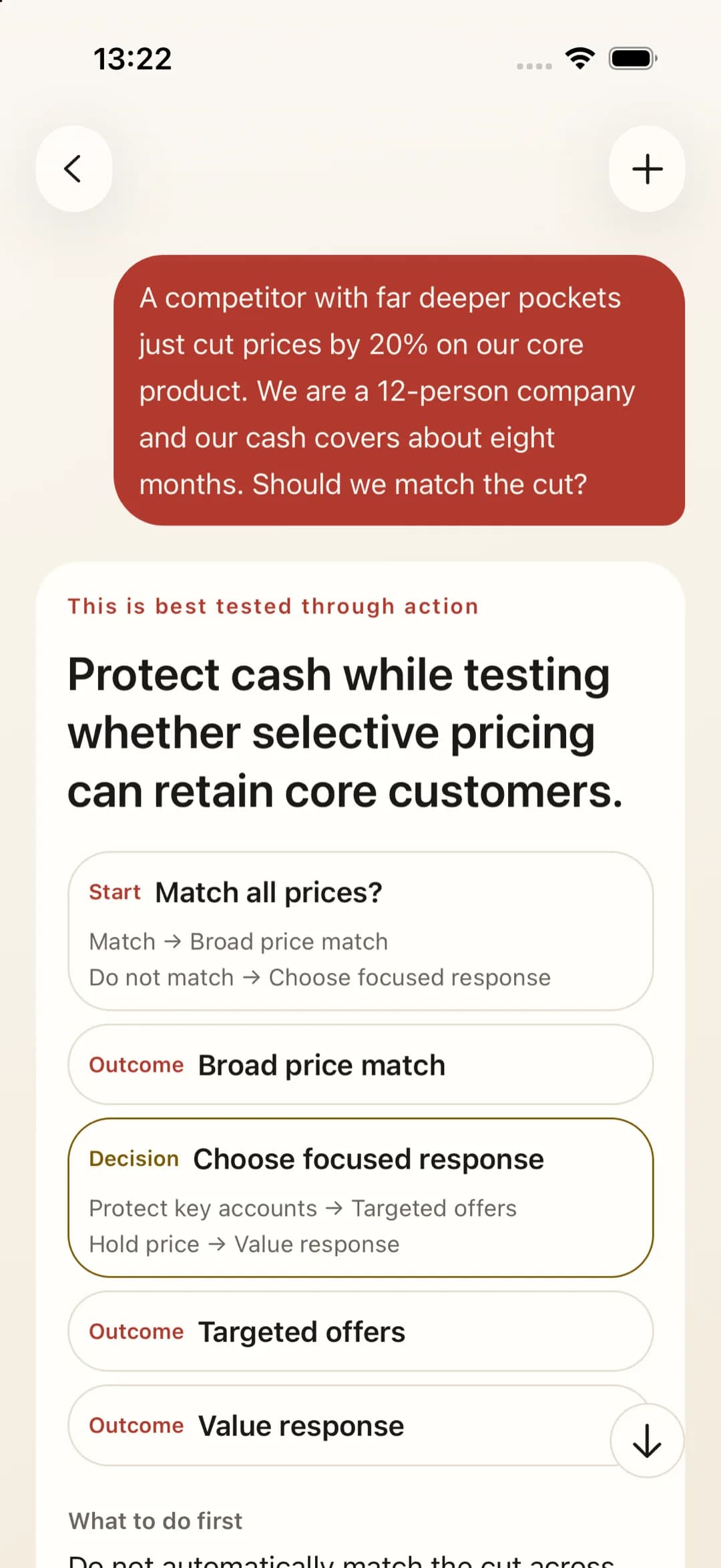
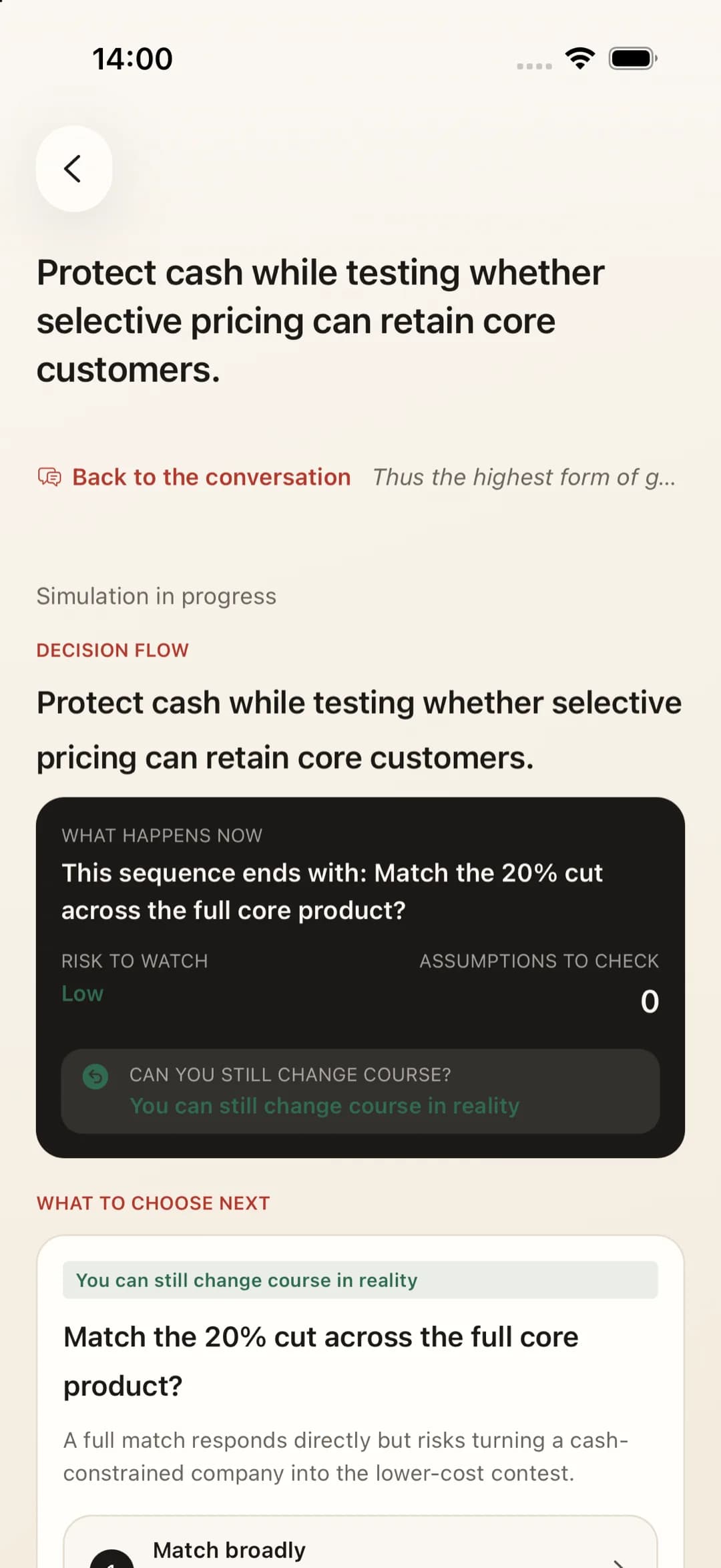
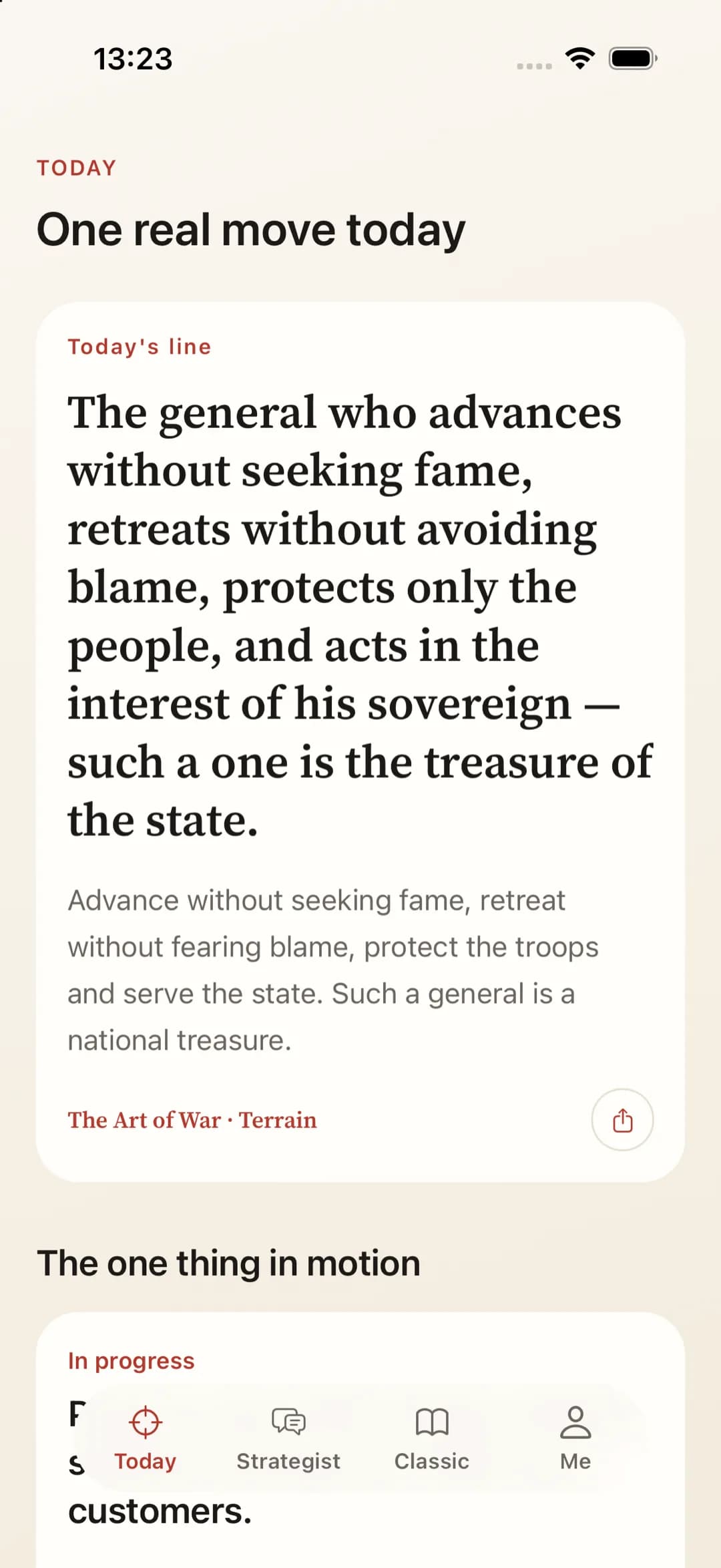
The strategist asks about your situation first, then gives a judgement and what to do firstLay both sides on the table and simulate whether the conclusion changesOne real move today, with a signal to watch
Tell the strategist what changed over the last three months: how often the goal moved, which promises slipped, who went quiet first, and your own guess at the cause.
The strategist first separates the three causes, direction, trust, and exhaustion, and tells you which one the signals you describe point to, rather than handing you an incentive plan.
You leave with an action card: one thing to do this week, usually a decision to make in public, plus a signal that tells you it is not working.
This page covers the order of judgement. Your own situation, opponent, and resources are worked through with the strategist in the app.
If the cause is money, yes. If the cause is unclear direction or broken promises, a bonus buys a short silence. Find the cause before deciding whether to spend the money.
Should I hold a meeting and ask the team directly why they are disengaged?
Ask, but not in a group. Go one to one, starting with whoever went quiet first, and ask which recent event disappointed them most. What you get in a group meeting is mostly performance.
Can I set a more ambitious goal to spark some fight?
It usually backfires. A demoralised team needs a goal it can finish, so that one completion rebuilds the link between effort and outcome. Let them win something small before asking for something big.
One or two people keep spreading negativity. What do I do?
First judge whether what they say is true. If they are naming real problems, they are speaking for the team, and dealing with them silences everyone else. If it is complaint without facts, set the boundary in a private conversation.
This page covers management judgement, not employment law. Follow local law on pay, appraisal, and dismissal and consult professionals. Persistent exhaustion or visible distress needs real support, not management technique. Do not use Sun Tzu's language to justify coercion or mistreatment of staff.