Cash flow is tight. Expand or cut back? Work out your runway first
When cash is tight, compute your real runway first, then separate spending that buys the future from spending that maintains habit. Three conclusions, common mistakes, three plays.
The short answer
When cash is tight, the first move is neither raising money nor cutting people. It is computing one number: how many months you can last at the current pace, and how many in the worst case.
Expand or cut depends on runway and revenue certainty. With more than twelve months of runway and a verifiable growth signal, limited expansion is possible. Under six months, cut to the smallest configuration that survives.
Cutting is not trimming everything evenly. It is removing spending that maintains habit while protecting the one path that brings the next certain revenue.
Also searching for: cash flow crunch what to do · expand or cut back when cash is tight · startup running out of cash decision · tight cash flow business
Where people usually go wrong
Computing runway with optimistic revenue
Treating unsigned contracts as cash. Count only money received and contracts signed.
Cutting evenly
Twenty percent from every department weakens what earns money together with what does not.
Waiting until the last moment
Fundraising, credit, and payment-term negotiations all take time. Starting with three months left leaves no option in reach.
Expanding while tight to take a shot
Betting the last of the cash on unverified growth. Sun Tzu's rule is to secure victory first and then fight, not fight first and hope.
Three things to check before acting
Real runway
Use cash received plus signed and invoiced receivables, divided by current monthly net burn. Then compute a worst case: a major customer pays late and revenue drops 30%.
The nature of each expense
Sort fixed costs into three kinds: buys certain revenue, buys possible revenue, maintains habit. Cut the third kind first.
Revenue certainty
Where the next certain money comes from, when, and who it depends on. The people and resources on that path are not to be touched.
What Sun Tzu would look at first
The Art of War, chapter 4, Tactical Dispositions
The victorious army wins first and then seeks battle; the defeated army fights first and then seeks victory.
Expanding while cash is tight is fighting first and seeking victory: staking the outcome on growth that has not happened. Sun Tzu wants the conditions for not losing in place first, runway, certain revenue, and reversible commitments, and only then a decision on whether to fight.
Three versions, three plays
Runway above twelve months with a verifiable growth signal
Limited expansion is possible, but every expansion spend needs a stop signal and should be released in tranches, never all at once.
Runway between six and twelve months
Pause expansion, concentrate on the path that brings certain revenue, and start fundraising or credit talks now. Terms today are far better than terms three months from now.
Runway under six months
Cut immediately to the minimum viable configuration. Cut habit spending first, renegotiate payment terms second, touch people last. Tell the team the situation and the plan; guessing drains morale faster than bad news.
How the app walks you through it
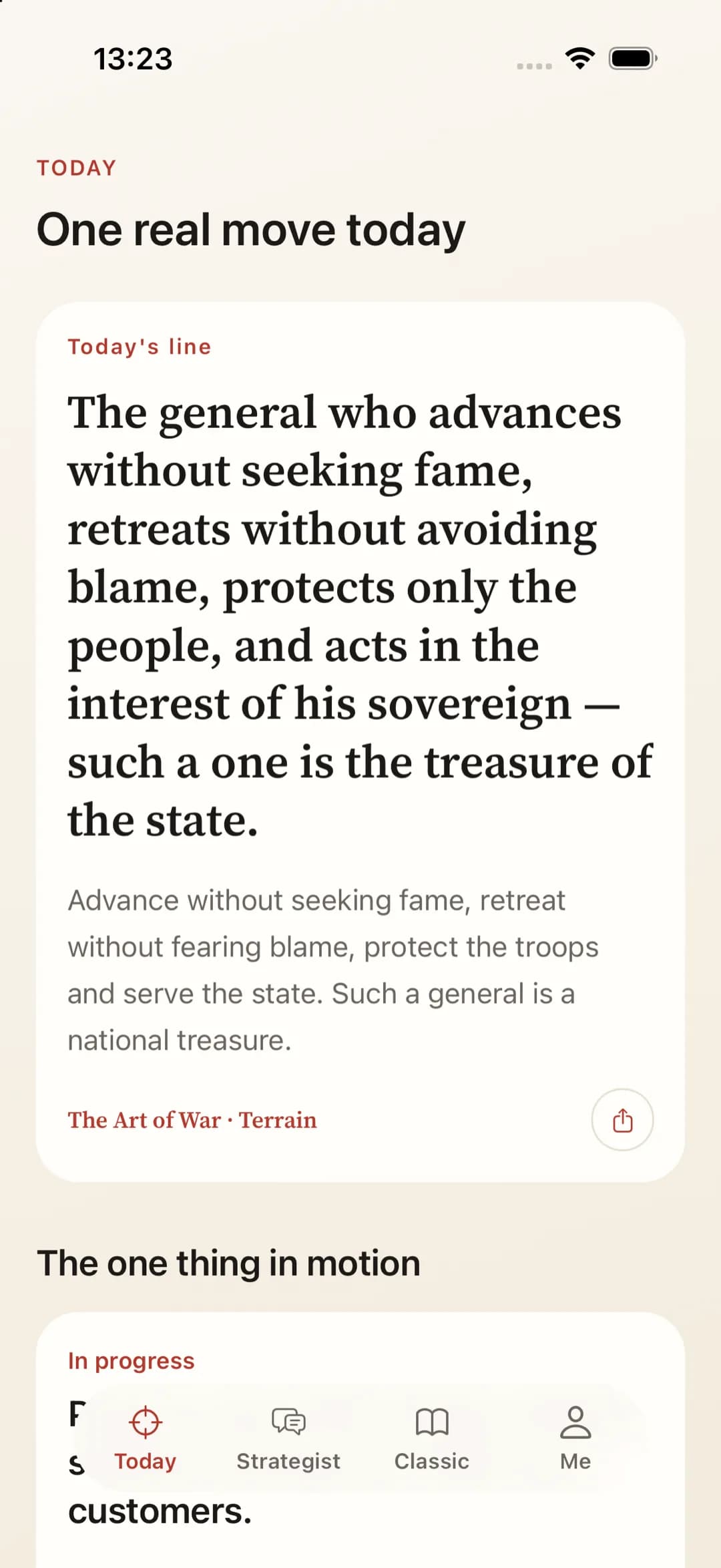
The strategist asks about your situation first, then gives a judgement and what to do firstLay both sides on the table and simulate whether the conclusion changesOne real move today, with a signal to watch
Give the strategist your cash, monthly net burn, signed revenue, and main expenses. Rough numbers are fine.
The strategist sorts spending into the three kinds and splits any expansion option into tranches that can be stopped.
You leave with one decision for this week: usually one expense to stop, or one negotiation to start.
This page covers the order of judgement. Your own situation, opponent, and resources are worked through with the strategist in the app.
Common guidance is to keep more than twelve months before considering expansion and to enter cutting mode under six. What matters more is a conservative count: only cash received and contracts signed.
Should I cut people first or other costs?
Cut fixed costs that do not bring revenue first: office space, unused tools, non-core outsourcing. People are last, because capability that leaves is hard to bring back.
Can I borrow to expand while cash is tight?
Only if the expansion brings certain revenue on a timetable, and you can repay even if that revenue falls short. If either condition fails, the loan only extends the same problem.
Should I tell the team that cash is tight?
Yes, and early. They usually already sense it, and silence amplifies guessing. Explaining the situation, the plan, and the reasoning keeps core people better than concealment does.
This page covers the order of judgement and is not financial, tax, or legal advice. Fundraising, layoffs, and debt restructuring require qualified professionals.