When the team is overloaded, hiring is the most expensive answer. Find the bottleneck and whether it lasts, then choose hiring, outsourcing, or cutting work.
The short answer
When the team is overloaded, do not make hiring the default answer. First find which step is the real bottleneck and whether it is permanent or only appeared in the last two months.
The order of judgement is: whether the bottleneck sits at one specific person or step, whether it will persist for more than six months, and how long a new hire needs before actually sharing the load, and who trains them in the meantime.
Most of the time the right move is to first loosen the bottleneck with outsourcing, tools, or cutting low-value work, see whether the overload really came from missing headcount, and only then open a permanent role.
Also searching for: should I hire now or wait · when to hire your first employee small business · team overloaded should I hire · startup hiring timing
Where people usually go wrong
Equating busy with understaffed
Busy can come from roundabout processes, poor tools, unfiltered requests, or one person blocking everyone. Hiring fixes none of these. A new hire simply joins the busyness.
Hiring for this quarter's peak
Projects piled up for two months, so you hired a permanent employee. Three months later the peak has passed and the extra person and salary remain. Peaks get temporary hands and outsourcing; permanent roles match permanent load.
Ignoring the cost of onboarding
For the first two or three months a new hire does not share the load and also takes time from the busiest person to be trained. The first quarter after hiring is often busier than not hiring.
Hiring without a clear deliverable
Before hiring the story was that hands were short. After hiring nobody can say what outcome the role is accountable for. The new person does many small things and the bottleneck stays where it was.
Three things to check before acting
Which step the bottleneck sits at
Draw the workflow from order to delivery and look for the step where the most work piles up and waits longest. The bottleneck is usually in one place; the busyness elsewhere is downstream of it.
Whether the load is permanent or seasonal
Look at monthly workload over the past six months. Consistently high and rising is permanent load; a two- or three-month spike is seasonal. Hire for the first, find a temporary solution for the second.
Ramp time and who trains the hire
How long from joining to independent output, who does the training, and whether that person has time now. If the trainer is the bottleneck, hiring will make the bottleneck worse before it gets better.
What Sun Tzu would look at first
The Art of War, chapter 6, Weak Points and Strong
Striking a stone against an egg: that is the matter of the solid and the hollow.
Sun Tzu describes concentrating strength against weakness like a stone against an egg. The point is pressing your force onto the right spot rather than spreading it thin. Hiring is deploying force: put one person on the bottleneck and the whole line frees up; put ten people in the wrong place and they are simply busy together.
Three versions, three plays
The bottleneck is one specific step and the load has lasted more than six months
Hire, but only for a role aimed at that step, with a written outcome it is accountable for. Before the start date, free the training time from the bottleneck person, or the first quarter will be more congested.
The bottleneck comes from a two- or three-month project spike
Do not open a permanent role. Cover the spike with outsourcing, part-timers, or a temporary contract, and record the data from this spike. If the spike recurs three times in a row, it is permanent load, and then you hire.
The busyness comes from process and unfiltered demand, not one step
Do not hire yet. Spend two weeks cutting low-value work, catching repetitive tasks with tools, and putting a filter in front of incoming requests. Most teams see the overload drop by about a third after those three things, and then you can see whether anyone is still missing.
How the app walks you through it
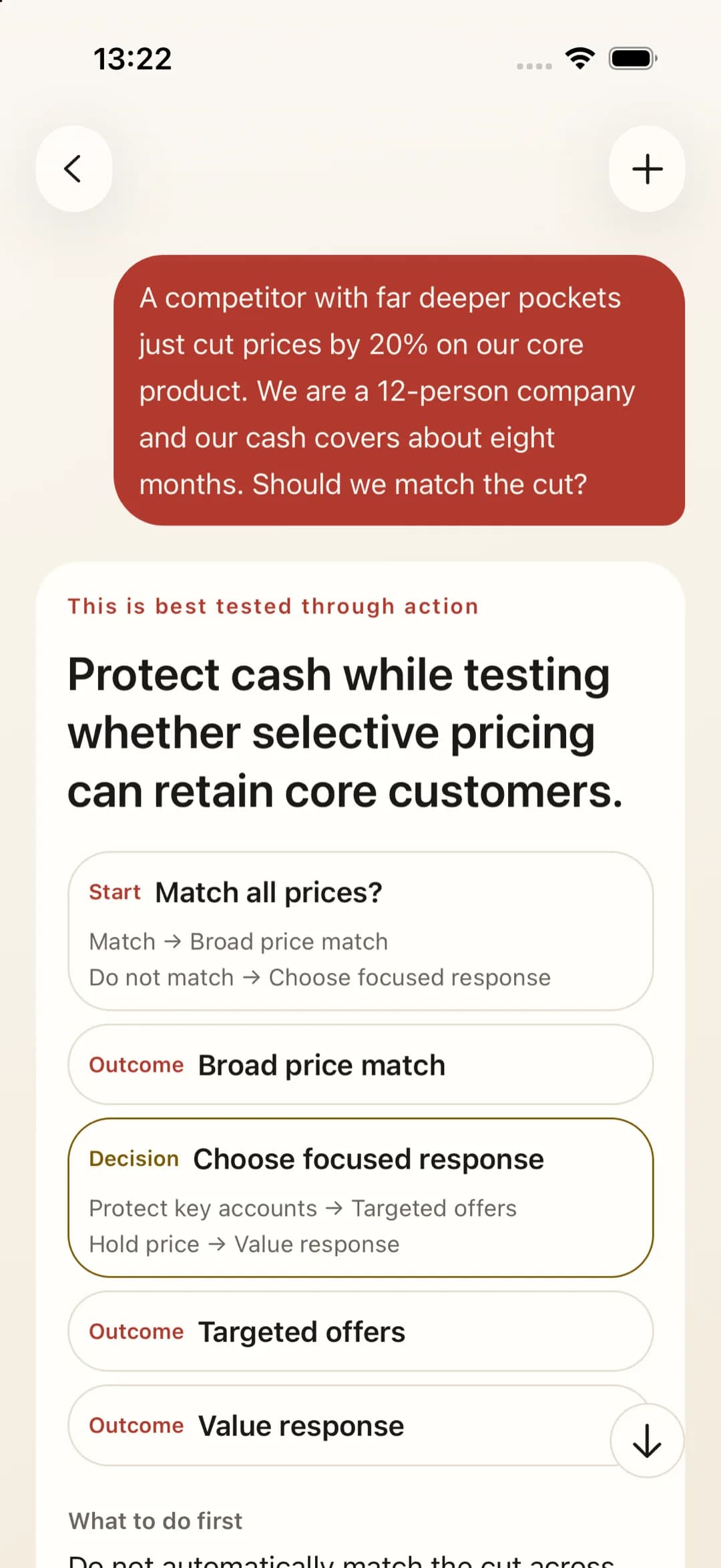
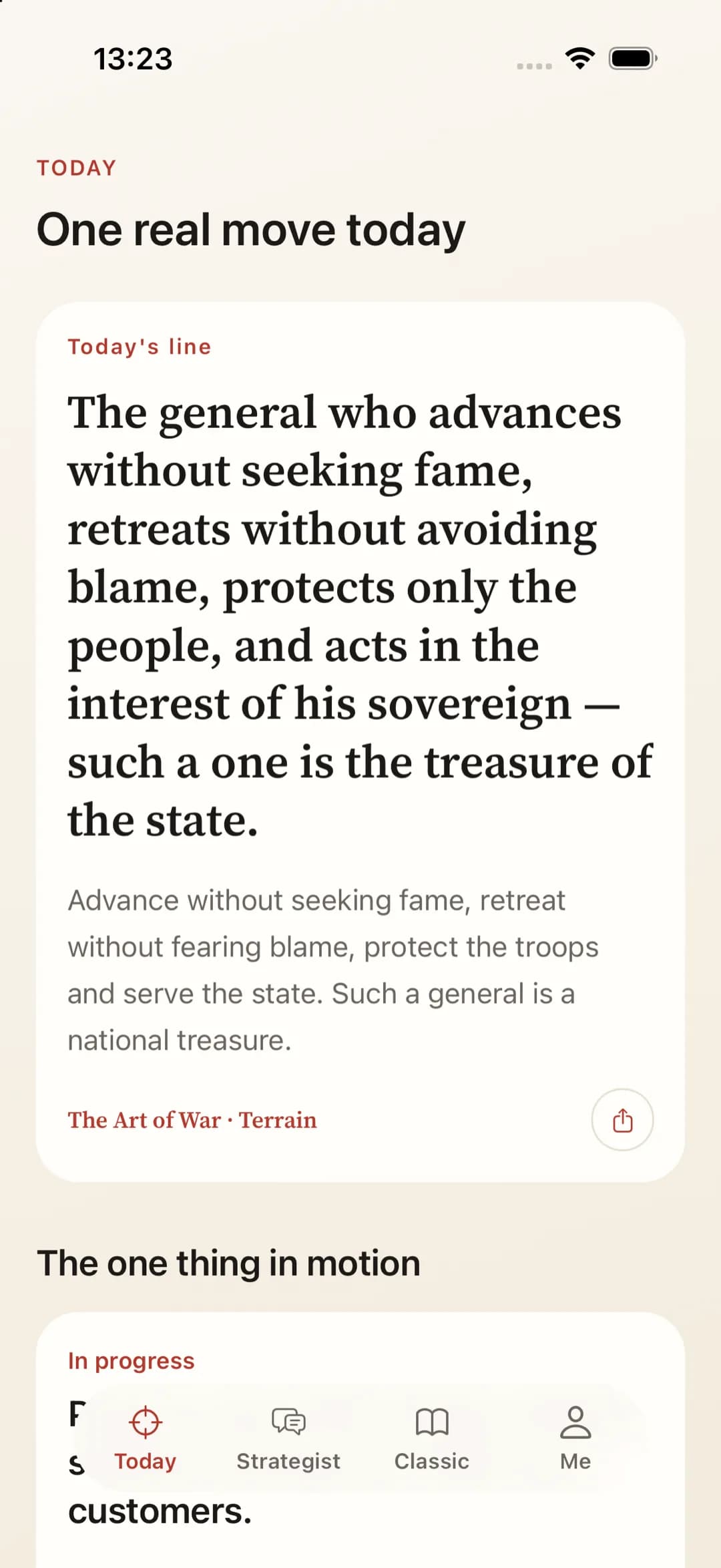
The strategist asks about your situation first, then gives a judgement and what to do firstLay both sides on the table and simulate whether the conclusion changesOne real move today, with a signal to watch
Tell the strategist about the team: how many people, what they do, where work piles up most, and how long this has been going on.
The strategist first helps locate which step the bottleneck sits at, then compares the cost and start-up time of hiring, outsourcing, and cutting demand side by side.
You leave with an action card: one move this week that loosens the bottleneck, and a signal in the data that tells you when a permanent hire is due.
This page covers the order of judgement. Your own situation, opponent, and resources are worked through with the strategist in the app.
We have plenty of cash. Can we hire ahead of need?
Cash is not a reason to hire; load is. Hiring ahead only makes sense if you can state clearly what outcome the person will be accountable for six months from now. A role you cannot describe that way is likely to sit idle or do odd jobs.
Senior or junior?
It depends on the nature of the bottleneck. If it is judgement and experience, hire senior: expensive but quick to start. If it is repetitive execution volume, hire junior with a clear process. Using a junior to fill a judgement gap makes the bottleneck person busier.
The team is exhausted. If we do not hire, will people leave?
Possibly, which is why the first move is reducing load rather than hiring. A hire pays off after three months; load reduction pays off this week. Also share the hiring plan and timeline with the team so they know when relief arrives.
Outsource or hire?
Ask whether the work is a core capability. Grow core capability in-house; outsource the non-core, the seasonal, and the specialist. Outsourcing also lets you measure how much work the role actually contains before committing to it.
This page covers the order of judgement and is not legal or human resources advice. Employment contracts, probation, and reductions require compliance with local law and qualified professionals.