A business line is losing money: cut it or double down
When a business line keeps losing money, cut or double down depends on what it still needs and whether the cause can change, not on what is already spent.
The short answer
When a business line is losing money, the first job is not deciding whether to cut it but finding out why it loses: not yet at scale, wrong pricing and cost, or no real demand. Three causes call for three completely different moves.
The order of judgement is: whether the cause of the loss can be changed, how much money and time changing it would take, and what the same investment would bring in the main business. Money already spent does not enter this calculation.
Most of the time the right move is neither a clean cut nor more funding but one final round with a deadline, a spending ceiling, and a written decision rule, executed as written when the deadline arrives.
Also searching for: should I shut down a losing business line · unprofitable business unit cut or invest · when to kill a product line · sunk cost business decision
Where people usually go wrong
Investing more because of what is already invested
Two million is already in, so cutting loses all of it, so another half million goes in. The money already spent does not come back whether you cut or not. It should not influence the next decision.
Mixing up the causes of the loss
Not at scale, wrong pricing, no demand: all three look like a loss. The first two can turn around with more investment; the third only loses more with more investment. Deciding without separating the cause is choosing with your eyes closed.
Cutting too slowly, or too hard
Delaying the cut lets the loss eat the main business's profit and the team's attention. Then, when the decision comes, cutting everything at once throws away the customers, channels, and capabilities that had accumulated.
Letting the person who runs the line evaluate the line
They will defend it. That is not a character flaw; it is their position. Evaluate against criteria set in advance, not against the owner's confidence.
Three things to check before acting
The nature of the loss
Look at unit economics: does each additional sale lose more or less? Losing less per sale is a scale problem. Losing more per sale is a pricing or cost problem. No sales at all is a demand problem.
The investment still needed to turn it around
How much money, how many people, and how long to reach break-even. Put that number next to the same investment in the main business and compare which return is more certain.
How entangled it is with the main business
Which main-business people and attention it occupies, and whether its customers are the same group as the main business's. Deep entanglement means cutting in steps; shallow entanglement means you can move fast.
What Sun Tzu would look at first
The Art of War, chapter 2, Waging War
In war, value victory, not prolonged operations.
Sun Tzu prizes quick decisions and warns against dragging on. A losing business line left undecided drains the main business's resources and the team's confidence every month, which costs more than cutting wrongly. Set a deadline and decide by criteria written in advance when it arrives. That is not prolonging.
Three versions, three plays
Unit economics hold; it is just not at scale yet
You can double down, but the doubling needs a shape: write the investment ceiling and time to break-even, release it in tranches, and check after each whether unit economics are improving as expected. When improvement stops, stop investing.
Unit economics do not hold; each additional sale loses more
Stop expansion first, then change pricing or cost structure. Give yourself one quarter to verify that the changed unit economics can turn positive. If they cannot, cut. If they can, then talk about scale.
The demand does not exist; nobody pays however you do it
Cut, but in steps: stop new investment first, fold valuable customer relationships and capabilities into the main business, then close what remains. Give the team and customers a clear timeline to avoid a drawn-out ending.
How the app walks you through it
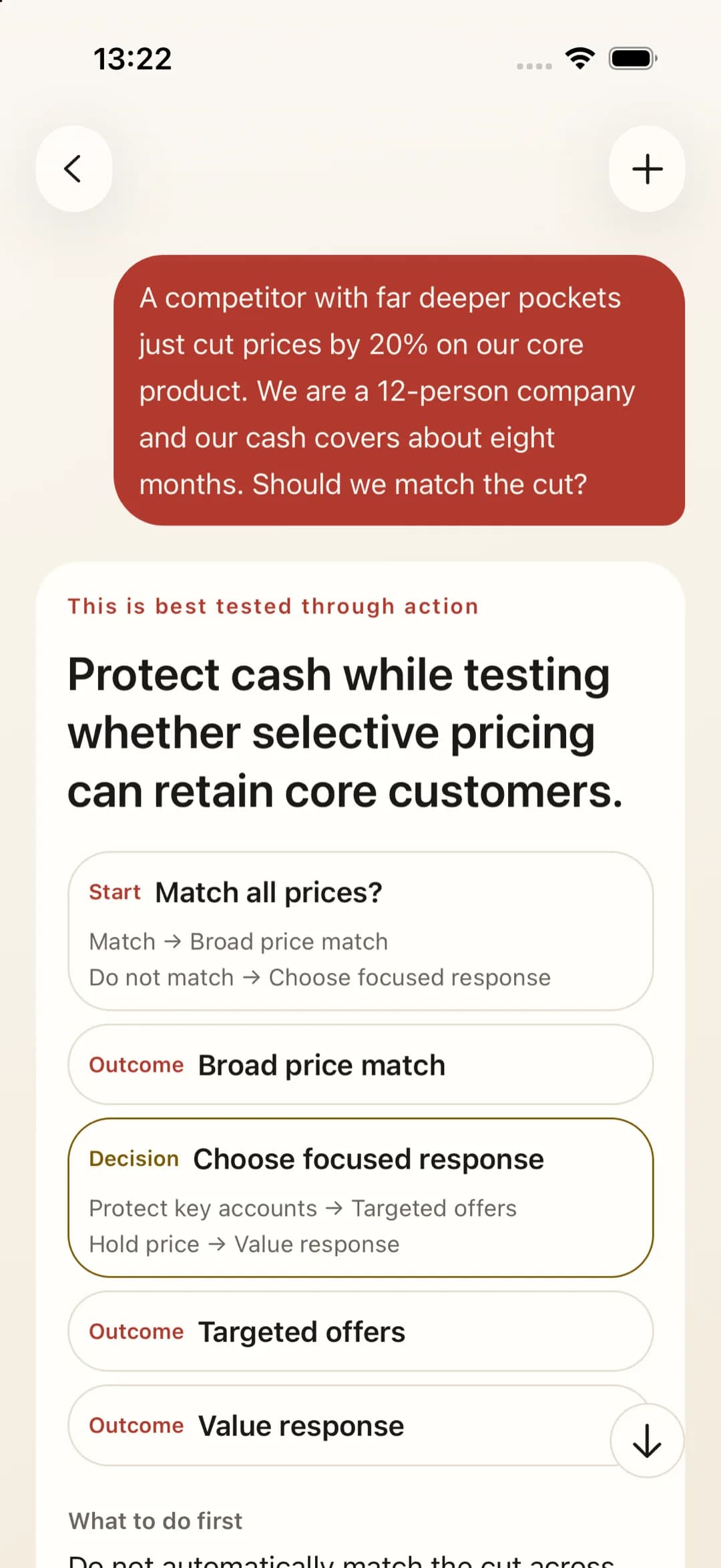
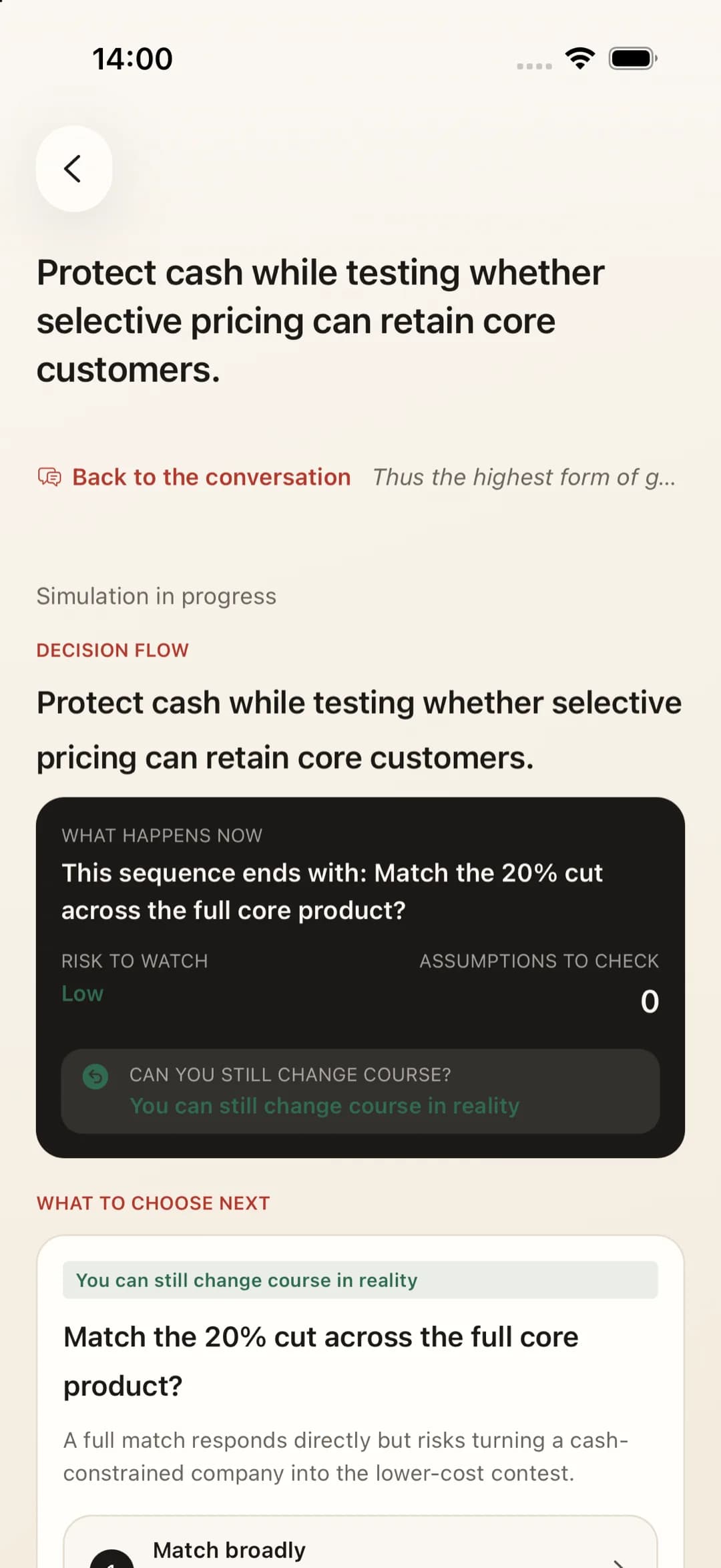
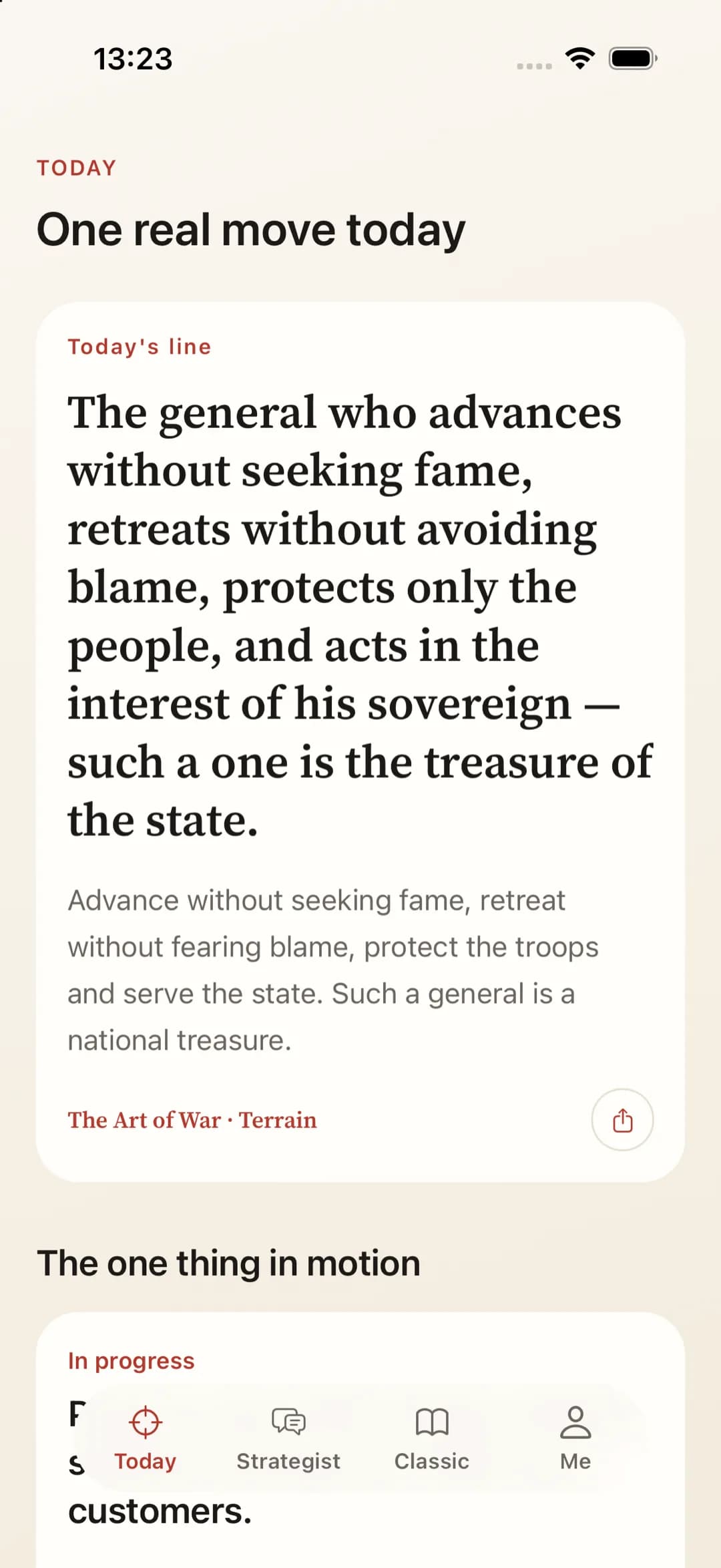
The strategist asks about your situation first, then gives a judgement and what to do firstLay both sides on the table and simulate whether the conclusion changesOne real move today, with a signal to watch
Tell the strategist about the line: how long it has run, the monthly loss, what the unit economics look like, and how it relates to the main business.
The strategist first helps classify the loss as a scale, pricing, or demand problem, then writes out the ceiling, deadline, and decision rule for a final round.
You leave with an action card: one number to verify this week, and a decision rule that says which result means cut and which means invest.
This page covers the order of judgement. Your own situation, opponent, and resources are worked through with the strategist in the app.
The line loses money but feeds customers to the main business. Should it still be cut?
Then count it as the main business's customer acquisition cost rather than a separate line. Work out whether the customer value it brings exceeds its loss. If yes, keep it with a ceiling on acquisition cost. If no, cut it and spend the savings on another acquisition channel.
If we cut the line, what happens to the people on it?
First see whether they can move into the main business. Capable people are the asset most worth keeping when a line is cut. Those who genuinely cannot be placed should be handled lawfully and decently, and told early rather than through rumour.
Our investors backed us because of this line. How do I explain cutting it?
With data. Show investors the unit economics, the investment needed to turn it around, and the comparison with the main business. What investors fear more is that you keep burning money to save face. Bring a clear analysis and most will support you.
When should I double down on a losing line?
In one case only: unit economics already hold, each additional sale loses less, and you can state clearly how much investment and time break-even still needs. If any of the three is missing, doubling down is gambling.
This page covers the order of judgement and is not financial, tax, or legal advice. Closing a business, staff arrangements, contract termination, and asset disposal require qualified professionals.