When a competitor poaches a key account, learn whether it was lost on price, relationship, or delivery, and whether it is worth fighting for, before you act.
The short answer
On the day a key account leaves, the wrong move is calling to beg them back. The right move is finding out why they left: price, relationship, delivery, or a change of people on their side. Different reasons demand different actions.
Decide whether the account is worth fighting for: its margin, its share of your revenue, and what winning it back would cost. Some accounts leaving is a relief; others cut a cash line.
In most cases do three things at once: one candid review conversation with no pressure to return, an immediate second source to close the revenue gap, and a fix for the real reason they left.
Also searching for: competitor poached my biggest customer · lost a key account to a competitor · how to win back a lost customer · major customer left for competitor
Where people usually go wrong
Buying them back with a discount
If they left over price, a discount only delays the next poaching. If they did not, a discount admits you were overcharging them before.
Blaming the salesperson
Key accounts usually leave over accumulated delivery, response, or relationship problems. Sales is just the last to find out. Blame makes the next problem surface even later.
Attacking the competitor
Running down the rival who won them makes the customer feel foolish. Nobody comes back to prove they were foolish.
Pretending nothing happened
No review, no process change, just the next customer. The same cause will take the next key account too.
Three things to check before acting
The real reason
Find someone on their side who will tell the truth and ask once, without any intent to retain. The answer is usually slow response, a delivery failure, a change of contact, or a competitor offer they could not refuse.
Whether the account is worth fighting for
Count margin, not revenue. An account that consumed heavy resources for thin margin is a relief to lose. Only accounts with good margin and a good relationship are worth winning back.
Your revenue exposure
What share of revenue they were, how many months cash lasts without them, and whether a second source can fill the gap. This sets how much time you have to fix the cause.
What Sun Tzu would look at first
The Art of War, chapter 3, Attack by Stratagem
The one who knows when to fight and when not to fight will win.
Sun Tzu says victory goes to the one who knows when to fight and when not to. After losing a key account, the hardest judgement is not how to win it back but whether to. Fight hard for the ones worth it, release the others cleanly, and put the effort into replacement and root cause.
Three versions, three plays
They left over a delivery or response failure
This is your fault and the easiest cause to fix. Fix it first, then let them know it is fixed without asking them back, and give them a reason to reassess in six months. Apply the same fix to every other account.
They left for a better offer from the competitor
Find out whether the offer was price or lock-in. If the competitor is buying the account at a loss, do not match; talk again when their terms expire. If the offer is one you could never make, wish them well honestly, keep the relationship, and move resources to replacement.
They left because their contact changed or internal politics shifted
Not something you can fix and not your fault. Keep the relationship with the old contact, learn what the new one actually cares about, and spend six months rebuilding an entry point. Accept that this account will not return short-term.
How the app walks you through it
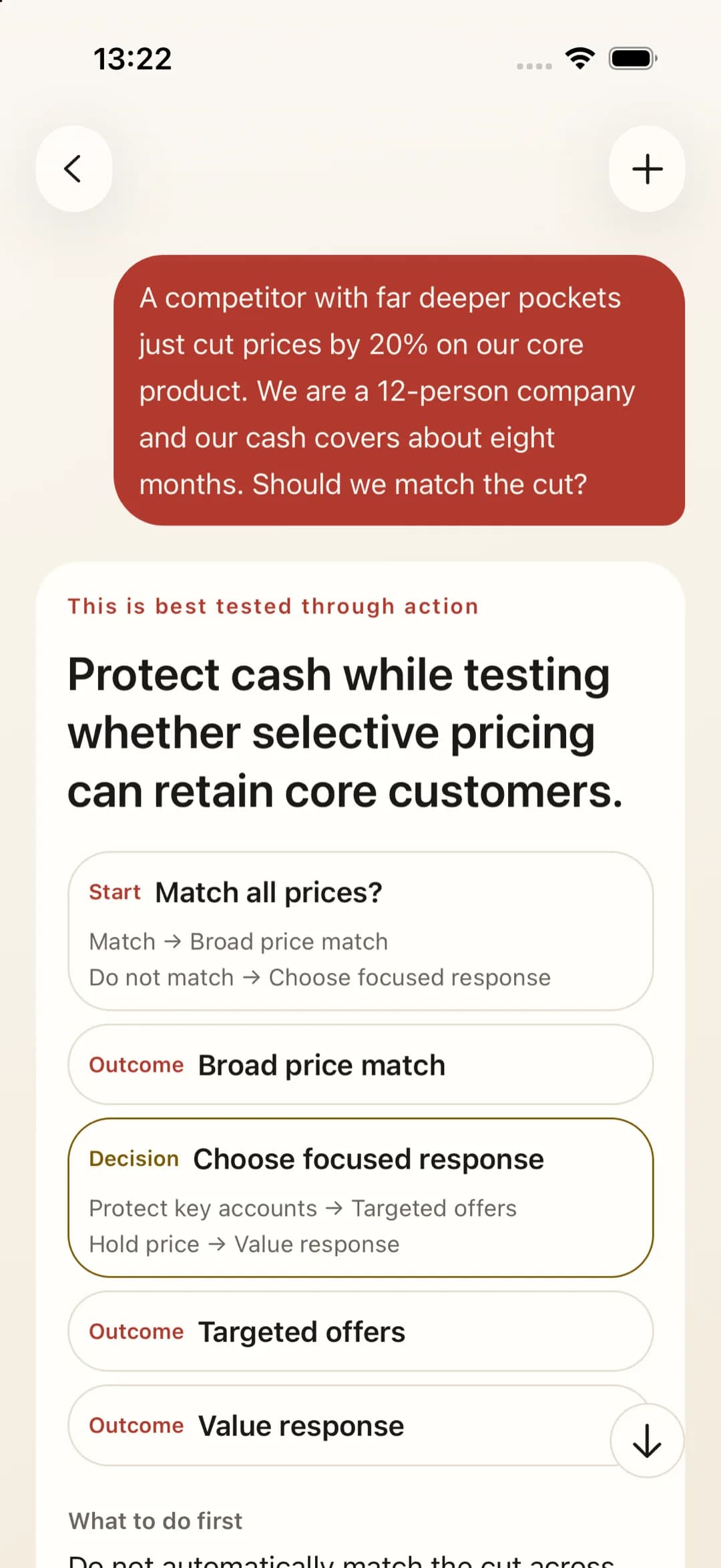
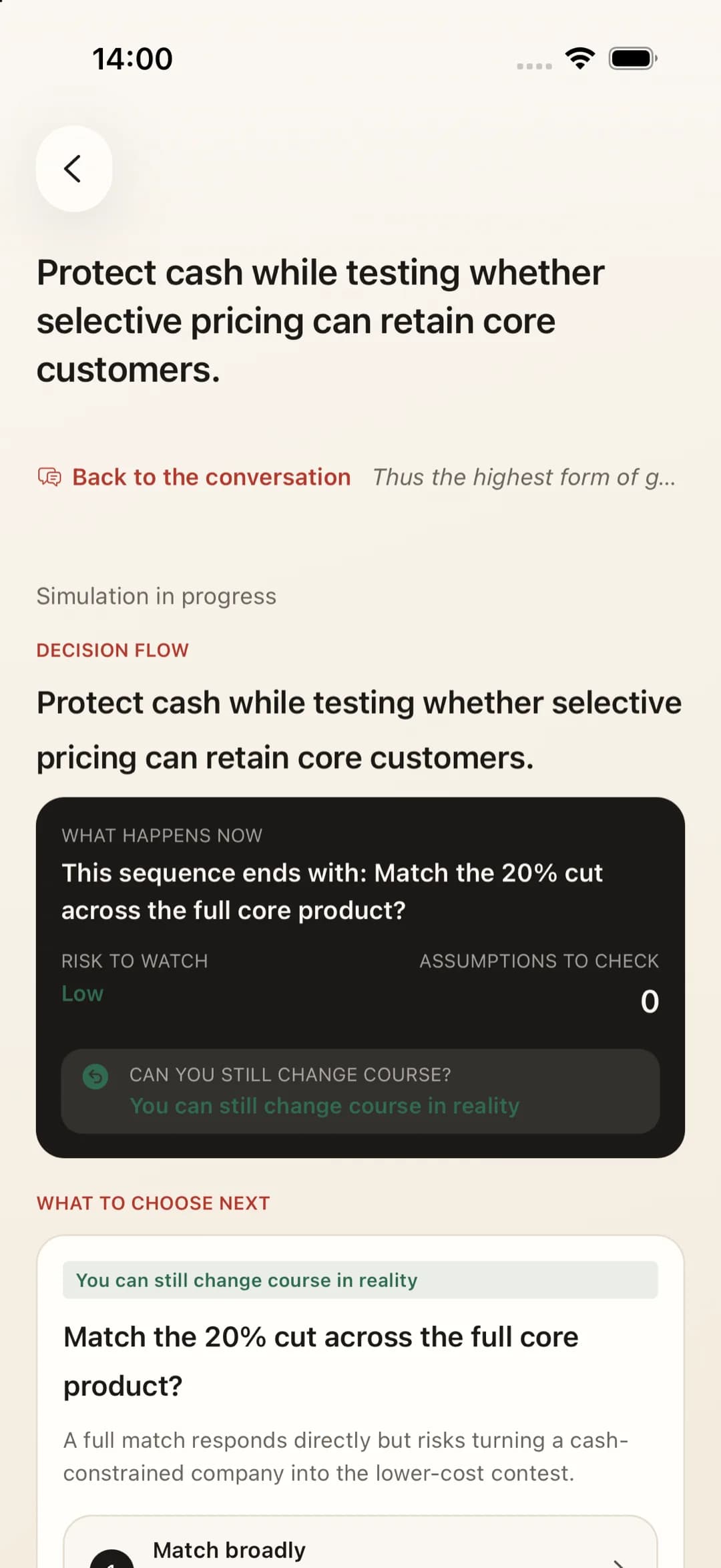
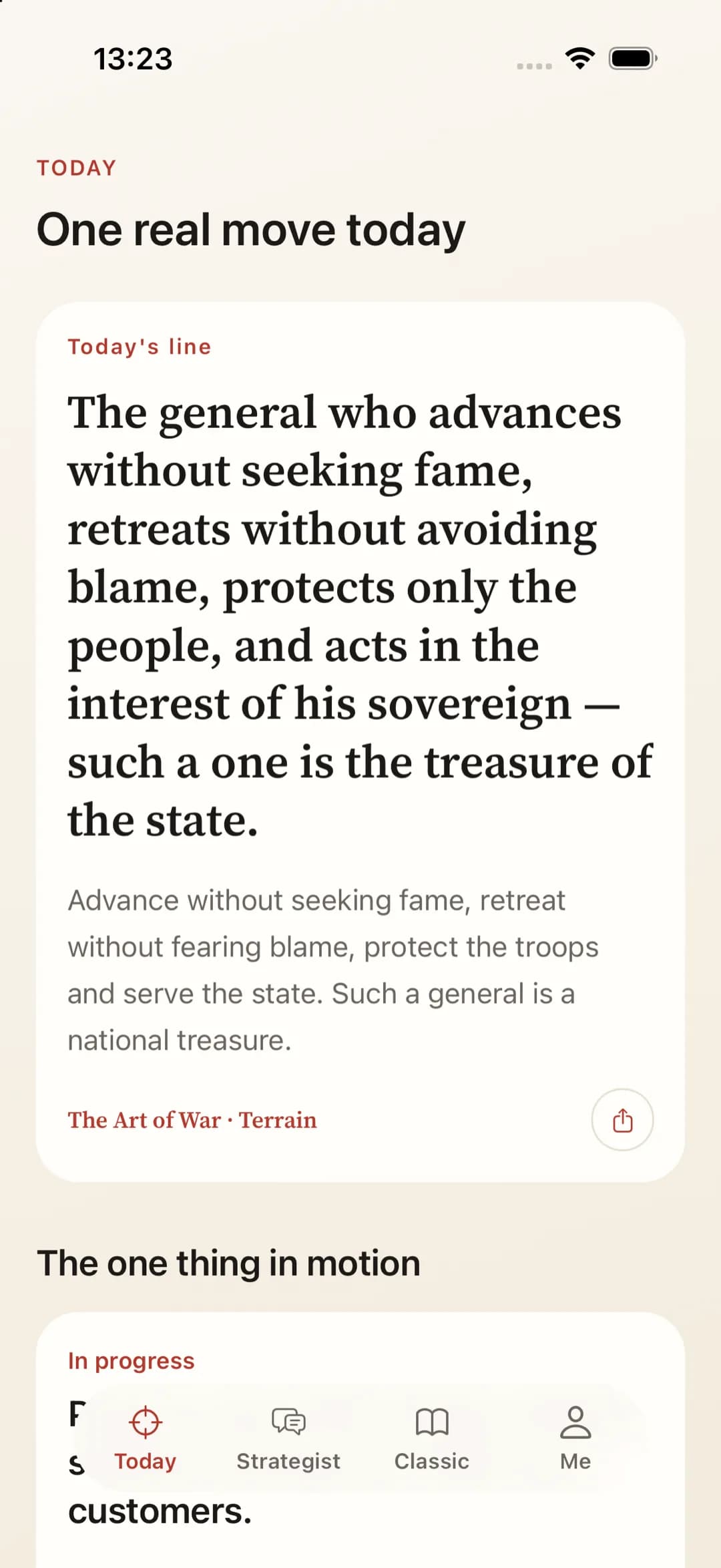
The strategist asks about your situation first, then gives a judgement and what to do firstLay both sides on the table and simulate whether the conclusion changesOne real move today, with a signal to watch
Tell the strategist which account left, its share of your revenue, what you know about why, and what the competitor offered.
The strategist separates three questions, whether to fight, how to close the revenue gap, and what root cause to fix, and judges each on its own.
You leave with an action card: one move this week, usually a review conversation or a replacement list, and a boundary that ends recovery efforts when a signal appears.
This page covers the order of judgement. Your own situation, opponent, and resources are worked through with the strategist in the app.
Should I contact the customer immediately to retain them?
Contact them, but not to retain. The first contact has one purpose: learning why they left. A conversation with a retention agenda gets polite answers, not the real reason.
Should I cut the price to win them back?
Only if they clearly left over price, your cost structure allows it, and the cut is tied to a contract term. Otherwise a discount just postpones the next poaching.
One account was 40% of revenue and it just left. What now?
Compute how many months of cash you have, start replacement immediately, and negotiate payment terms to slow outflow. Afterwards, cap any single account at a share you can survive. That matters more than winning this one back.
How do I stop the next key account from being poached?
Fix the real cause of this one and run the same check on every key account: response time, delivery record, contact relationships. The accounts that get poached are never the satisfied ones.
This page covers the order of business judgement and is not legal advice. Disputes involving contract breach, non-compete clauses, or trade secrets require qualified professionals.